

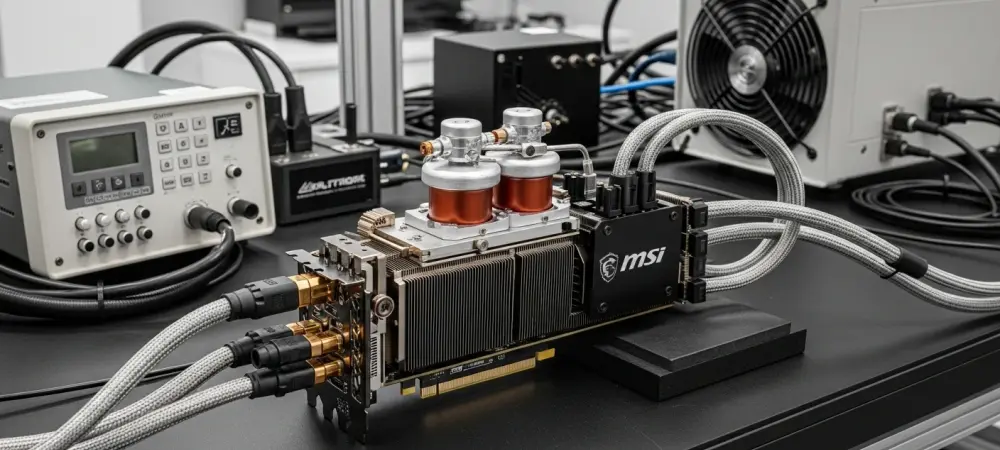
The relentless pursuit of ultimate performance in the consumer electronics space has yielded a new monument to engineering excess, a graphics card so powerful and exclusive it exists more as a concept than a product. The MSI RTX 5090 Lightning Z represents the pinnacle of consumer graphics technology, pushing the boundaries of performance and design. This review will explore the evolution of the legendary Lightning series, its key features, extreme performance metrics, and the impact it has on the enthusiast market. The purpose of this review is to provide a thorough understanding of this exclusive GPU, its current capabilities, and its place in the future of extreme PC hardware.
The Return of a Legend Introducing the Lightning Z
The MSI RTX 5090 Lightning Z arrives not merely as a new product but as the revival of a celebrated lineage, embodying the core principles of a halo product designed to be the absolute best. It serves as a benchmark for raw performance and a powerful symbol of MSI’s engineering prowess. This card is not intended for the mainstream market; instead, its existence is a statement aimed squarely at extreme overclockers and affluent collectors who demand the unprecedented.
Positioned at the apex of the ultra-high-end market, the Lightning Z’s release context is one of pure exclusivity. Functionally an RTX 5090 Ti in everything but name, it caters to a demographic that values rarity and record-setting potential above all else. Its relevance stems from its ability to redefine what is possible for a consumer-grade GPU, establishing a new high-water mark that will influence hardware enthusiasts and competitors alike for years to come.
Engineering for Extremes A Deep Dive into the Hardware
Unprecedented Power Delivery and Design
At the heart of the Lightning Z’s record-breaking potential is a power delivery system of uncompromising quality. The card is built around a massive 40-phase VRM, a component designed to supply exceptionally stable and clean power under the most demanding overclocking scenarios. This robust foundation ensures that the GPU can sustain extreme clock speeds without succumbing to electrical instability, a critical factor for competitive benchmarking.
Complementing this system are dual 12V-2×6 power connectors, which are necessary to feed the card’s tremendous energy appetite. The meticulous construction extends to its physical design, featuring a carbon fiber backplate that provides structural rigidity and reinforces its premium aesthetic. These elements work in concert to create a product that is as durable as it is powerful, engineered to withstand the rigors of extreme use.
Advanced Cooling and Tiered BIOS Options
Managing the thermal output of such a power-hungry GPU requires an equally impressive cooling solution. The Lightning Z comes equipped with an integrated AIO liquid cooler designed specifically to dissipate the immense heat generated under heavy loads. This advanced thermal management is essential for maintaining stability and unlocking the card’s full performance potential, particularly when pushing it beyond its factory specifications.
Further enabling this pursuit of performance are multiple vBIOS profiles tailored to different use cases. The standard “OC” mode sets the power limit to a formidable 800W, while an “extreme” setting raises it to 1,000W for serious enthusiasts. For the most elite users, MSI offers a warranty-voiding 2,500W XOC BIOS upon request, a clear indicator that this card is built for the sole purpose of shattering world records.
A New Sales Model The Lottery for a Chance to Buy
The Lightning Z’s exclusivity is reinforced by its method of distribution, which mirrors a growing trend for highly sought-after technology. With an extremely limited production run of just 1,300 units worldwide, the card is already reported as sold out through all conventional retail channels. This manufactured scarcity sets the stage for a sales model that departs entirely from traditional purchasing.
For prospective buyers in the United States, acquiring the Lightning Z is not a matter of simply having the funds. Instead, they must enter and win a lottery-style draw for the mere opportunity to purchase a single unit. This strategy effectively transforms the buying process into a contest, managing overwhelming demand while amplifying the product’s mythical status among enthusiasts.
Beyond Gaming The Niche Audience of the Lightning Z
While its theoretical gaming performance is undoubtedly immense, the Lightning Z’s true purpose lies far beyond conventional applications. Its primary audience is the competitive overclocking community, where individuals use exotic cooling methods like liquid nitrogen to push hardware to its absolute limits. For these users, the card is a specialized tool for achieving world records in performance benchmarks, not for playing the latest titles.
A secondary market exists among affluent enthusiasts who build ultimate “showcase” PCs. In these systems, the Lightning Z serves as a centerpiece—a collector’s item and a statement of prestige. Its value for this audience is derived as much from its rarity and iconic design as its raw power, making it a functional piece of art in the world of high-end computing.
The Price of Power Challenges and Considerations
The pursuit of such extreme performance comes with significant practical challenges. The card’s immense power consumption necessitates a power supply of at least 1,600W, a requirement that places it beyond the reach of most standard PC builds. Furthermore, its physical size and integrated cooling solution impose considerable constraints on case compatibility, demanding specialized system configurations.
Beyond the technical hurdles are the financial and accessibility barriers. The staggering $5,090 price tag solidifies its status as a luxury good, while the extreme market scarcity makes it nearly impossible to obtain. These factors combine to create a product that is fundamentally inaccessible, raising important questions about the line between flagship technology and unobtainable novelty.
The Future of Flagships What the Lightning Z Signifies
The Lightning Z provides a compelling glimpse into the future of the ultra-high-end GPU market. It suggests a trajectory where flagship products become increasingly specialized, with manufacturers creating halo-tier offerings that prioritize record-breaking performance and brand prestige over practicality and mass-market appeal. This approach allows for experimentation with cutting-edge power delivery and cooling technologies that may eventually trickle down to more consumer-friendly products.
Moreover, the card’s release strategy may signal a long-term shift in how manufacturers handle highly anticipated, low-volume product launches. As demand for exclusive tech continues to outpace supply, lottery-based systems and other curated sales models could become more common for top-tier hardware. The Lightning Z, therefore, not only sets a new standard for performance but also for what it means to be a flagship in an increasingly exclusive market.
Final Verdict An Unattainable Masterpiece
The MSI RTX 5090 Lightning Z stands as a monumental achievement in graphics engineering, a product that is as breathtaking as it is impractical. It is a technological marvel designed for a singular purpose: to be the fastest and most exclusive GPU on the planet. Its combination of an over-engineered power system, advanced cooling, and tiered BIOS profiles creates a platform with unparalleled potential for setting performance records. Ultimately, the Lightning Z is less a consumer product and more a collector’s item and a tool for a select few. It is an aspirational, unattainable masterpiece that perfectly encapsulates the extreme edge of the hardware world.