

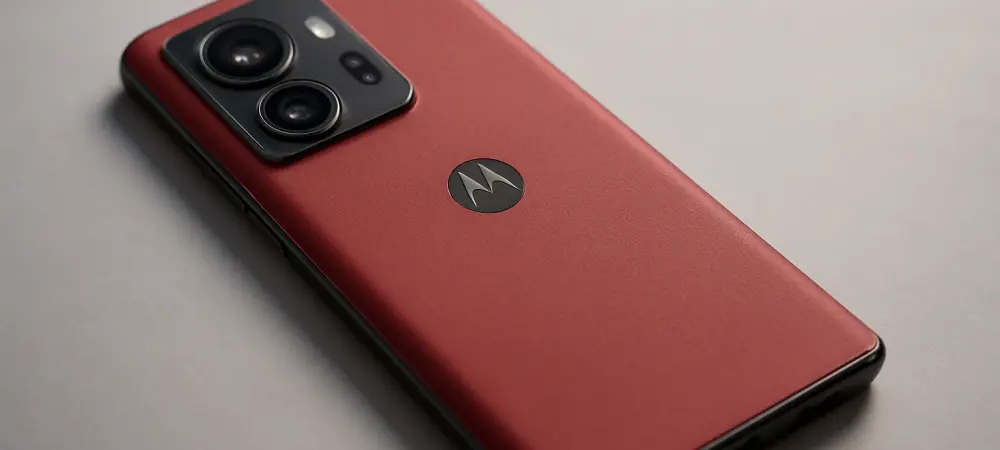
A convergence of official certifications and detailed leaks is painting an increasingly clear picture of Motorola’s next major assault on the premium smartphone market, a device that has now been pieced together as the Edge 70 Ultra. This review explores the synthesis of this pre-launch data, detailing the phone’s expected key features, performance benchmarks, and its potential impact. The objective is to provide a thorough understanding of the device’s capabilities and its intended position within Motorola’s ambitious high-end lineup.
A New Contender in the Premium Arena
The device, identified by model number XT2603-1, has surfaced across various international certification databases, signaling an imminent and coordinated launch. Its appearance is not just another yearly refresh but a calculated move by Motorola to assert itself more forcefully in the flagship arena. This handset represents a focused effort to compete feature-for-feature with the industry’s most established and popular premium offerings.
The Motorola Edge 70 Ultra is poised to be the brand’s primary weapon in the ongoing battle for market share among top-tier smartphones. By consolidating cutting-edge hardware with a refined design philosophy, Motorola aims to capture the attention of consumers who might otherwise gravitate toward more conventional flagship choices, thereby redefining its brand identity in the premium segment.
Deep Dive into Hardware and Features
Next-Generation Performance
At its core, the Edge 70 Ultra is expected to be powered by the formidable Qualcomm Snapdragon 7+ Gen 5 chipset, paired with an Adreno 829 GPU. Geekbench sightings corroborate this, pointing toward performance that can handle intensive applications and high-end gaming with ease. This processing power ensures the device is not just fast but also efficient.
Moreover, the inclusion of up to 16GB of RAM and the potential to run on Android 16 suggests a device built for longevity and seamless multitasking. This combination promises a fluid user experience that remains responsive under heavy load and is equipped to handle future software advancements, making it a forward-looking investment for demanding users.
Premium Build and Visuals
The anticipated design language speaks to a premium aesthetic, with rumors pointing to a sturdy metal frame that lends both durability and a high-end feel. The device is expected to launch in sophisticated colorways, including Carbon and Martini Olive, appealing to users who value both performance and style. Visually, the centerpiece is a rumored 6.7-inch flat OLED display with a crisp 1.5K resolution. A fluid 120Hz refresh rate will ensure that every scroll and animation is exceptionally smooth, providing an immersive viewing experience whether browsing, gaming, or consuming media. This focus on display quality is critical for competing at the highest level.
The 50-Megapixel Triple Camera Setup
Photography appears to be a major focus, with leaks indicating a distinct square rear camera module housing a triple-camera system. The standout feature is the reported inclusion of three separate 50-megapixel sensors, a configuration that promises exceptional detail and versatility across different shooting scenarios.
This setup likely translates to a powerful combination of wide, ultrawide, and telephoto lenses, all benefiting from high-resolution sensors. Such a system would empower users to capture everything from expansive landscapes to detailed portraits with consistent quality, positioning the Edge 70 Ultra as a serious contender for photography enthusiasts.
Power and Charging Capabilities
Battery life and charging speed are critical in the flagship space, and the Edge 70 Ultra seems prepared to deliver. Its appearance on China’s 3C certification database officially confirmed its support for 90W wired fast charging, a significant specification that places it among the fastest-charging devices available.
This rapid charging capability offers a tangible real-world benefit, allowing users to replenish a substantial amount of battery life in just a few minutes. For a power user, this means less downtime and greater freedom, ensuring the device is always ready for use without being tethered to a charger for long periods.
Global Release and Naming Strategy
Evidence strongly suggests a dual-naming strategy for a synchronized global rollout. The handset is expected to debut as the X70 Ultra in China before being rebranded as the Edge 70 Ultra for international markets. This approach allows Motorola to tailor its marketing while maintaining a consistent product identity worldwide. The sighting of the device on Europe’s EEC database and a “Signature series” tease in India further solidifies the plan for a multi-market launch.
Target Audience and Unique Use Cases
The Edge 70 Ultra is clearly aimed at power users and mobile photography enthusiasts who demand top-tier performance without compromise. Its powerful processor, ample RAM, and advanced camera system cater directly to those who rely on their smartphone for intensive tasks, from gaming to content creation.
A particularly intriguing rumor is the inclusion of stylus support. If true, this feature would significantly broaden the device’s appeal, positioning it as a direct competitor to other productivity-focused flagships. A stylus would transform the Edge 70 Ultra into a versatile tool for note-taking, drawing, and precise creative work.
Challenges in a Crowded Market
Despite its impressive specifications, the Edge 70 Ultra will enter an intensely competitive market dominated by a few key players. Motorola’s primary challenge will be to differentiate its product effectively. It must overcome brand inertia and convince discerning consumers that its offering provides a superior or more valuable experience than the well-entrenched competition. Success will depend not only on technical excellence but also on a compelling marketing narrative.
Outlook for Motorola’s Flagship Line
The launch of the 70 Ultra signals a strategic evolution for the Motorola Edge series. It represents a move toward a more focused and aggressive flagship strategy, aiming to build a reputation for consistent innovation and quality. This device could serve as the foundation for future developments, setting a new standard for what to expect from Motorola’s premium devices and potentially elevating the company’s overall market perception.
Concluding Thoughts and Expectations
Based on the synthesis of available data, the Motorola Edge 70 Ultra shaped up to be a formidable contender in the high-end smartphone industry. Its blend of next-generation performance, a versatile and high-resolution camera system, and user-centric features like rapid charging presented a comprehensive package. The device stood as a testament to Motorola’s renewed ambition, offering a compelling alternative that promised to challenge the status quo and deliver a truly premium experience.