

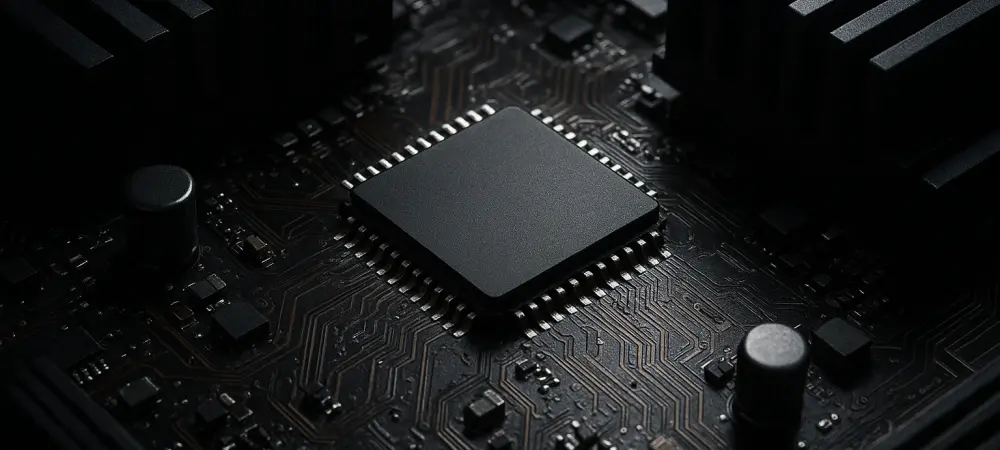
Hardware enthusiasts often face a significant price hike known as the phase tax when purchasing motherboards that prioritize high component counts over electrical efficiency. This phenomenon stems from the industry’s reliance on the Voltage Regulator Module (VRM) as a primary marketing metric, where a higher number of phases is equated with superior stability and overclocking potential. In reality, the VRM serves as a complex internal power conversion system, tasked with stepping down the 12V supply from the PSU to the roughly 1.3V required by a high-performance processor. Because modern CPUs consume vast amounts of energy, the cleanliness and precision of this delivery are paramount. Manufacturers exploit this necessity by plastering aggressive phase counts on retail packaging, often using clever semantic tricks to inflate these numbers. The resulting gap between a consumer’s expectation of technical sophistication and the actual electrical engineering under the heatsink creates a market environment where visual complexity often outweighs raw electrical performance.
The Mechanics of Phase Inflation and Teaming
The central intelligence of any VRM system resides in the Pulse Width Modulation (PWM) controller, a specialized chip that manages the timing and distribution of power across various channels. In an ideal engineering scenario, each phase is independent, receiving a unique interleaved signal from the controller to ensure a constant and smooth flow of energy to the processor. However, as modern CPU power demands have escalated, producing boards with twenty or more true, independent phases has become prohibitively expensive. To navigate this financial hurdle while still appealing to enthusiasts who shop by the numbers, many brands utilize doubler chips. While this physically doubles the number of chokes and MOSFETs on the board, allowing for a higher marketing number, the electrical logic remains tethered to the controller’s original, lower phase count.
In recent hardware cycles, the industry has shifted away from doublers toward a more direct method known as teaming or parallel power delivery. This configuration removes the intermediate doubler chip entirely, instead wiring two physical power stages directly to a single signal path originating from the PWM controller. From a technical standpoint, this approach can improve the transient response of the motherboard, allowing it to react more quickly to the sudden, sharp increases in current demand characteristic of modern multi-core processors. Despite these potential performance benefits, teaming is frequently used as a tool for marketing deception. Manufacturers will aggregate these physical components and advertise them as a high-phase-count system, such as a fourteen-phase design, even when it is electrically functioning as a seven-phase system. This creates a misleading narrative where quantity is emphasized over the actual sophistication of the power distribution logic.
Technical Audits: Decoding the Physical Layout
Navigating the landscape of motherboard specifications requires a willingness to perform a basic hardware audit that goes beyond the glossy images on the retail box. The most visible indicators of a power system are the chokes, which appear as small, square metallic cubes surrounding the CPU socket area. While counting these chokes provides an initial estimate of the physical power stages, it does not reveal the underlying architecture or the true number of phases. A more accurate assessment involves identifying the specific part number of the PWM controller, which is typically found near the upper edge of the PCB. By referencing the manufacturer’s technical datasheet for that specific controller, an enthusiast can determine the maximum number of true phases the chip is capable of managing. If a board claims twenty phases but uses a controller rated for only ten, it becomes clear that the design is employing doubling or teaming to reach that inflated figure for promotional purposes.
Understanding these discrepancies is essential for avoiding the phase tax, where consumers are often charged a premium for complexity that does not translate into better performance. The presence of numerous physical components can be an optical illusion designed to justify a higher price bracket, particularly in mid-range boards that attempt to mimic high-end aesthetics. When a motherboard utilizes a lower-tier controller paired with a high number of cheap power stages, the efficiency of the system often suffers compared to a more streamlined design using premium parts. The cost of adding extra chokes and capacitors is relatively low compared to the price of high-end PWM controllers, making it a profitable strategy for manufacturers to prioritize quantity. By focusing on the quality of the controller and the integration of the power stages, builders can identify which motherboards offer genuine engineering value and which are simply leveraging visual density to command an unjustified market premium.
Priority of Amperage Over Phase Count
The true measure of a motherboard’s power delivery capability lies not in the arbitrary count of phases, but in the total amperage it can reliably and efficiently provide to the processor. A true ten-phase VRM that utilizes high-quality 90-ampere Smart Power Stages (SPS) is objectively superior to a doubled sixteen-phase VRM that relies on cheaper 50-ampere components. Higher-quality stages incorporate advanced features like integrated current and temperature monitoring, which allow the system to maintain stability under extreme thermal conditions. These premium components generate less heat per unit of work, leading to improved longevity and more consistent voltage regulation during heavy workloads or long gaming sessions. This reality often conflicts with retail trends, where massive, elaborate heatsinks are used as a distraction to hide mediocre internal components. A well-engineered board with fewer, more capable phases will often outperform a crowded board that prioritizes marketing numbers.
The evolution of motherboard design demonstrated that relying on independent reviews and deep-dive technical breakdowns became the only reliable way to verify hardware performance. Consumers who looked beyond the branding discovered that electrical efficiency was more valuable than the sheer volume of components visible on the PCB. It was concluded that the industry shift toward teaming and doubling necessitated a more educated buyer who understood the relationship between the PWM controller and the power stages. Moving forward, the most effective strategy involved cross-referencing component part numbers with official technical documentation to ensure the VRM met specific power requirements. Builders prioritized boards that offered transparent specifications and high-amperage ratings rather than those that relied on misleading phase counts. This shift in perspective allowed enthusiasts to invest in hardware that provided tangible stability and efficiency, ensuring that their systems remained robust and reliable for years to come.