

The transition from a growing mid-sized operation to an enterprise-scale powerhouse often reveals a frustrating bottleneck within the digital infrastructure of the organization. Most distributors and manufacturers find that while their ERP systems, such as Microsoft Dynamics 365 Business Central, excel at recording transactions, they frequently struggle to provide the high-level analytical clarity required for complex decision-making. As product catalogs expand into thousands of SKUs and logistics networks span multiple geographic locations, the sheer volume of data often overwhelms standard reporting templates. This pressure leads to a reliance on manual workarounds where staff members spend hours each week exporting raw data into spreadsheets for cleaning and formatting. Such a process is not only labor-intensive but also introduces a significant margin for human error, resulting in reports that may be technically accurate but are delivered too late to influence critical daily operations. The disconnect between data generation and actionable insight creates a cycle of reactive management that can hinder long-term growth and competitive agility.
1. The Limitations: Why Traditional ERP Reporting Fails to Scale
The primary challenge in modern distribution environments is that standard ERP reporting tools were built to look backward at financial records rather than forward at operational trends. When a business experiences a surge in transaction density or adds multiple warehouse locations, the native reporting engine often lacks the processing power to aggregate this information in real time. Consequently, teams often find themselves trapped in a “spreadsheet cycle,” where the majority of their time is spent preparing data rather than analyzing it. This manual intervention creates a lag between the occurrence of a business event and its visibility to leadership. In a high-speed manufacturing environment, a delay of even twenty-four hours in identifying a production bottleneck or a supply chain disruption can result in significant financial losses. Furthermore, when data is manipulated in various independent spreadsheets, the organization loses its “single version of the truth,” as different departments may report conflicting numbers based on their specific filters or calculation methods.
Beyond the immediate loss of time, the reliance on manual reporting creates a fragile information ecosystem that is dependent on the specialized knowledge of a few key individuals. If the person responsible for the “master” spreadsheet is unavailable, the entire reporting pipeline often grinds to a halt, leaving decision-makers in the dark. This technical debt becomes increasingly expensive as the business tries to implement more advanced strategies, such as predictive inventory management or dynamic pricing. Traditional ERP reporting often lacks the flexibility to incorporate external data sources, such as market trends or third-party logistics updates, which are essential for a holistic view of the business. As these limitations become more pronounced, the risk of making strategic errors based on incomplete or outdated information grows. Distributors and manufacturers eventually reach a tipping point where the cost of maintaining inefficient reporting exceeds the investment required to modernize their entire data architecture.
2. The Value: Transforming Business Outcomes through Analytics Modernization
Modernizing the analytics environment involves shifting from a static reporting model to a dynamic data platform that leverages tools like Power BI and the Microsoft data cloud. This transition allows organizations to move away from the “export-and-adjust” mentality and toward a system where data refreshes automatically and metrics remain consistent across the enterprise. For a distributor like R.S. Hughes, the impact of such a shift was transformative for their managerial efficiency. By automating their reporting workflows and establishing a centralized data model, they successfully saved over 4,400 managerial hours annually. This recovery of time allowed their leadership to focus on strategic growth rather than the mechanical tasks of data entry. Over a three-year horizon, the projected savings of approximately $600,000 demonstrated that modernization is not just a technical upgrade but a profound financial optimization that pays for itself through increased productivity and better resource allocation.
The benefits of modernization extend beyond time savings to include direct reductions in software overhead and improved operational agility. Pacific Packaging Products provides a clear example of this efficiency, where a weekly reporting task that previously required six hours of manual labor was reduced to an instantaneous, automated process. By migrating away from restrictive legacy reporting tools and embracing a modern analytics stack, they also managed to lower their annual licensing expenses by roughly $18,000. This dual benefit of lower costs and higher speed illustrates why modernization is becoming a standard requirement for competitive manufacturers. When data is accessible in real time, teams can respond to market fluctuations or production issues as they happen, rather than reviewing them in a post-mortem report days later. The ability to trust the numbers without second-guessing the manual steps behind them creates a culture of data-driven confidence that permeates every level of the organization.
3. The Shift: Moving from Spreadsheets to Scalable Analytics
To achieve true scalability, organizations must dismantle the silos created by independent Excel workbooks and replace them with a centralized data warehouse or lakehouse architecture. This structural shift ensures that every department, from finance to the shop floor, is pulling from the same validated data set. In a modernized environment, core business metrics—such as gross margin, on-time delivery rates, or inventory turnover—are defined once within a semantic layer. This means that a “sales” figure in a marketing dashboard will always match the “sales” figure in a financial statement, eliminating the common corporate problem of conflicting reports. Automation plays a key role here, as scheduled data refreshes ensure that the information is always current without requiring human intervention. This move toward a shared, automated platform democratizes access to insights, allowing team members to explore data and discover trends without needing a degree in data science or deep technical expertise.
The transition to scalable analytics also changes the way teams interact with information, moving from a “push” model to a “pull” model. Instead of waiting for a weekly PDF report to be emailed, stakeholders can access interactive dashboards at any time to see the current status of their specific KPIs. This accessibility fosters a more proactive environment where potential issues are identified early in their development. For example, a warehouse manager can monitor real-time picking speeds against historical benchmarks and adjust staffing levels before a backlog occurs. By shifting the focus from the mechanics of report creation to the nuances of data interpretation, the organization can leverage its human capital more effectively. The ultimate goal is to create a resilient system that can handle an influx of new data points from IoT sensors, e-commerce platforms, or global supply chain trackers without requiring a corresponding increase in administrative headcount or manual oversight.
4. The Strategy: An Incremental Roadmap for Analytics Success
Implementing a comprehensive analytics strategy does not require a risky, all-at-once overhaul of the existing systems; instead, it is most effective when executed in manageable, incremental steps. The first phase involves identifying a single business goal or a specific operational area where reporting delays are currently causing the most friction, such as inventory visibility or cash flow management. By focusing on a narrow scope, the team can deliver a “quick win” that demonstrates the value of modernization to the rest of the company. Once this priority is established, the next step is to select a labor-intensive recurring report and replace its manual components with an automated Power BI dashboard. This immediate reduction in manual effort provides tangible proof of concept and frees up the personnel needed to support further expansion. This focused approach ensures that the project remains aligned with actual business needs rather than becoming an abstract IT exercise.
As the initiative gains momentum, the focus must shift toward unifying the underlying data structures to ensure long-term reliability and consistency across the enterprise. This involves establishing a common language for data, where every metric has a clear, documented definition and a single source of origin. This unification prevents the proliferation of redundant reports and ensures that as more departments gain access to the platform, the integrity of the information remains intact. Following this, the organization can broaden availability by moving from individual files to shared, cloud-based dashboards that encourage cross-departmental collaboration. Finally, the introduction of essential oversight and data governance standards ensures that the system remains organized as it grows. By defining who owns specific data sets and how changes to metrics are handled, the company builds a sustainable foundation that can support advanced analytics and future technological integrations for years to come.
5. The Vision: Achieving Live Operational Oversight on the Shop Floor
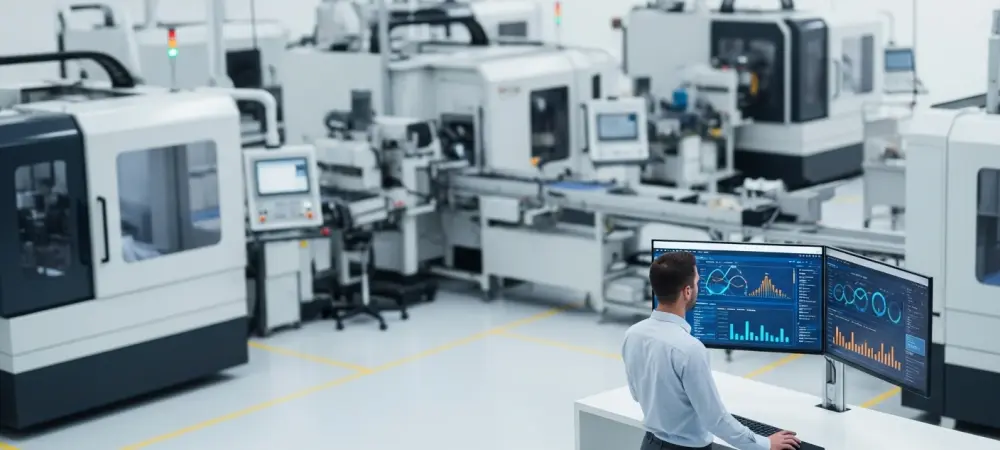
For manufacturers, the most significant advantage of modernized ERP reporting is the ability to achieve live oversight of production environments. By integrating real-time shop floor data directly with the analytical layer, managers can gain an immediate view of current manufacturing volumes as they fluctuate throughout a shift. This level of visibility allows for the monitoring of equipment efficiency in real time, enabling maintenance teams to intervene the moment a machine shows signs of suboptimal performance. Instead of waiting for an end-of-day summary, supervisors can identify emerging production hurdles or bottlenecks as they form, allowing for immediate reallocation of resources to maintain throughput. This real-time connection between the physical shop floor and the digital reporting environment transforms the ERP from a system of record into a dynamic tool for operational excellence and proactive problem-solving.
This live oversight also extends into the logistics and fulfillment aspects of the business, providing a comprehensive view of the entire order lifecycle. Managers can track shipment and order progress in real time without the need for manual follow-ups or constant phone calls to the warehouse. This transparency reduces the administrative burden on customer service teams, as they can provide accurate, up-to-the-minute status updates to clients directly from their dashboards. The integration of various data streams—from machine sensors to shipping carriers—creates a holistic digital twin of the operation. This allows leadership to simulate different scenarios, such as the impact of a material shortage or a sudden increase in demand, with a high degree of accuracy. The result is an operation that is not only more efficient but also more resilient, capable of pivoting quickly in response to the unpredictable challenges of the modern global marketplace.
6. The Outcome: Direct Impact on Efficiency and Resource Management
The culmination of a successful analytics modernization project is a significant and measurable increase in overall organizational efficiency. One of the most immediate impacts is the elimination of the information lag that often plagues traditional reporting methods; when data moves at the speed of the business, decisions are made based on the current reality rather than historical snapshots. This shift drastically reduces the occurrence of errors caused by manual data entry or outdated spreadsheet formulas, ensuring that the entire company operates on a foundation of verified information. By removing the need for human intervention in the data pipeline, the risk of “fat-finger” mistakes or inconsistent calculations is virtually eliminated. This increased accuracy builds trust in the data, which is essential for fostering a culture where every employee feels empowered to use insights to improve their specific area of responsibility.
In addition to improved accuracy, modernization enables much more sophisticated resource and time management across both the office and the production floor. By having a clear, real-time view of material usage and labor allocation, manufacturers can optimize their supply chains to minimize waste and reduce carrying costs. They can identify precisely where materials are being underutilized or where labor hours are being lost to inefficient processes. This level of detail allows for a more granular approach to cost control, where even small improvements can lead to significant cumulative savings over time. Furthermore, the recovery of thousands of managerial hours means that highly skilled employees can focus on innovation, product development, and customer relationships—the activities that actually drive revenue. The move toward modernized reporting is therefore not just about better technology; it is about creating a more streamlined, focused, and profitable business entity.
7. The Future: Strategic Evolution through Collaborative Data Models
As distributors and manufacturers look toward the coming years, the ability to turn data into a strategic asset will become the primary differentiator between market leaders and those who struggle to keep pace. The journey toward this level of maturity involves moving beyond the basic automation of reports and toward the development of a collaborative data model that supports complex, cross-functional initiatives. By partnering with specialized experts like JourneyTeam to implement Power BI and Microsoft data platforms, organizations can bypass the common pitfalls of DIY implementation and accelerate their time to value. These professional partnerships ensure that the technical architecture is built according to industry best practices, providing a scalable and secure environment that can grow alongside the business. The focus shifts from the technical struggle of gathering data to the strategic advantage of applying it to solve real-world business challenges.
The final step in this evolution is to establish a culture of continuous improvement where data is used to constantly refine every aspect of the operation. Leaders should look for ways to integrate advanced analytical capabilities, such as automated forecasting or anomaly detection, into their existing dashboards to stay ahead of market trends. By maintaining a clear roadmap and focusing on incremental, high-impact projects, organizations can ensure that their reporting capabilities never become a bottleneck for growth again. The objective is to reach a state where data is so deeply integrated into the workflow that it becomes an invisible but essential guide for every action taken. As the business landscape continues to evolve from 2026 to 2028 and beyond, those who have invested in a modern, scalable analytics foundation will be the ones best positioned to navigate uncertainty and capitalize on new opportunities with precision and confidence.