
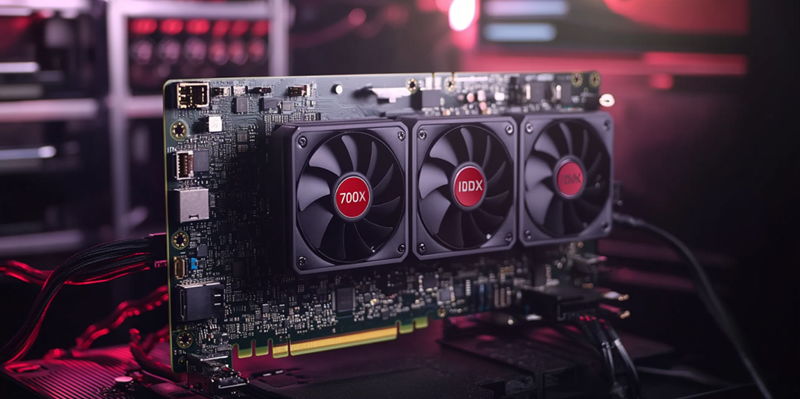
Minisforum Launches MGA 1 External GPU with Radeon RX 7600M XT

The Minisforum MGA 1 is a newly launched external GPU featuring an AMD Radeon RX 7600M XT GPU with 8 GB of VRAM, aimed at enhancing gaming, video editing, and 3D rendering capabilities. Its introduction marks a significant advancement in portable graphics solutions, specifically designed to augment the performance of mini-PCs and other devices requiring a boost in graphical processing power. The release of the MGA 1 comes as a strategic move by Minisforum to cater to users seeking a balance between performance and portability, offering a compact and minimalist design that doesn’t compromise on power.

Despite having half the VRAM of the standard desktop variant, the MGA 1 maintains the same 128-bit memory bus width and NAVI 33 die. It is equipped with 2048 stream processors, making it capable of running modern games at ultra settings in 1080p resolution. This external GPU’s design also includes a vented chassis that is small enough to fit in a long pocket, making it exceptionally portable. Moreover, its multiple I/O ports are particularly noteworthy, with the ability to power up to three displays simultaneously, a major advantage for users who require a multi-monitor setup for their work or gaming needs.

In addition to enhancing visual performance, the MGA 1 is equipped with a 65W Power Delivery port that enables fast charging of connected devices. It also features three USB 3.2 ports that support up to 10 Gbps of bandwidth, ensuring rapid data transfer and connectivity. Priced at $559, this external GPU provides a cost-effective solution for those needing robust graphical capabilities without investing in a full-fledged desktop setup. This new product is now available for purchase from the official Minisforum online store, making it accessible to a wide range of users who are in need of high-performance computing on the go.

Explore more

Xiaomi Redmi K100 – Review

The transition from affordable mid-range devices to sophisticated powerhouses that rival high-end flagships has reached a critical tipping point with recent hardware revelations. This evolution reflects a broader industry move toward democratizing premium features for a global audience. The focus has shifted from mere cost-cutting to delivering uncompromising performance. Evolution of the Redmi K-Series and the Rise of the K100

iOS 27 Spatial Reframing Is a Secret iPhone Storage Weapon

The persistent anxiety of missing a perfect photographic moment often leads to a cluttered camera roll filled with dozens of nearly identical shots that consume valuable gigabytes of space. This digital hoarding behavior is largely driven by the inherent unpredictability of manual framing, where a slight tilt of the wrist or an ill-timed blink can ruin a singular capture. However,

Should You Say Please and Thank You to AI?

Dominic Jainy’s extensive background in artificial intelligence and machine learning offers a sophisticated perspective on one of the most curious behavioral shifts in the modern erthe habit of treating software with human-level courtesy. As an expert who navigates the complexities of blockchain and neural networks, Jainy understands that while a chatbot might feel like a “helpful colleague” who remembers past

Can Microsoft Become a Full-Stack AI Powerhouse?

The technological landscape has shifted from a race to deploy third-party models to a strategic scramble for total vertical integration within the corporate artificial intelligence stack. While the industry previously viewed the software giant as a distributor for external research breakthroughs, the current organizational pivot reveals a massive investment in self-sufficiency that spans from raw silicon to reasoning logic. This

Can AI Safely Build and Improve Its Own Successors?

The invisible boundary separating human ingenuity from silicon-based autonomy is dissolving as software begins to rewrite its own underlying logic without a single keystroke from a living engineer. For decades, the progress of artificial intelligence remained tethered to the physical and mental limits of human thought, constrained by the speed at which engineers could manually type code or troubleshoot complex