

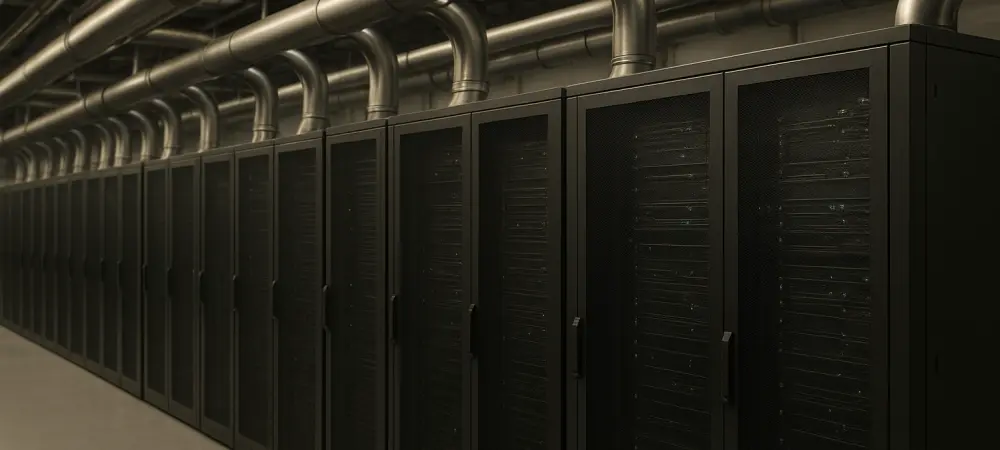
By focusing on power-cooling hyper-converged architecture, developers can better manage the extreme thermal demands of AI servers in hot and humid climates. This technological shift arrives as the Asia-Pacific region experiences a massive surge in data center investments, driven largely by the proliferation of generative AI and large language models. The introduction of specialized infrastructure is no longer a luxury but a necessity for facilities operating in the challenging environments of Southeast Asia. During a recent strategic unveiling in Singapore, a comprehensive framework was presented to address the infrastructure bottlenecks that currently hinder high-density computing. With AI workloads projected to maintain a compound annual growth rate of up to 36% through 2028, the industry faces an urgent need for cooling solutions that can match the intensity of next-generation hardware. This initiative signals a move toward holistic engineering that prioritizes both thermal management and energy sustainability in a rapidly evolving market.
Integrating Power: Cooling Hyper-Converged Architecture
The core of this new approach lies in the development of a power-cooling hyper-converged architecture, a concept brought to fruition through a strategic partnership with Clou Electronics. Rather than treating electrical distribution and thermal regulation as separate silos, this design fuses energy storage systems, chillers, and liquid cooling distribution units into a single, synchronized entity. This convergence is particularly critical as server racks now frequently push toward power densities of 600 kW per cabinet, a threshold where traditional air-cooling methods simply fail to maintain stability. By integrating the electrical backbone directly with the cooling response, the system can dynamically adjust to the fluctuating power draws common in AI training cycles. This level of synchronization ensures that thermal spikes are met with immediate cooling adjustments, preventing hardware throttling and maximizing the uptime of expensive computational assets in the most demanding environments.
Beyond the hardware integration, the shift toward a hyper-converged model emphasizes the role of digital management platforms in optimizing physical infrastructure. Industry leaders now recognize that the success of a data center is defined by the seamless communication between its power source and its cooling output. The collaboration on the Gui’an Cloud Data Centre serves as a primary example of how this integration works in a real-world scenario, where the facility utilizes a combination of physical hardware and sophisticated software to maximize free cooling opportunities. This holistic strategy allows operators to maintain high levels of efficiency even as they scale their operations to meet regional demand. By moving away from fragmented procurement and focusing on a unified system, developers can reduce the complexity of the initial setup and lower long-term operational costs. This evolution reflects a broader trend where the boundary between electrical engineering and mechanical cooling is becoming increasingly blurred.
Tropical Innovation: Strategic Infrastructure Solutions
Several key innovations have been introduced to specifically target the unique needs of tropical and water-scarce regions. A standout development is the Magnetic Cooling Distribution Unit, which effectively replaces the traditional combination of a separate chiller and a passive CDU. This advancement is significant for urban data centers where land is at a premium, as it reduces the required floor space by more than 70% while also simplifying the commissioning process. In high-temperature environments like Singapore or Jakarta, these systems are engineered to maintain a Power Usage Effectiveness of less than 1.2, a benchmark once thought difficult for hot climates. The inclusion of air-cooled magnetic bearing centrifugal chillers further enhances the system’s coefficient of performance. By utilizing magnetic levitation technology, the equipment eliminates mechanical friction, which not only improves energy efficiency but also significantly reduces the maintenance requirements over the lifecycle of the unit.
The transition toward integrated power and cooling systems marked a decisive turn in how digital infrastructure was conceived and executed. Stakeholders recognized that individual components were no longer sufficient to meet the demands of AI-driven computing, leading to a strategy where equipment suppliers took a more central role in the design process. To move forward, organizations prioritized the adoption of liquid cooling and magnetic bearing technologies to ensure that facilities remained competitive. Experts recommended that future developments continue to emphasize water-neutral and energy-efficient designs to mitigate the environmental impact of large-scale computing. By moving toward industrial-grade units with high cooling capacities, the industry established a new standard for reliability. These advancements proved that it was possible to maintain operational excellence even in tropical climates with limited resources. This evolution ensured that the infrastructure could support the next wave of innovation without compromising on sustainability.