

Imagine a world where businesses drown in data, struggling to extract meaningful insights from endless spreadsheets and disconnected systems, leading to delayed decisions that cost millions annually. In today’s fast-paced corporate landscape, the ability to transform raw information into actionable intelligence is no longer a luxury but a necessity. Microsoft Power BI emerges as a beacon in this chaos, offering a robust business intelligence tool designed to empower organizations with real-time analytics and intuitive visualizations. This review dives deep into the capabilities of Power BI, exploring its key features, performance across various applications, and its role in shaping data-driven strategies for modern enterprises.
Core Essence of Power BI
At its heart, Power BI stands as a leading business intelligence platform crafted by Microsoft to convert complex datasets into clear, actionable insights. Integrated seamlessly with the Microsoft ecosystem, including Azure and Office 365, it leverages a cloud-based architecture to ensure scalability and accessibility. Its user-friendly interface democratizes data analysis, enabling even non-technical users to create compelling reports with minimal training. In an era where data saturation challenges every industry, Power BI provides a critical solution by simplifying the process of data interpretation and fostering informed decision-making.
The significance of this tool lies in its adaptability to diverse business environments. Unlike traditional BI systems that often require extensive IT support, Power BI offers a self-service model, allowing teams to build custom dashboards without constant reliance on technical experts. This flexibility positions it as an indispensable asset for companies aiming to stay competitive in a data-centric world, where quick, evidence-based decisions often determine market success.
Defining Features and Performance
Real-Time Visualization and Dynamic Dashboards
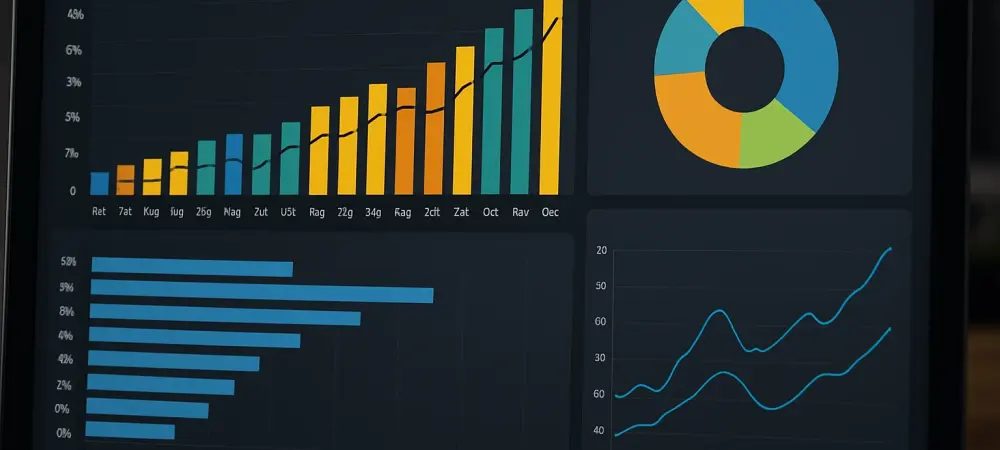
One of Power BI’s standout strengths is its ability to render complex data into visually intuitive, real-time dashboards. These dynamic displays automatically update as new data streams in, eliminating the need for manual refreshes and reducing the risk of outdated insights. Customization options abound, enabling users to tailor visuals to specific departmental needs, whether it’s tracking sales trends or monitoring operational KPIs, thus enhancing cross-functional decision-making.
Beyond mere aesthetics, this feature significantly boosts efficiency by presenting data in digestible formats like charts and graphs at a glance. Departments can pinpoint anomalies or opportunities instantly, such as a sudden dip in customer engagement, and respond promptly. The automation of these updates saves countless hours previously spent on manual data compilation, marking a leap forward in operational agility.
Collaboration and Seamless Sharing
Power BI redefines teamwork through its robust collaboration tools, allowing users to share live reports effortlessly across platforms like Microsoft Teams. This integration ensures that stakeholders access the same up-to-date information simultaneously, eradicating issues of version control that plague traditional reporting methods. Role-based access controls further enhance security, ensuring sensitive data remains protected while still accessible to authorized personnel.
The impact on organizational efficiency cannot be overstated. Teams scattered across geographies can align on strategies using a single source of truth, minimizing miscommunication and delays. By embedding reports directly into workflows, Power BI fosters a culture of transparency and collective problem-solving, making it a cornerstone for collaborative success in modern businesses.
Alignment with Business Intelligence Trends
Power BI aligns closely with the ongoing wave of digital transformation sweeping through industries, where the demand for real-time analytics continues to surge. Companies increasingly seek tools that provide instant insights to keep pace with rapidly changing market dynamics, and Power BI meets this need with its responsive data processing capabilities. This alignment positions it as a leader in the shift toward agile, data-informed operations.
Another prominent trend is the democratization of data access, moving away from siloed, expert-only systems to platforms that empower all employees. Power BI supports this by offering intuitive tools that allow non-analysts to engage with data meaningfully, breaking down barriers and fostering a data-literate workforce. Its influence on modern business practices reflects a broader industry push toward inclusivity in analytics, ensuring that insights drive decisions at every level.
Versatile Applications Across Business Functions
Power BI’s adaptability shines through its deployment across various organizational departments, each benefiting uniquely from its analytical prowess. In finance, teams utilize it for detailed budget analysis, creating dashboards that compare actuals against forecasts to identify variances swiftly. This capability transforms financial planning into a proactive, rather than reactive, process, ensuring better resource allocation.
In human resources, Power BI aids in uncovering workforce trends, such as patterns in employee turnover or performance metrics, enabling strategic talent management. Sales departments leverage it to monitor real-time performance indicators and customer behaviors, refining strategies with precision. Similarly, marketing teams connect campaign efforts to measurable outcomes like lead conversions, while procurement and logistics use it to optimize supplier interactions and inventory flows through data-driven insights, showcasing its broad utility.
Challenges in Adoption and Limitations
Despite its strengths, adopting Power BI is not without hurdles. New users often face a learning curve, particularly those unfamiliar with data visualization concepts, which can slow initial implementation. While training resources are available, the time investment required can be a barrier for smaller teams with limited bandwidth.
Integration with non-Microsoft systems also poses challenges, as compatibility issues may arise, requiring additional customization or third-party tools. For organizations handling extremely large datasets, scalability concerns occasionally surface, with performance lags reported under heavy loads. Solutions like Power BI Hub aim to address cost and IT dependency issues by offering cloud-based, cost-effective reporting options, though continuous improvements are necessary to fully mitigate these limitations.
Future Trajectory and Innovations
Looking ahead, Power BI is poised for further evolution with anticipated enhancements that promise to deepen its impact on business intelligence. Integration with emerging technologies such as artificial intelligence and machine learning is expected to introduce predictive analytics, enabling businesses to anticipate trends rather than merely react to them. Such advancements could redefine strategic planning over the coming years.
Additionally, ongoing updates are likely to focus on enhancing user accessibility and addressing current integration challenges, ensuring broader adoption across diverse tech environments. As data continues to shape the digital landscape, Power BI’s role in driving innovative, data-centric strategies will likely expand, solidifying its position as a transformative force in analytics from now through at least 2027.
Final Verdict and Next Steps
Reflecting on this evaluation, Power BI proves to be a game-changer in the realm of business intelligence, offering unparalleled real-time visualization and collaboration tools that empower organizations to navigate data complexity with ease. Its adaptability across departments underscores its value, despite challenges like learning curves and integration hiccups that occasionally temper its rollout. For businesses considering adoption, the next step involves assessing internal data needs and investing in targeted training to smooth the transition for staff. Exploring Power BI Hub as a cost-effective entry point offers a practical solution for smaller entities or those wary of IT overheads. Ultimately, embracing this tool positions companies to not only keep pace with data demands but to lead with foresight in an increasingly competitive market.