

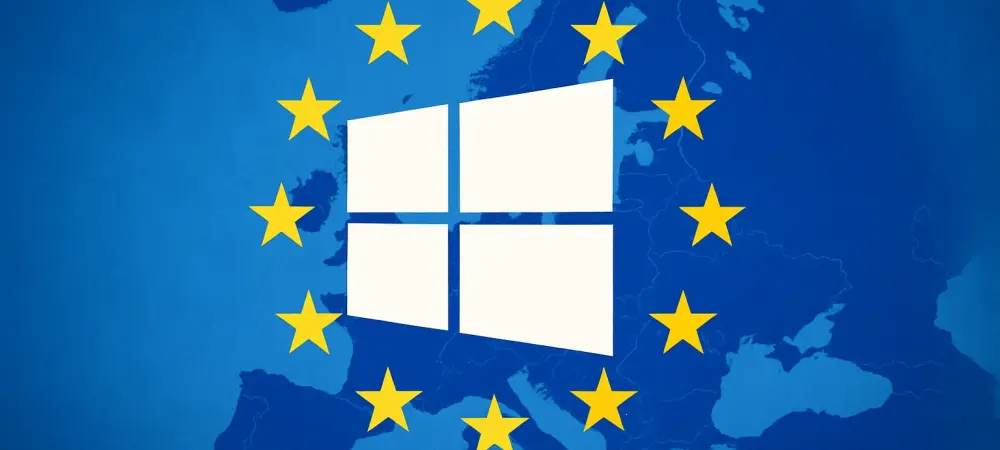
Imagine a world where updating your operating system comes with different rules depending on where you live, and for Windows 10 users, this scenario becomes reality in 2025. Microsoft has rolled out a free year of extended security updates (ESU) beyond the End of Life (EOL) date in October, but with a significant catch—only users in the European Economic Area (EEA) get the most flexible terms. This regional disparity has sparked heated debates among tech enthusiasts, privacy advocates, and everyday users alike. This roundup dives into diverse opinions and insights from various industry sources and commentators, exploring why this policy shift exists, how it impacts users globally, and what it reveals about the intersection of technology and regulation.
Unpacking the Policy Shift: What’s Happening in Europe?
Overview of the Europe-Only Offer
Microsoft’s decision to offer a free year of ESU for Windows 10, extending support until October 2026, initially came with strings attached for most users worldwide—namely, the need to use a Microsoft Account and sync PC settings to OneDrive. However, for EEA users, the company has waived these requirements, allowing direct access to updates via the Windows Update panel without forced cloud integration. This distinction has caught the attention of tech communities, raising questions about why such a benefit is geographically limited.
Reports from multiple tech outlets highlight that Microsoft’s move aligns with what the company describes as “local expectations” in Europe. Commentators suggest this reflects a broader strategy to comply with regional norms around data privacy, setting a precedent that could influence future policies. The relaxed conditions for EEA users are seen as a win for consumer choice in that region, though they also spotlight a divide in how global users experience the same product.
Regulatory Influence: The Digital Markets Act at Play
A recurring theme across discussions is the role of Europe’s Digital Markets Act (DMA), a stringent regulation pushing tech giants toward greater user control and privacy. Industry observers note that the DMA likely compelled Microsoft to offer these concessions, such as removing mandatory OneDrive syncing and even allowing users to uninstall apps like Edge without persistent prompts. This regulatory pressure is viewed as a driving force behind the Europe-only perks.
Some tech policy analysts argue that while the DMA benefits EEA users by enforcing flexibility, it also creates an uneven playing field. They point out that users in other regions lack similar legal protections, leaving them bound by more restrictive terms. This perspective fuels a narrative that regulations can both empower and fragment user experiences depending on geography.
Global Reactions: Disparity and Discontent
Frustration Outside the EEA
Non-EEA users, particularly in regions without comparable privacy laws, express significant dissatisfaction with Microsoft’s two-tier system. Online forums and tech blogs reveal a consensus of frustration over the requirement to sync data with OneDrive or pay for ESU access, options seen as less appealing than the free, no-strings offer in Europe. This sentiment underscores a perceived inequity in how Microsoft prioritizes its customer base.
Commentators from various platforms suggest that this disparity risks alienating a substantial portion of Microsoft’s global audience. Many argue that if privacy and ease of access are deemed essential in one region, they should be universal priorities. The growing call for standardized policies reflects a desire for fairness, with some users questioning why their location should dictate the quality of their tech experience.
Debating the One-Year Support Window
Another point of contention across tech circles is the duration of the free ESU—limited to just one year. Given Windows 11’s strict hardware requirements, which prevent many older devices from upgrading, numerous consumer advocates argue that a single year is insufficient. They push for at least an extension to 2027, emphasizing the need for longer support to bridge the transition gap for users with incompatible systems.
Tech industry watchers offer mixed views on this issue. Some believe Microsoft is balancing business incentives, like nudging users toward newer products, with user needs, while others see the short timeframe as a missed opportunity to build goodwill. This debate highlights a tension between corporate strategy and consumer expectations, with no clear consensus on an ideal solution.
Diverse Opinions: Should Microsoft Go Global with This Policy?
Arguments for a Unified Approach
A significant portion of tech commentators and user groups advocate for Microsoft to extend the EEA’s relaxed ESU terms worldwide. They argue that a unified policy would demonstrate a commitment to fairness and privacy as core values, rather than as concessions to specific regulations. This viewpoint is particularly strong among privacy-focused communities who see regional disparities as undermining trust in the company.
Supporters of this stance also note that globalizing the no-strings-attached offer could simplify Microsoft’s support framework, reducing confusion over varying rules. They suggest that aligning policies across regions might even preempt future regulatory challenges elsewhere, positioning Microsoft as a proactive leader in user-centric tech. This perspective prioritizes consistency as a cornerstone of customer satisfaction.
Counterarguments: Regional Realities and Business Needs
On the other hand, some industry analysts defend Microsoft’s regionally tailored approach, citing the practicalities of navigating diverse legal landscapes. They argue that complying with the DMA in Europe is a necessity, not a choice, and extending identical benefits globally could strain resources or conflict with other regional norms. This view frames the disparity as an inevitable outcome of a fragmented regulatory environment.
Additionally, certain business-focused commentators emphasize that Microsoft’s strategy likely aims to encourage adoption of Windows 11 and cloud services like OneDrive outside the EEA. They suggest that offering free, unrestricted ESU everywhere might undercut these goals, impacting long-term revenue streams. While acknowledging user frustrations, this opinion underscores the complexity of balancing corporate objectives with customer demands.
Key Takeaways from the Discussion
Reflecting on the varied insights, it’s evident that Microsoft’s decision to limit free, flexible Windows 10 updates to the EEA stirred a complex mix of admiration and critique back in 2025. The influence of the Digital Markets Act stood out as a pivotal factor, showcasing how regional laws can reshape tech policies for the better in specific areas. Yet, the resulting disparity left non-EEA users feeling sidelined, sparking a broader conversation about equity in digital experiences.
Looking back, the debates also illuminated the challenge of a one-year support window, with many advocating for extended timelines to ease transitions. For those navigating similar issues today, consider evaluating personal update options based on hardware compatibility and regional policies. Exploring community forums for user-driven workarounds or staying updated on evolving regulations could provide valuable guidance. As tech landscapes continue to shift, pushing for universal standards in privacy and support remains a critical step toward a more equitable digital future.