

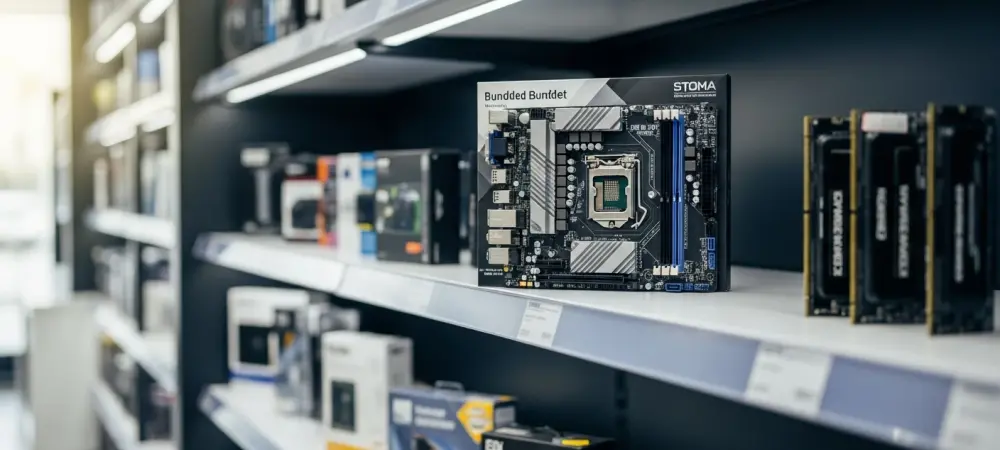
The prohibitively high cost of DDR5 RAM has remained a persistent obstacle for enthusiasts and first-time builders aiming to assemble a PC with the latest generation of processors, forcing difficult compromises between performance and budget. This pricing dilemma has often made adopting new platforms a financially daunting prospect. In a direct response to this market challenge, a major retailer has introduced a series of aggressive component bundles designed to make cutting-edge technology more accessible. A standout example of this initiative is a package featuring the new AMD Ryzen 7 9850X3D processor, an ASUS X870-P Prime WiFi motherboard, and a 32 GB kit of Crucial Pro DDR5-6000 memory, all for a combined price of $699. Considering that these components would total nearly $1100 if purchased individually, with the 32 GB DDR5 kit alone accounting for around $400, the savings are substantial. This approach effectively removes the single greatest financial barrier to entry for many builders.
A Market-Wide Strategy for PC Builders
This strategic bundling extends far beyond a single promotional offer, representing a comprehensive effort to address various segments of the do-it-yourself PC market. The promotions are not limited to high-end configurations; they cater to a wide spectrum of needs and financial plans. For those on a tighter budget, an entry-level combination centered around the AMD Ryzen 5 7600X processor starts at a highly competitive $349. Conversely, enthusiasts seeking maximum performance can opt for premium bundles that include the flagship Ryzen 9 9950X3D CPU paired with a top-tier X870E motherboard, with prices reaching up to $1199. Importantly, these cost-saving measures are platform-agnostic, with similar deals available for the latest Intel processors. By packaging the core trifecta of a CPU, motherboard, and RAM, this strategy not only saves customers a significant amount of money but also simplifies the building process. The financial flexibility gained allows builders to allocate more of their budget toward other critical components, such as a more powerful GPU, enhanced CPU cooling, or faster storage, resulting in a more balanced and capable final system.
A Landmark Shift in Component Accessibility
This bundling initiative represented a pivotal moment for the DIY PC community, fundamentally altering the economic landscape for building with new technology. By directly confronting the high cost of essential components like DDR5 memory, the strategy effectively democratized access to the latest processor platforms from both AMD and Intel. The move relieved a major financial pressure point for consumers, which allowed for a broader and quicker adoption of next-generation hardware than would have otherwise been possible. This approach did more than just offer a temporary discount; it established a new precedent for how core components could be marketed. It demonstrated a successful model that prioritized consumer accessibility, which in turn fostered significant goodwill and shifted market expectations. The long-term impact of this strategy was seen in how it empowered builders to construct more powerful and well-rounded systems without prohibitive upfront costs, ultimately invigorating the entire PC building ecosystem.