

Quarter after quarter, leaders reported more pilots, bigger AI budgets, and fresh training programs while outcomes barely moved because the wave itself had changed shape and speed, turning yesterday’s playbook into dead weight. The real divide was not between bold and cautious firms; it was between those that kept paddling harder and those that switched methods. Like tow-in surfing, the shift was elemental: new equipment, new techniques, and new disciplines that translated overwhelming force into controllable speed. In enterprise terms, the move was to replace sequential pilots and slow change management with organizational flow—a living capability to sense, evaluate, and act on frontier advances continuously and in parallel. This approach reframed ambition as throughput: how many signals were scanned this month, how many time-boxed runs cleared decision thresholds, and how quickly winning patterns rolled into redesigned services and products.
The Wave Changed, Not Just the Speed
The comforting idea of a “capability overhang” suggested that a bigger bucket—more spend, more specialists, more training—would eventually catch the overflow. That metaphor misled because it treated the problem as linear, as if the river just ran faster. The operating environment changed category. Annual planning and sequential approvals assumed slow-moving technology, high transaction costs for experiments, and scarce access to expertise. Those assumptions no longer held. With high-capability models and open tooling readily available, the real constraint shifted to organizational metabolism: the rate at which a company could ingest new possibilities, test them against live objectives, and make directional calls. Clinging to linear cadences produced false negatives, where promising advances died in queues rather than on evidence.
This categorical shift showed up in broken rhythms across functions. Strategy teams drafted three-year roadmaps only to watch frontier models render key estimates obsolete within weeks. Procurement processes optimized to squeeze unit costs locked buyers into stale vendors while top-performing models rotated in and out of leadership. Risk committees, built for quarterly gates, could not adjudicate updates that landed mid-sprint yet materially changed expected outcomes. Even talent models lagged: job profiles and onboarding pipelines presumed stable toolchains, but practitioners now cycled through frameworks and APIs at a monthly beat. The result was an illusion of discipline masking structural delay. Firms that updated the paradigm—treating speed as an input variable, not noise—gained clarity: when the medium changes, governance must specify “how to change” as much as “what to change.”
Method Beats Effort
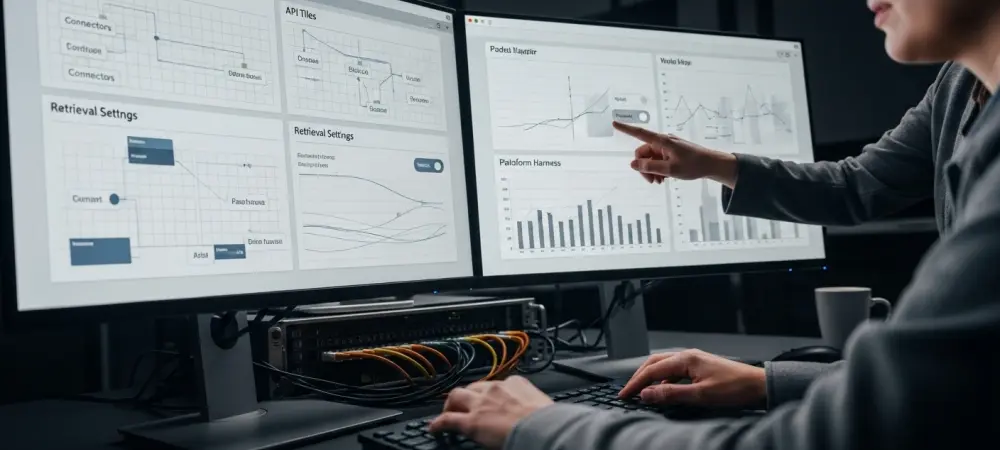
Tow-in did not make paddling stronger; it made paddling irrelevant for giant waves by replacing the constraint set. The enterprise parallel was direct. Rewriting planning from annual to rolling portfolios dissolved the bottleneck of big-bet approvals. Standardized evaluation harnesses, wired to real tasks and guardrails, turned model swaps from procurement events into runtime decisions. Delivery shifted from stage gates to short, evidence-led increments that could graduate, pivot, or sunset without ceremony. Risk moved from ex-ante vetoes to continuous controls—prompt logging, red-teaming schedules, and automated policy checks that ran at the same speed as iteration. The method, not the manpower, set the ceiling.
Concrete implementations made the point sharper. A global insurer refit its intake and triage process by binding claim classification to an internal benchmark suite that auto-scored accuracy, latency, and redaction quality across candidate models weekly; the best performer shipped to a shadow lane in days, then graduated once loss ratios improved in matched cohorts. A retail bank turned legal review into a service with contract templating, clause extraction, and risk scoring behind a single API; procurement plugged into the service rather than selecting standalone tools, cutting cycle times from months to weeks. None of this required heroics. It required a blueprint that made previous constraints—scarce specialists, tool sprawl, slow purchasing—largely irrelevant.
Speed and Cadence as Structural Facts
Compressed release cycles made the case impossible to ignore. GPT-5.5 followed 5.4 by roughly six weeks with accuracy and reasoning jumps that blurred one launch into the next, and Greg Brockman remarked that releases were becoming hard to distinguish in isolation. These intervals were shorter than standard cycles for strategy refreshes, vendor onboarding, or policy updates. Treating that pace as an anomaly invited compounding drag; treating it as a structural fact unlocked design space. The question changed from “Can budget support a 12-month pilot?” to “Can the system evaluate and adopt a clearly superior model within a fortnight without breaking risk posture?”
This cadence pressured every connective tissue in the enterprise. Finance teams had to differentiate between capacity funding for the platform and experiment-level OPEX that rose and fell weekly. Security leaders needed dynamic model registries with attestations, eval results, and kill-switches, not static vendor lists. Engineering organizations benefited from neutral abstractions—tooling that let practitioners switch among APIs, vector stores, and orchestration layers without rewriting end-to-end flows. Even branding and customer support adapted, drafting disclosure language and appeal paths for model-assisted decisions that might change behavior mid-quarter. The firms that baked cadence into their structures reduced context-switching costs and turned surprise into routine throughput rather than a recurring crisis.
Organizational Flow as the Decisive Advantage
Flow, properly defined, was not a motivational slogan; it was an operating condition with measurable throughput. Continuous scanning harvested updates from vendors and open ecosystems, then routed candidates into standing evaluation tracks aligned to real KPIs and risk thresholds. Parallel, time-boxed explorations—two to four weeks—ran across markets and functions, sharing artifacts in a common workspace. Decisions were criteria-driven: a model or method graduated when its deltas on accuracy, cost, or cycle time cleared pre-set bars with confidence. Feedback spread broadly to expose cross-domain signals fast: a compliance pattern found in one geography could inform a marketing filter elsewhere within days.
Several organizations made the pattern explicit. The Bank of New York ran side-by-side tests of GPT-5.5 and competitor models on accuracy-critical tasks in reconciliation and document processing; once evals crossed specific thresholds, teams greenlit workflow redesign rather than small automations. The flow engine mattered as much as the models: evaluation pipelines, data governance hooks, and a shared results ledger reduced handoffs and debate time. In manufacturing, 3M redirected roughly a third of its $3.5 billion R&D budget into AI research and simulation tools, using design-space exploration to compress lab cycles. The company reported 64 new products in a quarter—about a 70% year-over-year lift—and targeted more than 1,000 launches by 2027. That volume made sense only with high organizational metabolism, where insights traveled faster than org charts.
Redesign Over Optimization
Early movers did not stop at automating repetitive steps; they reframed services and operating models where new accuracy or reasoning levels changed what was possible. In financial services, threshold-crossing accuracy allowed straight-through processing for complex document sets, with exception handling redesigned around model-aware triage instead of manual queues. Advisory products shifted from static reports to interactive, model-assisted narratives that updated with market moves in near-real time. On the ops side, control frameworks became active systems: automated red-teams probed prompts and outputs on schedules, while policy engines governed tool access dynamically based on task risk and user role.
In industry and science-heavy domains, simulation and generative design redrew the map. 3M’s investment channeled model-driven materials discovery, parameter sweeps, and virtual testing into a single workflow, shrinking the time from concept to candidate. Aerospace and defense prototypes benefited as cross-functional teams explored multiple architectures in parallel, sharing intermediate results through a common representation layer that kept data lineage and model provenance attached. The payoff was not just speed. Parallel exploration uncovered non-obvious connections—an adhesive property informing packaging, a compliance tweak informing an ad review classifier—that single-lane pilots would have missed. Redesign, not tuning, created these second-order gains.
Operating Implications for Leaders
Leaders who caught up treated operating rhythm as product. Rolling priorities replaced annual offsites, with a monthly window to add, drop, or resize explorations based on eval results and portfolio balance. Lightweight approvals authorized teams to run small, reversible tests under pre-agreed controls, cutting the queue for legal and risk by bundling common patterns. Platform teams offered stable interfaces—prompt management, retrieval, eval harnesses—so application squads swapped models without deep rewrites. Finance separated platform capacity from experiment OPEX, enabling rapid iteration without surprise overruns. Talent moves focused on integrators—engineers and PMs fluent in models, data, and governance—who turned signals into shipped outcomes.
The near-term path for those still behind had been concrete and actionable. The immediate moves that positioned enterprises to catch the wave were simple to stage: stand up a baseline eval harness mapped to three or four high-value tasks; launch a six-to-eight-week portfolio of parallel, time-boxed experiments across two functions; institute a biweekly decision forum with explicit graduate/sunset criteria; and wire outputs into a shared knowledge base with templated artifacts. Procurement templates, red-team schedules, and disclosure language were prepared in advance, so adoption did not stall on first contact with governance. By treating method as the product—codified, teachable, and fast—leaders converted pace from a threat into an asset and were set up to tow in rather than paddle harder.