

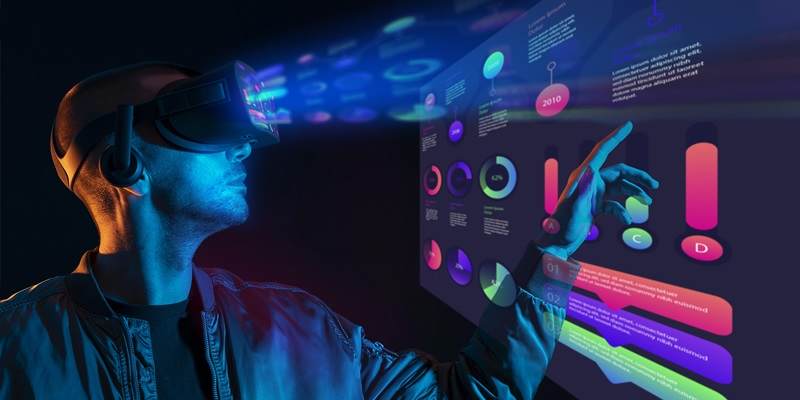
The concept of the metaverse, a virtual universe where physical and digital realities merge, has increasingly gained attention in recent years. It offers the potential for a new era of immersive experiences, revolutionizing the way we interact with technology and each other. However, to truly understand the metaverse and its impact, we must discard the idea of it being solely a virtual reality (VR) concept. Instead, it’s about exploring new interactions between the physical and digital worlds, creating a seamless blend of both.
The Growing Metaverse Economy
Experts predict that the metaverse economy is set to thrive, reaching a staggering worth of $400 billion by 2030. Furthermore, its impact could surpass $5 trillion by the end of this decade, highlighting the immense opportunities and potential it holds. This growth indicates a shift towards a more integrated and connected world, where people will explore digital environments and engage in virtual experiences on a scale never seen before.
Integration of the Metaverse with the Physical World
Looking ahead, the metaverse will increasingly become a part of the physical world through technologies like augmented reality (AR) and extended reality (XR). AR and XR technologies bridge the gap between physical and digital experiences, overlaying digital content onto the real world. This integration presents exciting opportunities for the metaverse to enhance and transform various aspects of our lives, from entertainment and gaming to education and professional development.
Focus on the Physical World
While the metaverse is often associated with virtual environments, its true potential lies in the physical world. According to industry expert Alex Resnick, the metaverse’s biggest opportunity lies in the physical realm rather than the digital one. This means applying metaverse technology to real-world settings to improve productivity, streamline processes, and enhance overall experiences.
Opportunities in Work and Learning
One area where the metaverse can have a significant impact is in work and learning environments. Augmented work, learning, and development have already started making waves, with concepts like virtual offices and collaborative digital onboarding. Virtual offices allow individuals to interact and collaborate in a shared digital space, enabling remote work and fostering teamwork across distances. Digital onboarding in the metaverse provides immersive training experiences and enables new employees to understand and adapt to their roles effectively.
Potential in The Industrial Setting
The metaverse also holds tremendous potential in the industrial domain, particularly in designing, building, and optimizing manufacturing systems. In an industrial setting, workers can utilize spatial data and digital overlays to fine-tune production flows and run simulations of multiple scenarios, leading to improved operations and efficiency. The metaverse becomes a powerful tool for industrial engineers and plant managers, enabling them to optimize processes and make informed decisions based on virtual simulations.
Challenges and Considerations
Despite the promise and potential of the metaverse, there are several challenges to overcome. The lack of advanced VR and spatial computing technologies poses a significant hurdle. More comfortable and accessible headsets and displays are needed to enhance the user’s experience and encourage widespread adoption. Additionally, social buy-in is crucial. Acceptance of metaverse technologies will depend on the availability of the right hardware that people are willing to wear, as well as the demonstration of tangible benefits and use cases.
Reimagining Processes and Problem States
To fully harness the power of the metaverse, organizations must reimagine processes and problem states. It’s not enough to replicate traditional ways of doing things in a virtual environment. Instead, the metaverse offers an opportunity to reinvent workflows, embrace generational artificial intelligence (gen AI), and leverage other emerging technologies. By embracing this mindset, organizations can maximize the potential of the metaverse and create innovative solutions that drive growth and success.
The metaverse represents a transformative force that is reshaping the way we interact with technology and the world around us. Its convergence of the physical and digital worlds offers limitless opportunities for growth and development. By integrating the metaverse with the physical realm through AR and XR technologies, leveraging it in work and learning environments, and exploring its potential in industrial settings, we can unlock a world of possibilities. Embracing the metaverse calls for a mindset shift, reimagining processes, and problem states to fully harness its capabilities. The future of the metaverse is not confined to virtual realms but lies in its integration into our physical lives, creating a harmonious synergy between the two.