

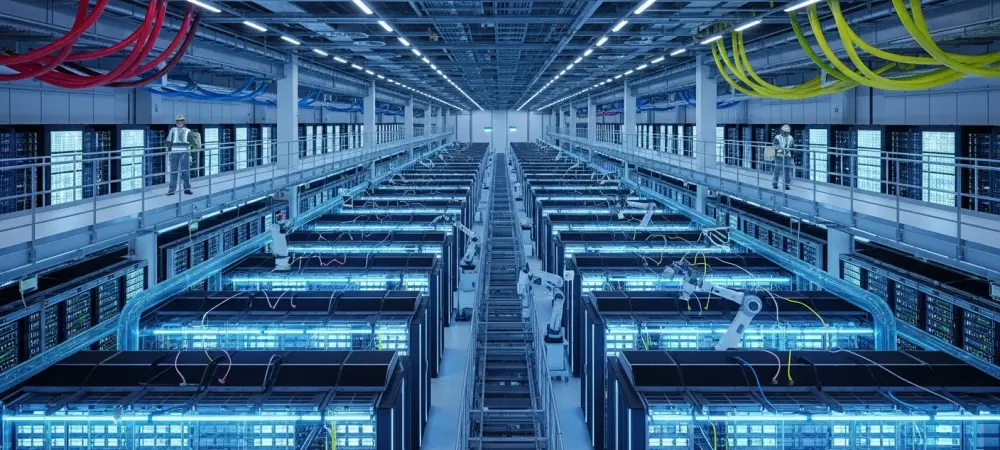
The radical transformation of Meta from a social media conglomerate into a massive provider of high-performance artificial intelligence infrastructure represents one of the most significant shifts in the history of Silicon Valley capital allocation. This strategic pivot signals a departure from the traditional model of social networking toward a future defined by raw compute power and algorithmic sophistication. By reallocating billions of dollars toward high-end silicon and specialized data center design, the organization is positioning itself not just as a consumer of technology, but as a foundational architect of the next digital era. This transition is driven by an aggressive commitment to outpace competitors in the race for specialized hardware, reflecting a broader industry trend where the ownership of physical infrastructure is as critical as the software that runs upon it.
The infrastructure imperative is becoming increasingly clear as enterprises around the globe seek alternatives to the traditional cloud hyperscalers for their massive generative workloads. As the demand for specialized AI training and inference grows, the market is beginning to embrace the concept of the neocloud, a dedicated environment optimized specifically for the unique requirements of large language models and neural networks. Meta’s entry into this space offers a compelling narrative for organizations that find legacy cloud environments too generalized or prohibitively expensive for cutting-edge development. Consequently, understanding the nuances of this transition is essential for any business leader navigating the complex intersection of hardware availability and machine learning scalability.
This analysis examines the multi-layered roadmap Meta has established to secure its position in the competitive cloud landscape. The investigation explores the quantitative metrics of scaling, the qualitative shifts required to transition from internal tools to external services, and the operational hurdles that stand in the way of widespread enterprise adoption. Moreover, the discussion delves into expert perspectives regarding security and multitenancy, while evaluating the long-term viability of a model that seeks to disrupt the established dominance of established players. By synthesizing these diverse elements, a clearer picture emerges of how a technical titan can bridge the gap between internal excellence and market-ready utility.
The Evolution of Meta’s Silicon and Software Ecosystem
Scaling for the AI ErGrowth and Adoption Metrics
The sheer scale of capital expenditure committed to AI infrastructure is staggering, with the acquisition of hundreds of thousands of NVIDIA #00 GPUs serving as the cornerstone of this expansion. Beyond off-the-shelf hardware, the development of the custom Meta Training and Inference Accelerator, known as MTIA silicon, demonstrates a desire to control the entire technology stack from the ground up. This vertical integration allows for optimizations that are simply not possible on generic hardware, providing a significant performance advantage for internal workloads that can eventually be passed down to external clients. The growth metrics indicate a trajectory that rivals the peak expansion periods of the established cloud giants, signaling a permanent shift in the company’s financial identity.
Parallel to the hardware surge is the widespread adoption of the Llama model family, which has effectively become the gateway for the broader hardware ecosystem. By releasing high-performance, open-weights models, Meta has cultivated a massive community of developers who are already familiar with the specific quirks and capabilities of its architecture. This software-led strategy creates a natural pipeline for future infrastructure services, as researchers who develop on Llama are more likely to seek compute environments that are natively optimized for those specific models. Benchmarking data suggests that when compared to raw compute capacity at AWS or Google Cloud, Meta’s specialized clusters offer superior efficiency for the specific transformer-based architectures that dominate the current market.
From Internal Tools to External Services: Real-World Applications
Transitioning internal development environments into the Llama Stack represents a major step toward a comprehensive service offering. This packaging process involves taking the sophisticated tools used by internal engineers and refining them into a user-friendly interface for external researchers and corporate developers. Such a move allows third-party organizations to utilize the same high-performance optimization libraries and deployment pipelines that power global-scale social platforms. This democratization of internal expertise is a critical component in proving that Meta can support external innovation with the same rigor it applies to its own proprietary features. Early pilot programs for Infrastructure-as-a-Service are already examining the feasibility of renting out specialized AI compute to third-party startups and specialized laboratories. These initiatives are not merely about selling spare capacity; they are about testing the operational requirements of hosting external workloads in a secure and isolated manner. At the same time, the real-time integration of generative features across Instagram, WhatsApp, and Threads serves as a massive, live case study for the infrastructure’s reliability. By successfully managing billions of AI-driven interactions every day, the company provides a tangible proof of concept for the durability and responsiveness of its underlying hardware.
Expert Perspectives on Navigating the Operational Gap
The Complexity of Multitenancy and Enterprise Security
One of the most significant challenges in this transition is the legacy of a single-tenant architecture designed exclusively for internal use. Industry experts point out that converting a private environment into a secure, multitenant public cloud requires a fundamental re-engineering of the networking and storage layers. Enterprises require absolute assurance that their proprietary data and training weights are logically and physically isolated from other users on the same hardware. Developing the robust “boring” features, such as granular Identity and Access Management and transparent billing systems, is often more difficult than the initial hardware deployment because it involves a different kind of technical complexity.
Furthermore, compliance and trust remain significant hurdles for a company historically focused on consumer data and advertising. Skepticism regarding data privacy track records can influence the decision-making process for enterprise leaders who handle sensitive corporate information. To gain a foothold in the professional market, Meta must implement rigorous governance frameworks that meet global standards like GDPR and SOC2. Experts argue that the technical fame of building great AI is not enough; the company must also prove it can be a neutral, secure, and reliable steward of corporate intellectual property in an increasingly regulated global environment.
Shifting from Product Culture to Service Excellence
The cultural shift required to move from a product-centric “move fast and break things” ethos to a 24/7 global service reliability model is immense. In the consumer space, a brief outage might be an inconvenience, but in the enterprise cloud market, it can lead to massive financial losses for clients. This necessitates the establishment of rigorous Service Level Agreements that guarantee high uptime and rapid response times. Industry leaders emphasize that building a world-class support organization is just as important as building a world-class data center, as corporate clients demand high-touch assistance and predictable performance.
Strategic durability is another area where experts voice caution, questioning whether a pivot of this magnitude can be maintained over the long term. If the market perceives the cloud ambitions as a temporary experiment to offset hardware costs, large organizations will be hesitant to commit their long-term roadmaps to the platform. To overcome this “strategic ambiguity,” there must be a clear and consistent message that infrastructure is now a core business pillar. Transitioning from being a technically famous entity to a reliable foundation for global business requires a level of institutional patience and focus that is rare in the fast-paced world of social media.
Future Outlook: The Sustainability of the Neocloud Model
Competitive Dynamics with Established Hyperscalers
The competitive landscape is currently defined by the trifecta of AWS, Azure, and GCP, each of which possesses deep roots in the enterprise ecosystem. Meta intends to differentiate itself by offering a specialized “triple threat” of AI optimization, custom silicon, and open-weights model integration. By focusing narrowly on high-performance AI rather than general-purpose cloud services, the company can offer optimizations that more generalized providers might struggle to match. This specialization could allow Meta to capture a significant share of the specialized AI market, even if it does not attempt to compete for traditional database or web hosting workloads.
Pricing wars are also a potential reality as Meta seeks to disrupt the market by offering lower-cost compute. Given the massive scale of its internal hardware purchases, the company could theoretically offer competitive rates that offset its own depreciation costs while undercutting the margins of traditional providers. However, this strategy carries the risk of vendor lock-in, where the reliance on specialized Meta silicon might make it difficult for developers to migrate their workloads to other clouds later. Balancing the flexibility of open models with the performance benefits of proprietary hardware will be a delicate act in maintaining market attractiveness.
Long-Term Implications for AI Accessibility and Governance
By providing access to the same grade of hardware used by the largest tech firms, Meta could spark a wave of innovation among startups that previously could not afford to train high-parameter models. This shift would change the power dynamics of the AI industry, moving away from a model where only a handful of companies possess the resources to create cutting-edge technology. Increased accessibility leads to a more diverse ecosystem of applications and researchers, accelerating the overall pace of development.
At the same time, global AI regulations and antitrust scrutiny will inevitably influence the trajectory of this infrastructure roadmap. As Meta becomes a critical provider of the tools used to build AI, it will face greater pressure from governments to ensure transparency and fairness in its offerings. Anticipating these regulatory shifts is vital for maintaining a sustainable business model that can withstand geopolitical tensions and changing legal landscapes. The path to becoming a “trusted utility” is long and requires a commitment to ethical standards that go beyond simple technical specifications or financial targets.
Conclusion: Bridging the Gap Between Technical Fame and Market Trust
The transition from a primary consumer of infrastructure to a potentially dominant provider of AI services marked a watershed moment in the company’s history. This journey required the organization to synthesize its vast financial scale with a newfound dedication to the unglamorous aspects of enterprise reliability and service management. Throughout this shift, the focus remained on converting raw technical prowess into a structured, accessible platform that could support the diverse needs of external developers. The initial successes in hardware deployment and model adoption provided the necessary momentum, but the true test lay in the ability to foster long-term institutional trust among corporate clients.
Success depended on mastering the complexities of multitenancy and security, moving beyond a culture of rapid experimentation toward one of disciplined service excellence. The organization learned that while cutting-edge silicon was a powerful differentiator, it was the surrounding ecosystem of support, governance, and transparency that ultimately secured market position. By addressing the skepticism of enterprise leaders and committing to rigorous service standards, the company laid the foundation for a sustainable business pillar that extended far beyond its social media origins. This evolution reflected a broader understanding that in the era of artificial intelligence, being a provider of the “foundational utility” was the most strategic role a technology titan could play.
Enterprise leaders were encouraged to monitor the ongoing maturation of this infrastructure as a viable alternative for the next generation of business applications. The mandate for the future involved a careful balancing of specialized performance with the universal requirements of stability and ethical governance. As the landscape continues to shift, those who can leverage these high-performance environments will likely find themselves at a significant advantage in the global market. The transition established a new benchmark for how massive internal investments could be repurposed to drive industry-wide innovation, provided the commitment to service quality remained as strong as the commitment to technical advancement.