

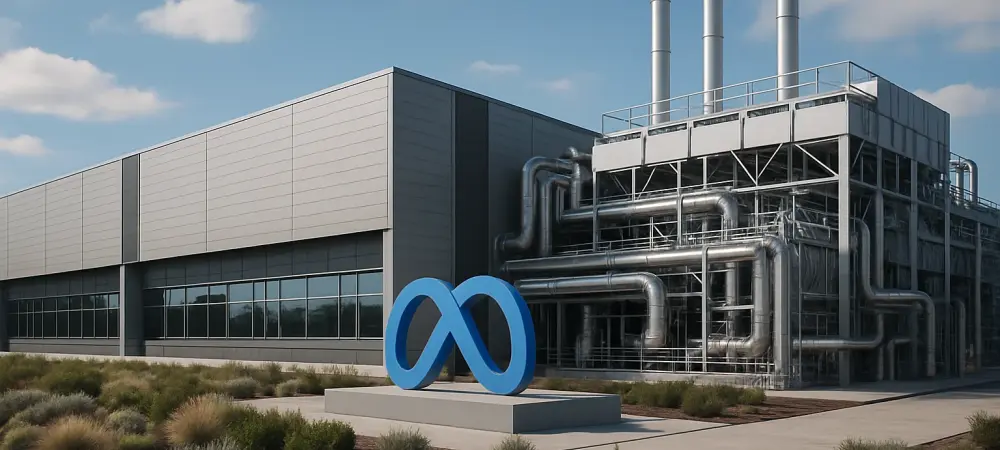
I’m thrilled to sit down with Dominic Jainy, a seasoned IT professional whose deep knowledge of artificial intelligence, machine learning, and blockchain has positioned him as a leading voice in technology infrastructure. With a keen interest in how cutting-edge tech transforms industries, Dominic offers unique insights into Meta’s latest venture—a massive data center campus in El Paso, Texas. In this conversation, we dive into the strategic importance of this project, the innovative design features tailored for AI workloads, the environmental considerations, and the broader implications for the region and Meta’s global operations.
Can you walk us through the significance of Meta’s new data center campus in El Paso, Texas, and what makes this location stand out?
Absolutely. Meta’s new campus in El Paso is a major step forward, marking their 29th data center globally and their third in Texas. What’s interesting about El Paso is that it’s not a traditional data center hub like Dallas or Austin. Its location in West Texas, near the borders of Mexico and New Mexico, offers unique advantages, possibly including access to renewable energy sources or lower operational costs. I believe Meta saw untapped potential here, especially with over 1,000 acres of land available, which gives them room to scale. Strategically, this campus strengthens their presence in the Southwest, complementing nearby facilities in New Mexico and Arizona.
How does the ability to scale this data center up to 1GW impact Meta’s operations, especially in terms of AI workloads?
Scaling to 1GW is a game-changer. Most data centers operate at a fraction of that capacity, so this kind of power positions the El Paso campus as a powerhouse for Meta’s AI-driven initiatives. AI workloads, particularly for training large language models or running complex simulations, demand immense computational resources and energy. This capacity ensures Meta can handle current needs while future-proofing for the exponential growth of AI applications. It’s a clear signal that they’re doubling down on AI as a core part of their tech ecosystem.
What’s behind Meta’s decision to design this facility for both traditional servers and next-generation AI hardware?
Meta is clearly planning for a hybrid future. Traditional servers still support a lot of their social media platforms, like Facebook and Instagram, handling user data and content delivery. But AI hardware—think specialized GPUs or TPUs—is critical for tasks like machine learning model training and real-time inference. Designing for both means the campus can seamlessly transition as AI becomes more central to their offerings. It’s about flexibility; they’re building a facility that won’t be obsolete in five or ten years as hardware evolves.
Can you explain the closed-loop, liquid-cooled system Meta is implementing at this site and why it’s significant?
Sure, the closed-loop, liquid-cooled system is a cutting-edge approach to managing heat in data centers. Unlike traditional air cooling, which can be energy-intensive, this system uses a liquid—often a specialized coolant—that circulates through the equipment to absorb heat and then dissipates it without evaporating much water. Meta claims it uses zero water for most of the year, which is huge in a region like West Texas where water scarcity can be an issue. Environmentally, it reduces their footprint significantly, setting a benchmark for sustainable data center design.
What are some of the environmental benefits of this cooling technology, and how does it align with broader industry trends?
The environmental benefits are substantial. By minimizing water usage, Meta is addressing one of the biggest sustainability challenges in data center operations. Traditional cooling towers can consume millions of gallons of water annually through evaporation, but a closed-loop system recirculates the coolant, drastically cutting that down. This aligns with a growing industry push toward net-zero operations, where companies are under pressure to reduce resource consumption and carbon emissions. It’s a forward-thinking move that could inspire others to adopt similar technologies.
How does the investment in the first phase of this project reflect Meta’s commitment to El Paso, and what can we expect from future phases?
Meta’s initial investment of $1.5 billion in the first phase shows a serious commitment to the region. This likely covers land development, initial construction, and core infrastructure like power and cooling systems. It’s a massive injection of capital that will create jobs and stimulate the local economy. As for future phases, reports suggest up to five stages of development, each potentially adding around 800,000 square feet. While timelines aren’t fully confirmed, I’d expect a phased rollout over the next decade, depending on demand for capacity and advancements in AI tech driving the need for more space.
Why do you think Meta chose a less conventional location like El Paso over more established data center hubs in Texas?
El Paso’s selection is intriguing. Unlike Dallas or Austin, which are saturated with data center activity, El Paso offers a blank slate with ample land and possibly lower costs. Proximity to the borders of Mexico and New Mexico might also play a role, perhaps in terms of logistics or tapping into cross-border energy grids. I suspect local and state incentives were a factor—cities like El Paso often offer tax breaks or infrastructure support to attract big tech. Plus, the land was previously set aside by the city for industrial projects, so it was primed for development.
Can you shed some light on the history of the land Meta acquired for this campus and how it ties into the city’s vision?
From what I understand, the land—over 1,000 acres in northeast El Paso—was originally acquired by the city more than a decade ago with the hope of luring an automotive manufacturing project. That never panned out, and there were later discussions around 2019 for another manufacturing deal that also fell through. It seems the city has long envisioned this area as a hub for large-scale industrial or tech development, so Meta’s arrival aligns perfectly with that vision. It’s a win for El Paso to finally see such a significant project take root on this site.
What is your forecast for the future of data center development in non-traditional locations like El Paso?
I think we’re going to see more companies exploring non-traditional locations for data centers in the coming years. As major hubs become overcrowded and costs rise, places like El Paso—with available land, potential for renewable energy, and supportive local governments—will become increasingly attractive. The shift toward sustainability will also drive companies to regions where they can innovate with cooling and power solutions. My forecast is that within the next decade, we’ll see a more distributed network of data centers across the U.S., with smaller cities stepping up as key players in the tech infrastructure landscape.