

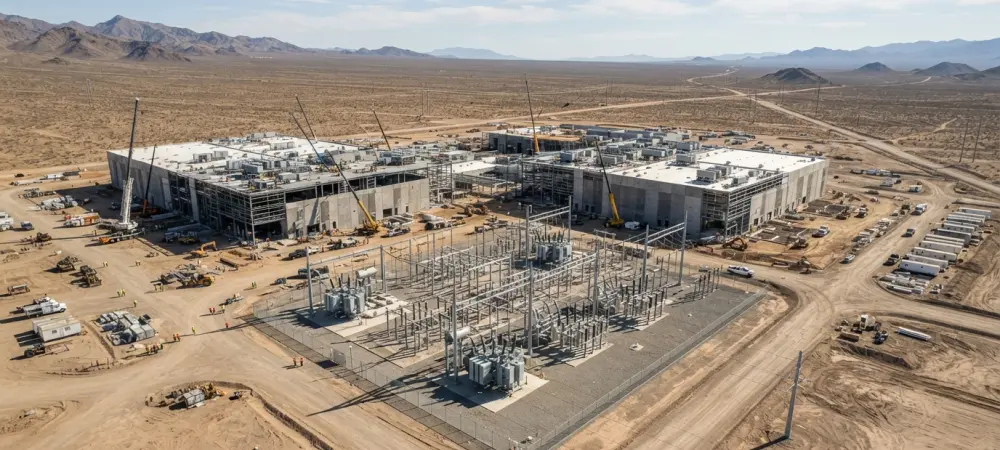
The digital gold rush across the Iberian Peninsula is currently colliding with a rigid electrical ceiling that threatens to stall billion-dollar investments for the foreseeable future. Merlin Properties recently suspended its Arasur 4 and 5 data center developments near Bilbao, signaling a strategic withdrawal. This decision highlights that while demand for artificial intelligence is surging, physical grid limitations remain a formidable obstacle. The following analysis explores how energy constraints are reshaping digital infrastructure in Southern Europe.
Navigating the Energy Bottleneck: Spain’s Digital Infrastructure
The rapid expansion of the digital economy has encountered a significant roadblock where infrastructure readiness lags behind market interest. Although Spain remains attractive for cloud computing, the suspension of major projects highlights friction between technological progress and energy distribution. This forces a reevaluation of project prioritization, shifting the focus from location toward verified power availability. Without a reliable energy backbone, advanced digital ambitions cannot materialize into operational facilities.
The Evolution of Spain’s Data Center Ambitions
Spain has long been a strategic gateway for data traffic connecting Europe with global markets via subsea cables. Extensive networks and renewable potential created an ideal investment environment, yet the shift to power-hungry data centers exposed grid vulnerabilities. Historically, the challenge was securing funding; today, the obstacle is the bureaucratic inability of the transmission system to support hyper-scale energy requirements.
The Arasur Impasse: Power Procurement Challenges
Local Impasse: The Collapse of Energy Procurement
The primary driver behind the withdrawal from Arasur is the inability to secure a stable power supply. Local authorities denied authorization for solar farms intended to power the facility, making the 48MW expansion unviable. Developers are now adopting extreme caution, refusing to commit capital without ironclad electricity guarantees. This reflects a shift where private energy partnerships are now a prerequisite for breaking ground.
Regulatory Burdens: The Costs of Environmental Compliance
New regulatory frameworks introduce requirements that complicate the financial feasibility of data centers. Proposed mandates for Battery Energy Storage Systems could increase capital expenditure by over 11 percent. While these measures aim to stabilize the grid, developers view them as a financial burden that could stifle innovation. These costs force companies to weigh Spanish expansion against more lenient environments in neighboring countries.
Capacity Gaps: Geographic Disparities in Grid Access
Discrepancies between design capacity and actual power allocation have turned some sites into stranded assets. A facility designed for 100MW might only receive a fraction of that power initially due to local grid limitations. This undermines the rate of return and discourages investment in specific provinces. Consequently, development interest is migrating toward regions like Madrid or Portugal, where grid access appears more favorable.
Future Trends: European Digital Infrastructure Evolution
Power availability now dictates the geography of development across Europe. There is a rise in “behind-the-meter” solutions, where operators build dedicated renewable plants to bypass the traditional grid. Future projects will likely prioritize facilities that can provide grid-balancing services. The competitive advantage will belong to firms that navigate administrative landscapes to secure private energy agreements.
Strategic Implications: Lessons for Global Investors
Investors must conduct energy due diligence long before land acquisition. Relying on future grid upgrades is no longer a viable strategy in a market defined by scarcity. Diversification across multiple jurisdictions is essential to mitigate the risk of local regulatory shifts. Developers should prioritize regions with prosumer-friendly policies that allow for large-scale self-generation to ensure continuity.
Conclusion: A Strategic Pivot in the Iberian Market
The decision to halt the Arasur projects marked a pivotal moment for the regional digital economy. It demonstrated the critical misalignment between national goals and the reality of energy infrastructure. As the industry observed this pivot, the message to policymakers became clear regarding the need for regulatory stability. Moving forward, developers must integrate onsite storage and advocate for policy reforms that treat data centers as essential grid partners.