

A Strategic Leap into Southern Europe’s Digital Future
Mediterra DataCenters, a platform dedicated to serving Southern Europe, has officially announced its expansion into Spain through a significant data center development in Barcelona, a move that marks a pivotal moment for both the company and the region’s burgeoning digital economy. This new facility is engineered not just to satisfy current market needs but to proactively address the future requirements of high-growth sectors, including artificial intelligence and high-performance computing. The strategic importance of this expansion, the facility’s advanced technical and sustainable design, and its implications for the wider Mediterranean digital landscape signal a major investment in the infrastructure needed to power Spain’s technological future.
The Rising Tide of Digital Demand in the Mediterranean
For years, Europe’s digital traffic has primarily converged on the established FLAP-D hubs of Frankfurt, London, Amsterdam, Paris, and Dublin. A strategic rebalancing, however, is now in motion. Southern Europe is quickly becoming a critical digital gateway, accelerated by new subsea cable landings, soaring data consumption, and an increasing demand for low-latency processing. Spain, particularly the Catalonia region, stands at the forefront of this transformation. The area’s dynamic tech ecosystem and strong focus on innovation have turned it into a magnet for investment, creating an urgent need for advanced data centers capable of supporting the next generation of digital services.
Inside the Barcelona Project: A Blueprint for Next-Generation Infrastructure
Power, Performance, and Scalability
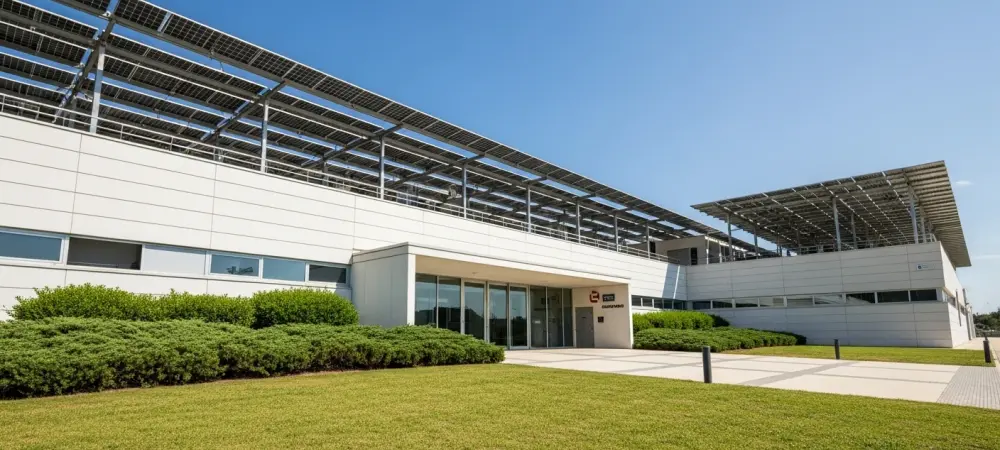
At the core of Mediterra’s Spanish initiative is a facility designed for the intensive demands of modern computing. Scheduled for commissioning in the latter half of 2027, the data center will be constructed on a strategically chosen campus within Catalonia’s industrial heartland. It will provide a 12MW electrical connection, with 8MW of dedicated IT capacity distributed across a 9,700 sqm area. To meet the power-intensive needs of AI and HPC, the facility will feature a modular architecture, enabling efficient and flexible scaling as client requirements evolve. Crucially, its design supports high-density workloads and is prepared for the integration of advanced liquid cooling systems.
A Commitment to Sustainable Operations
Sustainability serves as a foundational principle in the design of Mediterra’s Barcelona facility, which integrates leading-edge green technologies to minimize its environmental footprint. The campus will operate on 100 percent renewable energy and employ a closed-loop, refrigerant-based cooling system that significantly reduces water consumption. In a decisive move away from fossil fuels, the backup generators will be configured to run on HVO100 biofuel. Moreover, the facility is designed to enable waste heat recovery and exchange with local public services, fostering a circular energy economy within the community.
Mediterra’s Pan-Mediterranean Vision
The Barcelona project represents a cornerstone of a much broader regional strategy for Mediterra. Launched in 2024 and supported by DWS Infrastructure, the company is steered by industry veteran Emmanuel Becker with a mission to become a premier data center operator across Southern Europe. This expansion into Spain enhances the company’s existing portfolio, which includes a 4MW site in Rome and a 2MW facility in Palermo, Sicily. By establishing a robust presence in key Mediterranean markets, Mediterra is building a connected network of digital hubs, with additional expansion planned for France and Portugal.
The Future of Data Infrastructure in Southern Europe
Mediterra’s investment in Barcelona highlights a larger trend reshaping Europe’s digital geography. As AI and machine learning become integral to every industry, the demand for powerful, specialized, and geographically distributed data infrastructure will only grow. This will continue to energize secondary European markets, attracting investment away from the saturated northern hubs. The future of the industry will be shaped by providers who can deliver not only high-density power and cooling but also a transparent and credible sustainability strategy.
Key Takeaways for the Digital Economy
The development of this Barcelona data center validates the strategic importance of Southern Europe as a burgeoning digital hub, presenting enterprises with a high-performance alternative to traditional markets. It also reinforces that sustainability is an essential component of modern infrastructure, where innovations in cooling, power, and fuel become key competitive differentiators. For businesses in Spain, this new facility provides the local, low-latency capacity required to deploy advanced AI applications and accelerate digital transformation, all while ensuring the underlying infrastructure is both resilient and responsibly managed.
A New Digital Anchor for the Mediterranean
The decision to expand into Spain was more than the construction of a new building; it represented the establishment of a new digital anchor for the Mediterranean. This state-of-the-art facility was conceived as a critical investment in the region’s technological future, providing the power, connectivity, and sustainable design needed to attract innovation. As digital demands evolved, it became clear that projects like this one played a vital role in ensuring Southern Europe was not merely a consumer of digital services but a key creator in the global data economy.