

For most smartphone owners, the simple act of powering down their device and placing it in a drawer provides a sense of absolute digital privacy, yet a newly identified critical vulnerability proves this confidence is entirely misplaced. This security flaw, cataloged as CVE-2025-20435, has sent shockwaves through the global technology community by exposing nearly 875 million Android devices to high-speed unauthorized access. Recent investigations conducted by the security researchers at Ledger’s Donjon Hacker Lab have demonstrated that for a vast number of users, the traditional protections of a locked screen can be dismantled in under sixty seconds. The vulnerability primarily impacts the massive segment of the market powered by MediaTek chipsets, which currently constitutes approximately one quarter of the global Android user base. This revelation underscores a profound systemic weakness within the boot chain of many popular smartphones, revealing that the hardware-level architecture of millions of devices remains fundamentally susceptible to physical exploits.
Technical Analysis: The Boot Chain Breach
The Role: MediaTek Preloader Security
The epicenter of this significant security failure is found within the MediaTek “preloader,” an essential firmware component that handles the initial hardware configuration of the mobile device. During the sequence of operations that occur immediately after a user presses the power button, the preloader is the very first software to run, performing its tasks well before the Android operating system or any of its sophisticated security features have a chance to load. Because this component functions at the most foundational level of the device’s hardware environment, it operates outside the jurisdiction of standard user-facing protections. If a vulnerability exists at this stage, it effectively grants an attacker a high-level administrative foothold that precedes the activation of encryption barriers or biometric checks. This inherent positioning makes the preloader a high-value target for sophisticated exploits, as any compromise here bypasses the entire software security stack that modern consumers have come to rely on for their privacy.
The preloader’s primary responsibility is to prepare the internal memory and processor for the subsequent stages of the boot process, which includes verifying the digital signatures of the next pieces of software in the chain. However, the discovery of CVE-2025-20435 indicates that this verification process contains a critical logic error that can be manipulated through external commands. When an attacker interacts with a device in this early state, they are essentially speaking directly to the hardware before it has established its defensive perimeter. This lack of isolation means that the preloader is not just a gateway for the operating system, but also a potential backdoor for those who know how to exploit its initialization routines. The gravity of this situation is compounded by the fact that the preloader code is often baked deep into the firmware, making it significantly more difficult to update or secure compared to a standard mobile application or a minor operating system patch, thus leaving millions of devices in a state of perpetual risk until a full system update is applied.
Root Key Extraction: The Core Vulnerability
The most alarming technical aspect of this vulnerability involves the direct extraction of root cryptographic keys from the device’s internal storage during the pre-boot phase. Researchers have demonstrated that an attacker who possesses physical access to the smartphone and a standard USB connection can trigger a specific set of commands that force the preloader to reveal these keys. These cryptographic foundations are the bedrock upon which Android’s full-disk encryption system is built, acting as the master lock for every byte of data stored on the internal memory. By targeting the system at this granular, pre-boot level, the exploit effectively renders every modern security measure—such as complex alphanumeric passwords, fingerprint scans, and facial recognition—completely irrelevant. The keys are recovered before the system even asks the user for a PIN, meaning the entire defensive structure of the Android platform is essentially sidestepped without the attacker ever needing to guess a single character of the user’s passcode.
Once these root keys have been successfully extracted, the security of the entire device is considered permanently broken for that specific session. The extracted keys allow the attacker to reconstruct the encryption environment in an external setting, providing them with the ability to read the raw data stored on the phone’s flash memory as if it were never protected. This specific method of attack highlights a massive shift in the threat landscape, moving away from software-based phishing or malware toward hardware-centric physical exploits. Because the vulnerability exists in the way the silicon itself handles the boot sequence, there is no software firewall or antivirus program that can detect or prevent the extraction from occurring. This represents a total failure of the trust model that many manufacturers have promoted, showing that if the physical hardware cannot protect its own cryptographic secrets during the initial power-on phase, the rest of the software security features are merely performative and offer no real protection against a dedicated adversary.
Mechanics: Exploit Execution and Data Exposure
Speed and Requirements: The Physical Attack
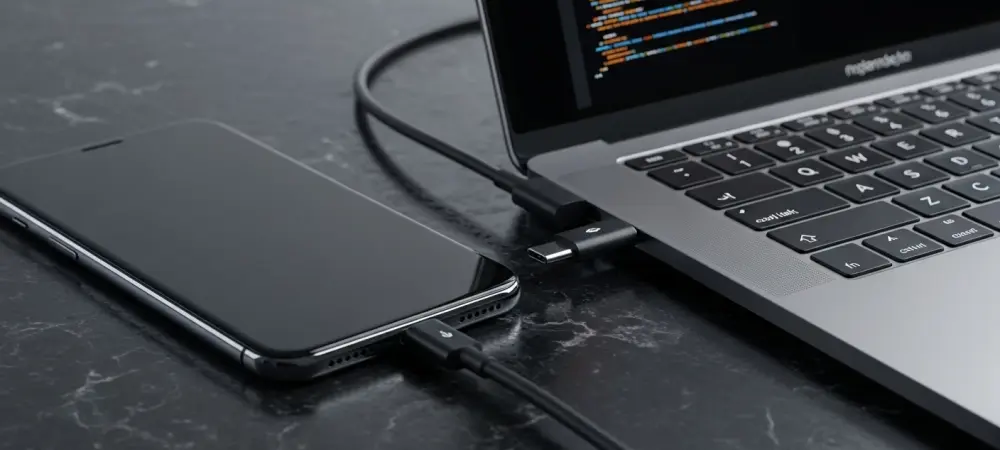
The sheer efficiency with which this exploit can be carried out is perhaps its most chilling characteristic for the average consumer. In controlled laboratory environments, security experts were able to complete the entire breach process on a modern MediaTek-powered smartphone in a mere forty-five seconds. This rapid turnaround time means that a device left unattended for even a short period, such as at a security checkpoint or in a shared workspace, could be fully compromised before the owner even notices it is missing. The attack requires only basic physical possession and a standard USB-C cable connected to a laptop running the exploit script. Remarkably, the phone does not even need to be powered on or have its operating system active for the attack to succeed. This low barrier to entry for the physical phase of the exploit makes it a potent weapon for targeted data theft, as it removes the need for expensive or highly specialized equipment that was previously required for hardware-level hacking.
While the requirement for physical access does provide some level of protection against remote mass-exploitation, the speed of the attack changes the risk profile for many high-value individuals. Traditional advice suggested that as long as a phone remained locked, the data inside was safe from prying eyes, but this new reality dictates that physical control of the hardware is the only true measure of security. The exploit effectively turns a standard charging port into a high-speed data siphon that can drain the device’s most guarded secrets in the time it takes to pour a cup of coffee. This speed is achieved by targeting the specific handshake protocols used by the MediaTek preloader, which were originally designed for factory testing and device recovery. Because these protocols prioritize speed and hardware access over security verification, they provide the perfect pathway for an attacker to bypass the usual delays associated with software-based password guessing, moving straight to the heart of the device’s storage.
Offline Decryption: Total System Compromise
Following the successful extraction of the root keys and the encrypted data blobs via the USB connection, the attacker can transition to an offline environment to complete the breach. In this controlled setting, the extracted data is processed on a high-powered computer where the limitations of the smartphone’s processor no longer apply. The user’s security PIN, which might take years to guess if attempted directly on the phone due to software-imposed lockout periods, can be brute-forced almost instantly using the recovered cryptographic material. This offline decryption process is the final nail in the coffin for the user’s privacy, as it allows the attacker to browse through the entire file system at their leisure. The resulting exposure is absolute, covering every category of sensitive information stored on the device, including private messaging history, cloud-synced photos, and even the most sensitive credentials used for banking or workplace authentication.
The implications of this total data loss are especially severe for users who utilize their smartphones as a primary tool for managing digital assets or cryptocurrency. Because the exploit provides access to the raw memory, any stored seed phrases, private keys, or two-factor authentication tokens are laid bare to the attacker. There is no “secure folder” or encrypted application that can withstand this level of access, as the keys required to unlock those specific silos are also typically derived from the root keys that were stolen during the initial phase of the attack. This comprehensive exposure transforms the smartphone from a secure personal assistant into a liability that can be used to liquidate a person’s entire digital life. The transition to offline decryption ensures that even if the user later changes their password or attempts to remote-wipe the device, the data has already been duplicated and decrypted elsewhere, leaving the victim with no recourse to protect their stolen information or restore their privacy.
Structural Trends: Hardware Impact and Security Evolution
Silicon Architecture: General Chips vs. Secure Elements
The emergence of CVE-2025-20435 has reignited a critical debate within the technology sector regarding the fundamental design of mobile silicon and the necessity of dedicated security hardware. Most of the affected MediaTek chipsets are classified as “general-purpose” chips, which are engineered to balance performance, power efficiency, and manufacturing costs. In these architectures, the so-called “secure world”—a Trusted Execution Environment (TEE) meant to isolate sensitive tasks—often shares the same physical resources as the main processor. This lack of physical separation creates a significant vulnerability, as a flaw in the shared boot firmware can allow an attacker to cross the boundary into the secure zone. This design philosophy is increasingly being viewed as inadequate for the modern era, where the sophistication of physical exploits has evolved beyond the capabilities of firmware-based isolation to provide a truly reliable defense. In stark contrast, premium mobile architectures have begun to favor the inclusion of a physically isolated “Secure Element” or a dedicated security processor, such as the chips found in high-end flagship devices. These specialized components possess their own dedicated memory and processing power, ensuring that cryptographic keys are never exposed to the main system bus or the general-purpose firmware. Even if the primary bootloader is compromised, the keys remain locked inside an impenetrable hardware vault that does not respond to external USB commands in the same way a standard preloader does. This incident suggests that the era of relying solely on firmware-based security within general-purpose chips is coming to an end. Industry analysts are now calling for a shift toward more robust hardware isolation as a standard feature across all price points, arguing that the cost savings associated with integrated security are no longer worth the massive risk of exposing nearly a billion users to foundational hardware exploits.
Fragmentation: The Patch Deployment Challenge
One of the most difficult hurdles in resolving this security crisis is the extreme fragmentation of the Android ecosystem, which complicates the distribution of critical firmware updates. While MediaTek and their security partners successfully developed a patch for the preloader vulnerability months before it was publicly disclosed, the actual delivery of that fix to the end-user remains a logistical nightmare. Unlike a centralized operating system where a single entity can push updates to all users, the Android model relies on a chain of independent manufacturers, such as Xiaomi, Oppo, and Vivo, to integrate the patch into their own custom software builds. Each manufacturer must then test the update for every specific model in their lineup before releasing it to the public, a process that can take months or, in the case of budget-oriented or older devices, may never happen at all, leaving a significant portion of the 875 million affected users indefinitely exposed.
This fragmentation creates a tiered security landscape where the users of the most expensive flagship phones are protected, while those with mid-range or budget-friendly hardware remain vulnerable. Many of the affected MediaTek SoCs, such as the MT6700 and MT6800 series, are utilized in devices that have already reached their “end-of-life” status for software support, meaning they will likely never receive the necessary firmware update to close the preloader hole. Furthermore, the vulnerability extends beyond smartphones into the realm of the Internet of Things (IoT) and networking hardware, where update cycles are even less frequent and often non-existent. This vast and diverse range of impacted hardware ensures that the threat posed by CVE-2025-20435 will persist for years to come. The incident serves as a clear warning that the current model of security update distribution is fundamentally broken when it comes to addressing critical hardware-level vulnerabilities that require deep firmware modifications across a wide variety of manufacturers.
Mitigation Strategies: Protecting Personal Digital Assets
User Actions: Verification and Risk Management
Given the severity of the threat, users must take immediate and proactive steps to assess their personal risk and secure their digital lives. The first and most essential action is for individuals to verify the current security status of their devices by checking for the most recent system updates in their settings menu. It is crucial to determine if the manufacturer has specifically addressed the CVE-2025-20435 vulnerability in their latest security bulletin. Because many consumers are unaware of the specific chipset powering their smartphone, utilizing reputable online databases to identify whether their device uses one of the impacted MediaTek SoCs—such as the widely distributed MT6739 or MT6833 models—is a vital secondary step. If a device is confirmed to be on the list and has not received a patch, the user must operate under the assumption that the physical security of their data can no longer be guaranteed if the hardware leaves their sight.
Beyond simply updating software, users should re-evaluate how they store their most sensitive information on mobile platforms. For those who manage cryptocurrency or high-value digital assets, the consensus among security experts was that general-purpose smartphones are no longer suitable for long-term storage of private keys or seed phrases. Moving these critical assets to a dedicated hardware wallet, which provides the physical isolation currently lacking in most MediaTek devices, is the only way to ensure they remain safe from preloader-based exploits. Additionally, users should consider the life cycle of their hardware; if a phone is no longer receiving security patches from the manufacturer, it should be transitioned away from any tasks involving sensitive personal data. This proactive approach to hardware management and asset relocation is necessary to mitigate the risks posed by a vulnerability that targets the very foundation of the device’s architecture and security model.
Future Considerations: Transitioning Toward Robust Security
The investigation into the MediaTek preloader vulnerability has concluded that the historical trust placed in mobile firmware was largely insufficient to protect against determined physical access. In the months following the discovery, it became evident that the industry was forced to re-examine the trade-offs between manufacturing costs and hardware-level isolation. Security professionals and manufacturers alike realized that the speed at which encryption could be stripped away necessitated a shift in how silicon is designed from the ground up. This incident served as a catalyst for a broader movement toward making Secure Elements a mandatory requirement for all devices, rather than a luxury feature reserved for high-end models. The realization was clear: as long as cryptographic keys remain accessible to the early-stage bootloader, the entire software security stack remains a house of cards that can be toppled in under a minute.
Moving forward, the primary lesson learned from this crisis was the absolute necessity of hardware-based isolation for critical security functions. The industry moved toward implementing more transparent update cycles and better coordination between chipset vendors and handset manufacturers to address the fragmentation that left so many millions of people at risk. For the average user, the event underscored the reality that a smartphone is a versatile communication tool but not an impenetrable vault. The shift in user behavior toward hardware wallets and more disciplined security practices reflected a newfound understanding of the inherent limitations of mobile platforms. While the immediate threat was mitigated by a series of patches and hardware upgrades, the long-term impact on the architecture of Android devices ensured that the security of the boot chain would never again be taken for granted in a world of evolving physical threats.