

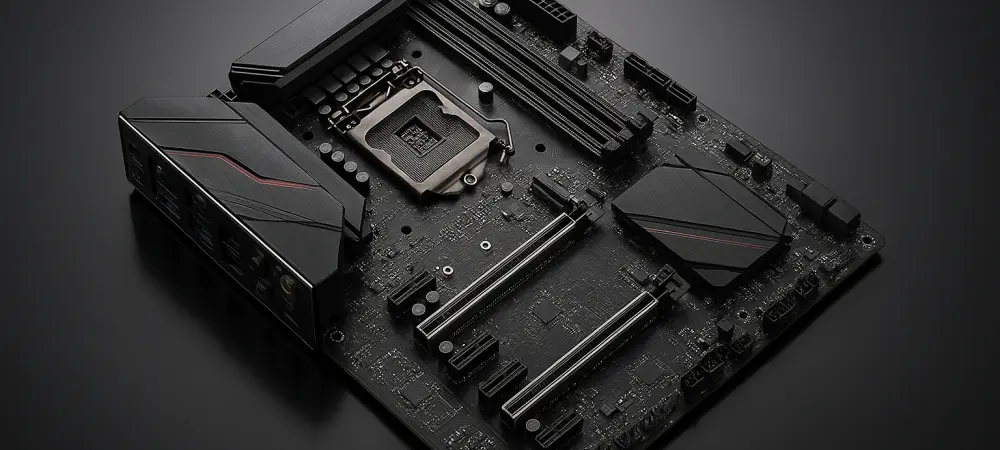
Selecting the right motherboard involves weighing the benefits of dual Gen 5 M.2 storage against the limitations of 10 Gbps USB ports and a lack of dedicated fan control software. This calculation has become increasingly complex as the AM5 platform enters its second major cycle, where hardware expectations for the Ryzen 9000 series demand more than just basic connectivity. The emergence of manufacturers like Maxsun in the Western DIY market represents a significant shift in consumer choice, offering high-end specifications that were previously gated behind premium price tags. As builders navigate the landscape of modern PC assembly, the desire for future-proof storage often clashes with the reality of daily usability and software integration. This particular Micro ATX board highlights the evolving priorities of the mid-range market, where raw data throughput and robust electrical engineering are being prioritized to meet the needs of content creators and gamers alike. By focusing on the essentials of speed and power stability, this design attempts to bridge the gap between niche regional favorites and globally recognized standards, forcing a re-evaluation of what constitutes a balanced motherboard in today’s competitive hardware environment.
Robust Power Delivery and Thermal Management
The engineering philosophy behind this board is centered on providing a stable platform for the latest high-count core processors through a sophisticated 8-layer matte-black PCB. This choice in PCB design is more than just an aesthetic preference; it significantly improves signal integrity for high-speed data paths and aids in heat dissipation across the entire surface of the motherboard. At the heart of its power delivery system is a 15-phase configuration, with 12 of those phases dedicated exclusively to the Vcore. These phases utilize 50A DrMOS MOSFETs, providing a theoretical total output of 600 Amps to the processor. While enthusiast-tier motherboards often feature much higher amperage stages, this setup is designed to strike a balance between cost-efficiency and reliable power delivery for the standard user. The implementation of high-quality inductors and capacitors further ensures that power delivery remains clean and consistent during varying load levels. This robust foundation allows the board to handle the power spikes associated with modern multi-core architecture without the instability often found in entry-level boards that cut corners on the voltage regulator module. In practical, real-world scenarios, the power delivery architecture enables the board to support processors with a TDP rating of up to 300W, which encompasses even the flagship Ryzen 9 9950X under standard operation. However, users planning to push these chips to their absolute limits through sustained, heavy multi-threaded tasks like professional 3D rendering or complex scientific simulations should monitor their thermals closely. Because the 50A stages are pushed harder than the 90A or 110A stages found on more expensive enthusiast boards, they naturally operate at higher temperatures during extended peak loads. This thermal profile suggests that while the board is exceptionally capable for high-end gaming and standard productivity, it might not be the primary choice for extreme overclockers who demand the lowest possible VRM temperatures. For the majority of builders, however, the cooling solution provided by the integrated heatsinks is more than sufficient to prevent thermal throttling, provided there is adequate airflow within the chassis to move heat away from the VRM area. The balance struck here favors the high-performance gamer who values stability over extreme tuning capabilities.
Storage Innovations and High-Speed Memory Performance
One of the most compelling reasons to consider this motherboard is its advanced storage configuration, which challenges the traditional segmentation of the market. Unlike many mid-range Micro ATX boards that offer a single high-speed slot, this model features three M.2 sockets, two of which support PCIe 5.0 x4 speeds. The inclusion of dual Gen 5 slots is typically a luxury reserved for top-tier enthusiast motherboards, making this a significant value proposition for users who rely on ultra-fast data transfers. However, there is a technical trade-off to consider: utilizing both Gen 5 slots simultaneously will reduce the primary PCIe graphics card slot from x16 to x8 mode. While this bandwidth reduction has a negligible impact on most current GPUs, it is a critical factor for users planning to keep the system for several years as graphics technology advances. This storage-centric design ensures that the board remains relevant well into the lifecycle of the AM5 platform, providing a future-proof path for the next generation of NVMe drives that are becoming the standard for high-end workstations. Regarding system memory, the board accommodates up to 256GB of DDR5 RAM across four DIMM slots, reflecting the growing need for high-capacity memory in modern computing. While technical marketing suggests support for extreme speeds up to DDR5-8000, real-world stability is most reliable at the 6000 to 6400 MT/s range, which is often cited as the performance sweet spot for the Ryzen architecture. This focus on high-capacity and reliable speeds makes it a dependable choice for users who want to run intensive applications, such as virtual machines or large-scale video editing projects, without the headache of troubleshooting the diminishing returns of extreme memory overclocking. The board’s ability to handle such large memory modules ensures that it can keep up with the increasing demands of software through 2026 and beyond. By prioritizing capacity and standard high-speed stability over niche overclocking records, the board provides a pragmatic solution for professional users who require consistent performance above all else.
Functional Design and Hardware Quality of Life
The branding of this series is reflected in a minimalist, blackout aesthetic that avoids the flashy RGB lighting common in modern hardware. The board features a matte black finish with subtle crimson accents on the heatsinks, making it an ideal choice for professional-looking builds or understated gaming rigs. This design philosophy focuses on functionality, providing a clean canvas that fits easily into almost any chassis color scheme without clashing with other components. In an industry often dominated by visual noise, this restrained approach is a breath of fresh air for builders who prefer their hardware to speak through performance rather than illumination. The industrial look is further enhanced by the substantial heatsinks covering the M.2 slots and the VRM area, which not only contribute to the board’s durability but also provide the necessary thermal mass to keep components running within their optimal temperature ranges during long sessions of use.
Physical quality-of-life improvements have also been integrated to simplify the building and maintenance process, a feature often overlooked in mid-range offerings. A standout feature is the inclusion of a quick-release GPU latch, which allows users to easily remove massive modern graphics cards that would otherwise block access to traditional retention clips. This small but significant mechanical addition prevents the common frustration of trying to reach a tiny plastic lever behind a massive triple-slot cooler. Additionally, the board includes integrated plate-style heatsinks for all three M.2 slots, ensuring that high-speed drives stay cool even when they are positioned in the direct path of heat-generating components like the GPU or the CPU socket. These thoughtful hardware inclusions demonstrate a clear understanding of the challenges faced by modern PC builders and provide a more premium experience than the price tag might initially suggest. The combination of industrial aesthetics and practical mechanical features makes the board as rewarding to build with as it is to look at.
Navigating Connectivity Trade-offs and the Software Ecosystem
While the board excels in raw storage potential, its connectivity suite presents a mix of modern standards and aging technology that users must navigate. It offers Wi-Fi 7 support and 2.5 GbE networking, ensuring that the system is ready for the latest internet standards and local network speeds. However, the wireless implementation is currently limited to the 160 MHz band, meaning it cannot reach the absolute maximum speeds theoretically possible with the Wi-Fi 7 standard on the 320 MHz band. Furthermore, the rear I/O panel is limited to 10 Gbps USB ports, lacking the 20 Gbps Gen 2×2 ports that are becoming standard on competing motherboards in this price bracket. This limitation might be a point of contention for users who frequently transfer large files to external SSDs or use high-bandwidth peripherals. These trade-offs suggest that the manufacturer chose to invest heavily in internal storage and power delivery at the expense of external connectivity, a decision that will appeal to some users while deterring others who rely on external expansion.
The software experience and overall support landscape remained the final frontiers that the brand needed to conquer to reach parity with its more established global rivals. While the hardware itself performed admirably during initial testing, the absence of a dedicated Windows-based software utility for managing fan curves and real-time system monitoring necessitated more frequent trips into the BIOS than many modern users preferred. Furthermore, the decision to use the legacy ALC897 audio codec and the lack of a comprehensive online manual indicated that the product was still finding its footing in the premium international market. Despite these growing pains, the motherboard represented a significant leap forward in making high-speed storage technologies accessible to a wider audience without the usual enthusiast tax. Builders who prioritized these advanced hardware features over a polished software ecosystem found that the trade-off was manageable through third-party tools or manual BIOS adjustments. To maximize the longevity of this platform, enthusiasts turned toward high-airflow cases to mitigate the thermal load on the 50A DrMOS stages during intensive tasks. As the market moved toward 2027 and 2028, the inclusion of dual Gen 5 slots on more affordable boards became a benchmark that other manufacturers were forced to meet, ultimately driving down prices for high-performance NVMe storage. For those looking to optimize their setups, the focus transitioned toward pairing these boards with well-ventilated cases and relying on the robust physical hardware to carry the system through several upgrade cycles of the AM5 platform.