

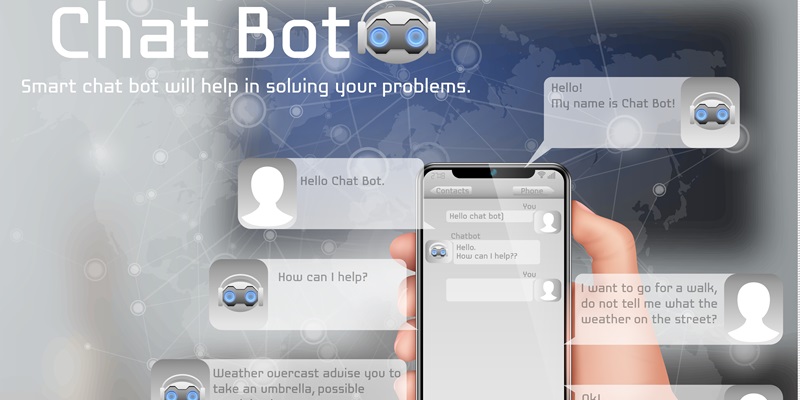
In today’s fast-paced digital world, AI chatbots are crucial for delivering swift customer service. These automated conversationalists are not just quick to respond but also help navigate websites and complete transactions. To build a chatbot that genuinely enhances customer interaction and business efficiency requires detailed planning and ongoing optimization. Here’s a concise guide to crafting a bespoke AI chatbot:
Identifying the Need and Establishing Objectives
Before delving into the technicalities of chatbot creation, it is pivotal to clearly define what you aim to achieve with your AI-powered assistant. Start by identifying the need within your business model – are you looking to reduce the response time to customer queries, or do you want to provide out-of-hours support? Perhaps, your primary goal is to assist customers in making purchases or navigating your services. Once the purpose is established, set measurable goals. This could be anything from increasing customer engagement, easing the burden on human customer service agents, or fostering leads through the sales funnel. Having a clear objective helps in designing a chatbot that is not only efficient but also aligned with your company’s goals.
Platform Selection and Chatbot Design
Selecting the right platform to build your chatbot on is critical – it’s like choosing the foundation for your virtual assistant’s home. Factors such as the desired complexity of conversations, integration capabilities with existing systems, language support, and scalability should steer your choice. Platforms like Dialogflow, Microsoft Bot Framework, and Wit.ai offer varied functionalities that cater to different business needs. Upon choosing a platform, the next step is to design the conversation flow. This includes plotting a dialogue tree, which outlines all the potential paths a chat conversation could take. Scribble down potential questions users might ask and draft concise, informative responses. It is imperative to keep the user’s experience front and center through this process, ensuring the chatbot’s persona is engaging, friendly, and reflective of your brand’s voice.
Training and Iterative Improvement
A well-designed conversation framework is the skeleton of your chatbot, but the essence of AI lies in its learning capabilities. Here is where you begin training your chatbot using datasets that include typical customer queries and appropriate responses. The more nuanced and comprehensive your datasets are, the smarter your chatbot becomes. Implement machine learning models that enable your bot to understand and process natural language inputs. Over time, as the bot interacts with real users, it will encounter scenarios that were not covered in the initial training data. These instances are valuable opportunities for you to refine your chatbot’s conversational abilities. Continuously gather feedback, analyze chat logs, and enhance your bot’s performance – remember, the creation of an AI chatbot is an ongoing process.
Testing, Deployment, and Maintenance
Thorough testing is crucial before launching your chatbot. Simulate a variety of user interactions to evaluate the bot’s performance, particularly on unexpected queries. This stage demands a detail-oriented approach to refine your bot’s reactions. When ready, proceed with launching the chatbot on the selected platform. Remember, the job doesn’t stop there. Your chatbot should grow with your business, requiring ongoing assessments and enhancements to stay effective. Commit to routine verifications and implement updates in step with new technologies. This will guarantee that the customer service delivered through your chatbot remains top-notch – personal, timely, and engaging. Maintaining your chatbot is not just about fixing bugs; it’s about enhancing the user experience in line with evolving customer expectations and tech advancements. With consistent attention and improvements, your chatbot can become an invaluable asset that exemplifies customer care at its finest.