

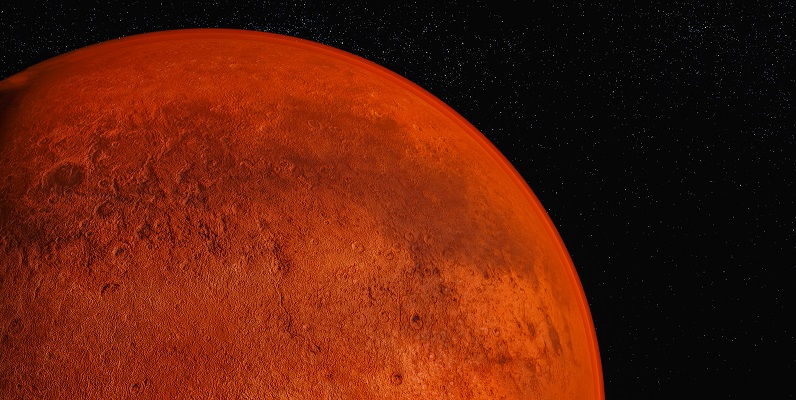
For decades, space enthusiasts have had a fascination with Mars. The mere idea of exploring the red planet, with its mysterious terrain and potential for extraterrestrial life, has captivated the imaginations of people all over the world. Now, with the advent of huge technological transformations such as virtual reality (VR), ordinary people have the opportunity to get up close and personal with an environment so different from our own. One game, in particular, is taking advantage of these advancements to offer an immersive and thrilling experience: Mars4.
NASA’s contributions to Mars exploration
The exploration of Mars has been significantly aided by the data collected by NASA. This data has paved the way for detailed 3D maps of the terrain on Mars to be created. These maps provide a realistic and accurate representation of what it would be like to traverse the planet’s surface. Utilizing this information, Mars4 has created a game that allows players to explore Mars in stunning detail, bringing the Red Planet to life like never before.
Introduction to Mars4 Game
Mars4 is an AAA 3D game that has been built using the Unreal Engine 5.1, a game engine made by Epic Games. This powerful engine enables the game to deliver breathtaking graphics, realistic physics, and immersive gameplay. The objective of the game is simple: explore, expand your land, construct dream buildings, gather resources, establish a colony, and create value. Whether you’re a seasoned gamer or new to the genre, Mars4 offers a captivating experience that will keep you engrossed for hours on end.
Continuous updates and new features
One of the standout features of Mars4 is the continuous addition of new content and features. The game developers are committed to keeping the experience fresh and exciting for players. Recently, two rovers inspired by Tesla Cybertrucks, Phobos X and Deimos X, have been introduced. These rovers allow players to explore Mars with advanced technology and gather resources more efficiently. Additionally, a robotic pet called Bullionaire has been launched, providing colonists with a helping hand and additional inventory space.
Unique Selling Points of Mars4 Game
Mars4 sets itself apart from other games in several meaningful ways. Unlike games that suffer from limited levels, a lack of land to explore, or unrelatable storylines, Mars4 has something for everyone. Its vast open-world environment provides ample opportunities for discovery and expansion. The game is designed to cater to various playstyles and preferences. Whether you’re an explorer, a builder, or a strategist, Mars4 offers a fulfilling experience that appeals to all types of players.
Educational potential of Mars4
Beyond its entertainment value, Mars4 has the potential to be a truly educational game. Parents can rest assured knowing that their children can spend hours on the game while learning about space exploration, resource management, and problem-solving. The realistic representation of Mars and the incorporation of scientific principles make Mars4 an engaging tool for learning and fostering curiosity about the universe.
Future Enhancements and Ambitions of Mars4
Mars4 is continually looking to break new ground and add further enhancements. The developers are dedicated to providing the best possible experience for players and strive to incorporate the latest advancements in gaming technology. Whether it’s introducing new features, expanding the gameplay mechanics, or enhancing the graphics, Mars4 is committed to pushing the boundaries of what is possible in a virtual Mars exploration game.
In conclusion, Mars4 is a groundbreaking AAA 3D game that brings the wonders of Mars to life. Utilizing NASA data, the game offers an incredibly realistic experience, allowing players to explore, build, and create on the Red Planet. With continuous updates and new features, Mars4 keeps the gameplay fresh and exciting. Moreover, its educational potential makes it a game that parents can endorse. As Mars4 continues to evolve and aim for new heights, it is undoubtedly set to become a benchmark for immersive gaming experiences in the future. So, gear up for an unforgettable journey to Mars with Mars4 and unlock the mysteries of the Red Planet like never before.