

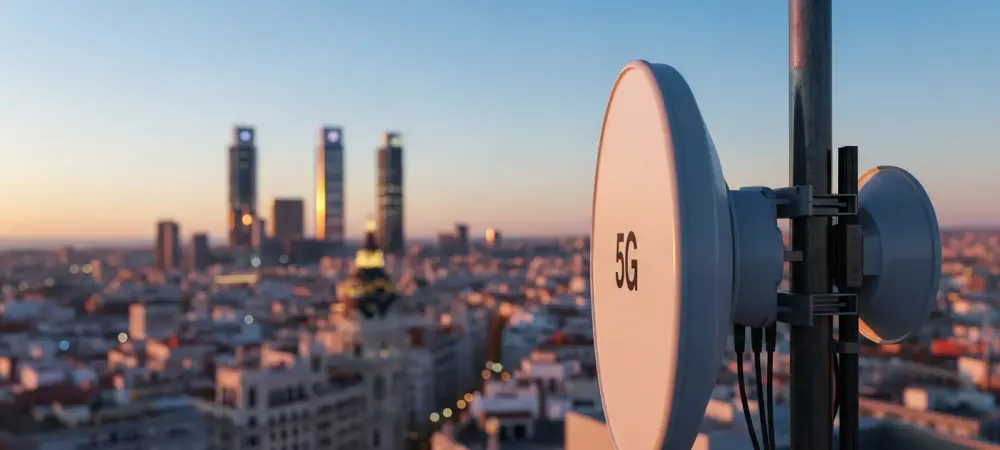
In the critical moments of a city-wide emergency, when public communication networks often buckle under the strain of unprecedented traffic, first responders require a lifeline that cannot fail. Recognizing this vulnerability, the city of Madrid has taken a decisive step to overhaul its emergency response infrastructure through a landmark initiative. This project, born from a strategic alliance between Orange and Ericsson, introduces a dedicated network slice on Orange’s advanced 5G Standalone network, specifically reserved for the city’s essential services. This implementation effectively provides Madrid’s police forces, fire brigades, and emergency medical teams with their own private, high-performance communication channel, insulated from the unpredictability of the public network. By leveraging the power of Ericsson’s cutting-edge Radio Access Network and Core technologies, the city is building a new foundation for public safety, ensuring that even amidst chaos, the lines of communication for those on the front lines remain open, clear, and instantaneous.
A New Era of Resilient Emergency Communications
The core principle behind this technological upgrade is an unwavering commitment to resilience and reliability, especially during a crisis. The dedicated network slice is engineered to guarantee high-speed, low-latency connectivity by prioritizing all emergency-related data traffic, which prevents communication failures even when public cellular networks are congested with calls and data from the general populace. To ensure operational continuity under the most extreme circumstances, the system is designed with multiple layers of redundancy, including autonomous energy sources that allow it to function independently if the public power grid or other municipal infrastructure is damaged or unavailable. This robust framework is powered by key Ericsson technologies, such as the Ultra Compact Core for efficient data processing and advanced radios that can dynamically and seamlessly switch between the public 5G network and a dedicated emergency spectrum, Band 68. This dual-band capability ensures not only rapid deployment in urgent situations but also a continuous, uninterrupted service that public safety officials can depend on.
This initiative established a new benchmark for what is possible in urban public safety, with leaders from the partner companies affirming its transformative impact. Joaquín Colino of MasOrange noted that the project provided the secure and uninterrupted communications that are absolutely essential for emergency services, firmly positioning Madrid as a leader in European public safety innovation. The advanced network infrastructure enabled new, life-saving applications that were previously impractical. For instance, firefighters were equipped to stream live, high-definition video from helmet-mounted cameras directly to command centers, allowing for real-time risk assessments and vastly improved situational awareness. This capability demonstrated the broader trend of applying 5G to create robust, scalable, and secure communication platforms for those who protect the public. In her comments, Somaya El Marrakchi of Ericsson emphasized how such industry collaborations could fundamentally transform urban safety. The successful deployment in Madrid was viewed as a pioneering model that the partners aimed to replicate across Spain and other regions, reflecting a global movement toward digitizing emergency response operations.