

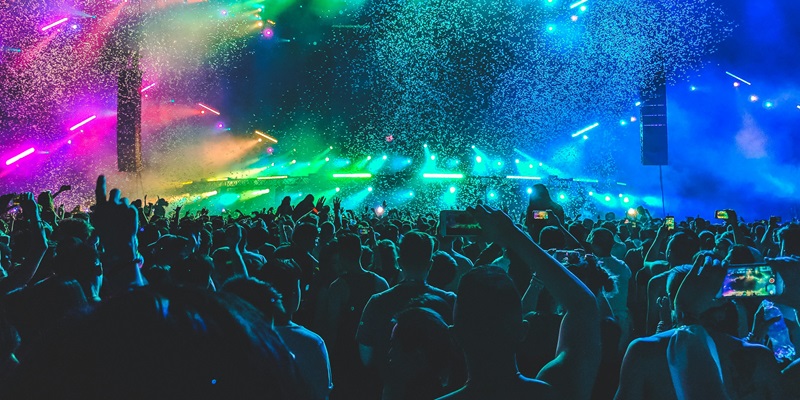
Madonna has repeatedly proven herself as an innovator in the realm of performance arts, and her recent incorporation of AI-generated video content in her concerts is no exception. By blending revolutionary AI technology with her compelling artistry, she’s setting the bar for the future of live music experiences. The Queen of Pop’s latest endeavors illustrate the growing convergence of high-tech advancements and artistic invention.
This synthesis not only uplifts the concert-going experience but also showcases how technology can be harnessed to enhance artistic vision. With artificial intelligence as an instrument in her expansive repertoire, Madonna is crafting a new performance paradigm, seamlessly merging the virtual and real, to the delight of fans who crave novel and immersive experiences.
Madonna’s exploration of AI in her shows doesn’t merely elevate her status as an entertainment pioneer; it acts as a beacon for others in the industry, signifying a transformative era where musicians and artists can push the boundaries of what’s possible on stage. As AI continues to evolve, its applications within the music industry promise ever more innovative and enthralling ways to experience live performances.
Revolutionizing Concert Visuals with AI
AI Transforms “La Isla Bonita”
Madonna has embraced AI in her concerts, elevating the experience during her performance of “La Isla Bonita.” Gone are the days of conventional stage visuals; in their place, an AI-driven spectacle mesmerizes fans. This innovative use of technology creates otherworldly environments on stage, intertwining with Madonna’s live act. The AI’s real-time processing generates scenes with stunning speed and intricacy.
The profundity of this technological integration is not simply in the visual quality upgrade. Rather, the focus is on the ability of AI to keep pace with the live performance, creating a dynamic interplay that seems to organically respond to the music and movement of the moment. This cutting-edge blend of art and technology marks significant progress in how concerts could be designed in the future, turning the stage into a canvas where artificial intelligence and human creativity coalesce to produce an immersive, captivating show.
Pushing the Boundaries Beyond CGI
Madonna, ever the pioneer, is leaving the familiar realm of CGI to explore the cutting-edge world of AI in producing visual effects. This move into AI terrain revolutionizes the art of visual storytelling, offering a canvas limited only by the bounds of imagination. With AI’s ability to generate intricately detailed graphics, the spectrum of creative possibilities expands exponentially. This breakthrough not only promises to enrich viewer engagement but also demonstrates a bold leap toward the vanguard of entertainment technology. Madonna’s investment in AI demonstrates her commitment to pushing boundaries and setting new standards within the industry. As audiences crave increasingly sophisticated experiences, Madonna’s AI-driven visual narratives are poised to redefine the future of visual entertainment, merging artistry with the latest advancements in artificial intelligence.
The Role of AI in Storytelling and Entertainment
Enabling Custom Narratives with AI
Runway’s AI technology in video production promises more than just enthralling visuals for music stars. It heralds an era where storytelling becomes interactive, tailoring narratives to individual viewers. With this tech, stories could dynamically shift in response to viewer emotions or the time of day, offering a unique and immersive entertainment experience. Imagine watching a movie that changes its storyline based on your mood, or a series that adapts its narrative twists to match the rhythm of your day. This level of personalization is no longer just a dream; it’s on the horizon with AI advancement, potentially revolutionizing how we experience and interact with stories on screen. Such innovation could personalize storytelling in unprecedented ways, turning passive viewing into an active engagement that is as individual as the viewer themselves. This AI-driven future of video content is not just about watching stories—it’s about living them.
Addressing Technical and Ethical Challenges
While the creative prospects are tantalizing, the integration of AI in the entertainment industry isn’t without substantial hurdles. Technical limitations have yet to fully unleash the potential of AI in rendering extended and detailed sequences. Additionally, ethical questions regarding the originality and copyright of AI-generated content present complex challenges. As these issues are discussed and worked through, the precedence set by artists like Madonna serves as a catalyst for industry-wide innovation.
In conclusion, Madonna’s latest move to incorporate AI technology into her concert visuals marks a momentous step in the intersection of technology and art. As the capabilities of AI continue to evolve, the challenge will be to navigate this promising yet complicated fusion with a vigilant eye on ethical considerations and industry impact. Opening a brave new world for artists and audiences alike, the transformative power of AI in performance art is only just beginning to be realized.