

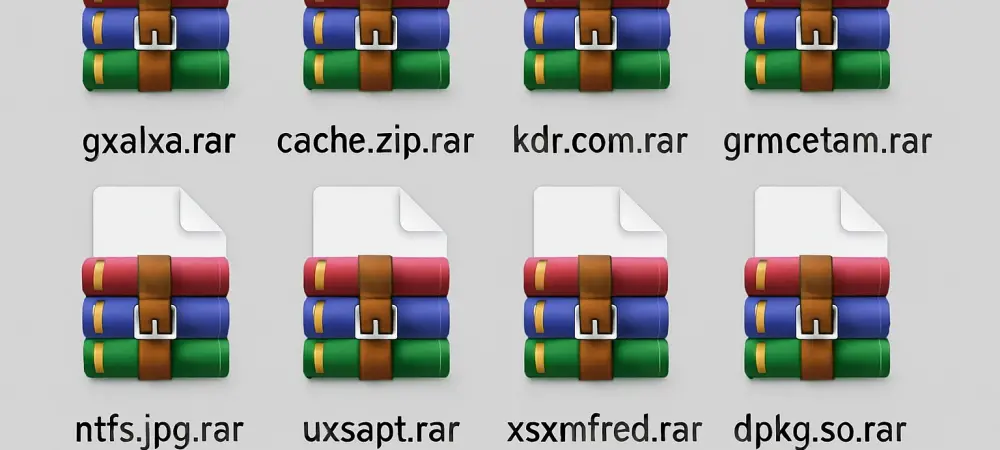
In an era where digital threats are becoming increasingly sophisticated, a startling new method of malware delivery targeting Linux systems has emerged, catching the attention of cybersecurity experts worldwide. This innovative attack vector exploits something as seemingly innocuous as filenames within RAR archives to deploy dangerous backdoors, bypassing traditional antivirus and endpoint detection systems with alarming ease. Often initiated through deceptive phishing emails, these attacks reveal a deeper trend of cybercriminals capitalizing on the permissive nature of Linux environments. The growing prevalence of such threats underscores a critical vulnerability in systems long considered more secure than their counterparts, especially as Linux powers a vast array of servers and IoT devices. This development serves as a wake-up call, urging a reevaluation of security protocols to address unconventional methods of infiltration that challenge the very foundations of current defenses.
Emerging Threats in Linux Environments
Unconventional Delivery Through Filenames
A particularly cunning tactic employed by attackers involves embedding malicious code directly into the filenames of files within RAR archives, rather than relying on the file contents themselves. This approach, often distributed via phishing emails posing as harmless surveys or promotions, takes advantage of how shell scripts process filenames. When a filename containing embedded Bash-compatible commands is interpreted by a shell, it triggers the execution of a Base64-encoded downloader without any user interaction beyond extracting the archive. This downloader then fetches an ELF binary tailored to the system’s architecture, setting the stage for further compromise. What makes this method so insidious is its ability to evade traditional antivirus software, which typically focuses on scanning file contents rather than scrutinizing filenames for potential threats, leaving systems exposed to stealthy attacks that operate under the radar of conventional security measures.
The implications of this filename-based attack vector extend far beyond initial access, as it facilitates the deployment of a powerful backdoor known as VShell. Once installed, VShell, often associated with sophisticated threat actors, provides extensive remote access capabilities, including reverse shell access, file manipulation, and encrypted communication with command-and-control servers. Its operation entirely in memory further reduces the likelihood of detection, as it leaves minimal traces on the disk. This level of stealth, combined with the adaptability of the malware to various Linux architectures, highlights a significant challenge for defenders. As attackers continue to exploit overlooked aspects of system design, such as filename processing, the need for updated security practices that monitor and sanitize shell interactions becomes increasingly apparent, pushing the boundaries of what constitutes a comprehensive defense strategy.
Exploiting Kernel Features for Stealth
Another alarming development in the Linux malware landscape is the use of advanced kernel features to evade detection, as seen with tools like RingReaper. This post-exploit utility leverages the io_uring framework, a modern asynchronous I/O interface in the Linux kernel, to conduct operations such as reading, writing, and network communication without relying on traditional system calls. By bypassing conventional hooks that security tools use to monitor activity, RingReaper significantly reduces its visibility in telemetry data collected by endpoint detection and response platforms. Its capabilities include enumerating system processes, harvesting sensitive data from files, and even escalating privileges through SUID binaries, all while maintaining a low profile that challenges existing monitoring solutions and exposes gaps in current security architectures.
Beyond its technical prowess, RingReaper exemplifies a broader shift among cybercriminals toward exploiting lesser-known or recently introduced kernel functionalities to stay ahead of defenses. The tool’s design reflects a deep understanding of Linux internals, allowing attackers to erase traces of their activities post-execution and further complicate forensic analysis. This focus on stealth underscores the evolving nature of threats targeting Linux environments, where attackers prioritize persistence and invisibility over brute force. As such sophisticated tools proliferate, the cybersecurity community faces mounting pressure to develop detection mechanisms that account for kernel-level manipulations, emphasizing behavioral analysis over traditional signature-based approaches. The challenge lies in anticipating where attackers will strike next within the complex and often under-scrutinized layers of the operating system.
Strengthening Defenses Against Sophisticated Attacks
Adapting to Novel Infection Vectors
Reflecting on the past, it became evident that reliance on conventional antivirus solutions was insufficient against the novel infection vectors employed by Linux malware. The use of malicious filenames in RAR archives to deliver threats like VShell demonstrated a clear blind spot in traditional security tools, which failed to scan such unconventional entry points. Phishing emails, often crafted with subtle psychological manipulation to lure users into engaging with attachments, played a pivotal role in initiating these attacks. Historical data showed that many organizations were unprepared for threats that exploited shell script interactions, revealing a gap between existing defenses and the innovative tactics of adversaries. This underscored the urgency of revisiting how systems handle file metadata and user interactions with archives, pushing for more robust safeguards against social engineering ploys that often served as the first step in a multi-stage attack.
Moreover, past efforts to combat these threats highlighted the importance of focusing on user education alongside technical solutions. Many successful breaches stemmed from a lack of awareness about the risks of unsolicited emails and attachments, allowing attackers to exploit human vulnerabilities as effectively as technical ones. Retrospectives on these incidents suggested that integrating behavioral monitoring into security frameworks could have provided an additional layer of protection by flagging anomalous shell activities triggered by malicious filenames. As these attacks often relied on in-memory execution to avoid detection, historical lessons pointed to the need for tools capable of analyzing runtime behaviors rather than static file signatures. This dual approach of enhancing user vigilance and deploying advanced monitoring was seen as a critical step in mitigating the impact of such stealthy and adaptive malware campaigns.
Building Resilience Through Advanced Monitoring
Looking back, the exploitation of kernel features by tools like RingReaper exposed a significant oversight in how security systems monitored low-level operations. Past analyses revealed that many endpoint detection platforms were ill-equipped to track activities bypassing traditional system calls, allowing attackers to operate with near impunity at the kernel level. The ability of such malware to harvest data, escalate privileges, and cover its tracks after execution was a stark reminder of the limitations of hook-based detection methods. Historical responses to these challenges often involved reactive measures rather than proactive defenses, leaving systems vulnerable to repeated exploitation. It was clear from these experiences that a deeper focus on kernel-level telemetry was necessary to identify and disrupt threats leveraging advanced Linux functionalities before they could inflict lasting damage.
In response to these past shortcomings, a shift toward actionable strategies emerged as a priority for safeguarding Linux environments. Implementing comprehensive behavioral analysis to detect unusual shell or kernel activities offered a promising path forward, as did enhancing scrutiny of file metadata interactions to catch malicious filenames early. Developing security tools that could adapt to the architectural diversity of Linux systems ensured broader protection against adaptable threats like VShell. Additionally, fostering collaboration within the cybersecurity community to share threat intelligence helped anticipate future attack vectors, building on lessons learned from earlier incidents. These steps, grounded in the need to evolve alongside increasingly sophisticated adversaries, aimed to fortify defenses and protect critical infrastructure from the persistent and evolving dangers posed by Linux-targeted malware.