

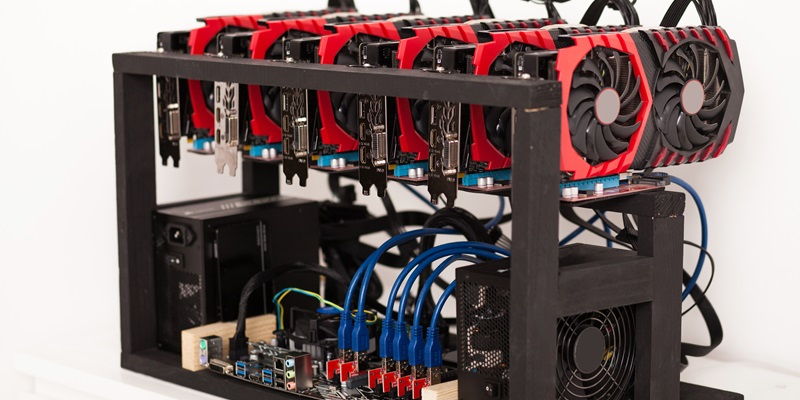
NVIDIA’s CMP (Crypto Mining Processor) GPUs were introduced in response to the growing demand for cryptocurrency mining. These specialized GPUs were designed specifically for miners, offering high mining performance. However, their limited functionality and lack of optimization for gaming make them unfit for gamers.
The unique features of the CMP 50HX GPU
The CMP 50HX GPU, one of NVIDIA’s offerings in the CMP lineup, comes with a unique BIOS and lacks a display connector. These features present challenges when attempting to use the GPU for gaming. Without a display connector, connecting the GPU to a monitor directly becomes impossible. This means gamers have to rely on alternative methods, such as using integrated graphics, which can be a cumbersome process.
Absence of gaming-oriented drivers
One of the major drawbacks of NVIDIA’s CMP GPUs is the absence of gaming-oriented drivers. Since these GPUs were not intended for gaming, NVIDIA did not develop specific drivers for them to run games smoothly. As a result, gaming performance on CMP GPUs is severely impacted, as the absence of optimized drivers hinders the GPUs’ ability to handle gaming workloads efficiently. Gamers are left with subpar performance and compatibility issues.
Bottleneck issue in CMP 50HX
The CMP 50HX, like other CMP GPUs, suffers from a bottleneck issue stemming from limited PCIe lane width. This limited bandwidth restricts the flow of data between the GPU and the rest of the system, leading to decreased gaming performance. The narrower PCIe lanes create a bottleneck effect, causing slower data transfer and reduced overall performance in gaming scenarios. This further contributes to the unsuitability of CMP GPUs for gaming.
Differences in GPU and VRAM usage
When it comes to mining, the emphasis is primarily on stressing the VRAM rather than the GPU itself. Mining workloads rely heavily on VRAM to perform calculations and store data. However, in gaming workloads, both GPU and VRAM horsepower are required to deliver optimal performance. The CMP GPUs, designed for mining, prioritize VRAM usage over GPU performance. As a result, gamers may experience underwhelming performance and inadequate rendering capabilities.
Lack of exploration of alternative use cases
At the launch of the CMP lineup, NVIDIA’s focus was primarily on catering to the crypto mining market. The company was caught up in the hype surrounding cryptocurrency and did not explore other potential applications for these GPUs. This lack of exploration limited their versatility and prevented them from being optimized for non-mining applications, such as gaming.
Incompatibility with Non-Mining Applications
The limitations imposed on CMP GPUs in terms of PCIe lanes and driver support make them unsuitable for running applications other than cryptocurrency mining. The narrow PCIe lanes and lack of gaming-oriented drivers restrict the tuning of the GPUs for other applications, including gaming. The lack of compatibility and optimization hinders the CMP GPUs from delivering the expected performance in a gaming environment.
NVIDIA’s shifted focus
Since the decline of the crypto hype, NVIDIA has shifted its focus towards AI applications. Consumer-level GPUs are now being utilized in data centers, AI research, and workstations. This shift in focus indicates that NVIDIA acknowledges the limitations of CMP GPUs for gaming and is exploring other avenues where their GPUs can be better utilized.
Speculations for the Future
As AI continues to evolve, the possibility of AI-specific GPUs performing gaming tasks arises. PCIe H100/H800 or A100/A800 GPUs, designed specifically for AI workloads, may be able to run games smoothly, offering a unique gaming experience. However, this remains speculative, and only time will tell if such GPUs will be successfully adapted for gaming purposes.
NVIDIA’s CMP ‘Crypto’ GPUs, such as the CMP 50HX, face significant limitations that render them unfit for gaming. The unique features, limited PCIe lanes, absence of gaming-oriented drivers, and focus solely on mining applications make them unsuitable for gamers. NVIDIA’s shift towards AI applications highlights the company’s recognition of these limitations. It remains to be seen if future developments will bring about GPUs specifically designed for gaming, catering to the needs and expectations of gamers.