

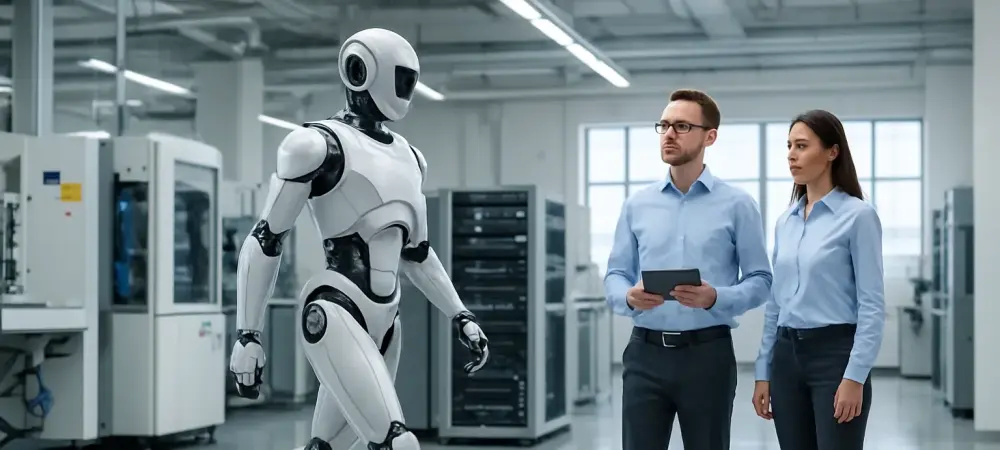
LG Innotek’s advanced sensors and LG Energy Solution’s battery technology are being optimized to support the high-performance requirements of autonomous bipedal units. This strategic development marks a critical turning point as the technology industry transitions from experimental prototypes to commercially viable humanoid systems. By combining Nvidia’s computational prowess with LG’s global manufacturing infrastructure, the two companies are positioning themselves to lead the rapidly expanding field of physical artificial intelligence. This collaboration aims to deliver a bipedal robot capable of navigating both industrial and domestic environments by early 2027, bridging the gap between digital reasoning and physical action. As the demand for versatile automation grows, the integration of high-density power sources and low-latency processing becomes the primary focus for engineers. This partnership is not just about building a machine; it is about creating a scalable platform that can adapt to the unpredictable nature of human-centric spaces. The transition from lab to reality is finally underway.
Synergizing Artificial Intelligence With Robotic Hardware
Integrating the Digital Brain: Nvidia’s Cognitive Framework
Nvidia provides the foundational intelligence for this project, leveraging its Isaac GR00T model and the Jetson Thor computing platform to serve as the robot’s primary cognitive engine. This setup allows the machine to perceive its environment, reason through complex spatial problems, and react to dynamic changes in real time. A critical component of this digital architecture is a specialized safety framework designed to ensure that human-machine interactions remain predictable and harm-free. By focusing on low-latency processing, Nvidia enables the robot to make split-second decisions that are essential for maintaining balance and navigating crowded spaces. This level of autonomy is achieved through a combination of generative AI and reinforcement learning, allowing the system to refine its movements based on sensory feedback. The goal is to move past pre-programmed routines and toward a more adaptive form of intelligence that mimics human situational awareness. This cognitive depth is necessary for any robot intended to walk among humans safely.
Training these high-level models requires an unprecedented volume of data, which the partnership is generating through a massive simulation infrastructure. By utilizing the Omniverse platform, the team can create millions of synthetic scenarios where the robot learns to navigate obstacles and perform dexterous tasks without the risk of hardware damage. These virtual environments are meticulously calibrated to match the physical properties of the real world, including gravity, friction, and material density. This “sim-to-real” pipeline is essential for shortening development cycles and ensuring that the AI can handle the unpredictability of human environments. Once the robot achieves a high degree of proficiency in the digital realm, its learnings are transferred to the physical prototypes for final validation. This approach allows for continuous refinement of the robot’s “brain” without the logistical constraints of physical testing facilities. Consequently, the software becomes more resilient as it encounters an endless variety of simulated challenges.
Constructing the Physical Form: LG’s Mechanical Engineering
On the physical side, the mechanical sophistication is provided by LG subsidiaries, which handle the intricate demands of bipedal locomotion through advanced engineering. High-precision actuators and tactile sensors developed by LG Innotek are integrated into the limbs to facilitate fluid, natural movement that rivals human dexterity in specific manual tasks. These components are designed to withstand the stresses of constant movement while maintaining the delicate touch required for interacting with everyday objects. Meanwhile, high-density battery solutions from LG Energy Solution address the persistent challenge of power consumption, ensuring that the robots can operate for extended periods without frequent recharging or downtime. LG’s internal software layers act as a vital bridge between the high-level AI instructions and the raw mechanical hardware, translating complex data streams into actionable physical movement. This vertical integration allows for a seamless flow of information from the robot’s visual and tactile sensors directly to its central processing unit.
To validate these mechanical systems, the partnership has established a series of pilot programs that test the hardware in demanding environments. Starting in 2026, LG began utilizing specialized wheeled platforms to collect telemetry and environmental data within its manufacturing plants in Tennessee. These robots gather information on how metallic and organic surfaces interact, providing the bipedal units with a library of physical world interactions. This data is then used to optimize the gait and balance of the humanoid, ensuring it can maintain stability on various floor types and gradients. The synergy between LG’s hardware reliability and Nvidia’s software agility allows the team to iterate on design flaws much faster than previous generations of roboticists. By combining real-world sensor data with high-performance actuation, the partnership is overcoming the mechanical “uncanny valley” where movements once appeared robotic and stiff. The result is a machine that moves with a purposeful, biological grace, ready to transition from a prototype into a mass-produced tool.
Strategic Outlook: Strengthening the Global Robotic Ecosystem
To ensure the long-term success of this humanoid initiative, the focus shifted toward establishing a more resilient supply chain for specialized robotic components. Moving forward, the industry prioritized the standardization of communication protocols between different AI models and robotic hardware to foster broader compatibility. Developers recognized that the next logical step involved creating more robust data privacy frameworks to protect the sensitive information gathered by robots operating in private spaces. As the project progressed, the emphasis remained on reducing the total cost of ownership to make these units accessible to small and medium-sized enterprises. Investors and engineers alike looked toward more efficient energy management systems as the key to unlocking true 24-hour operational cycles. The integration of edge computing became a standard practice, allowing robots to process critical safety data locally while offloading non-essential tasks to the central hub. These collective efforts established a solid foundation for the next generation of autonomous labor and service interaction.