

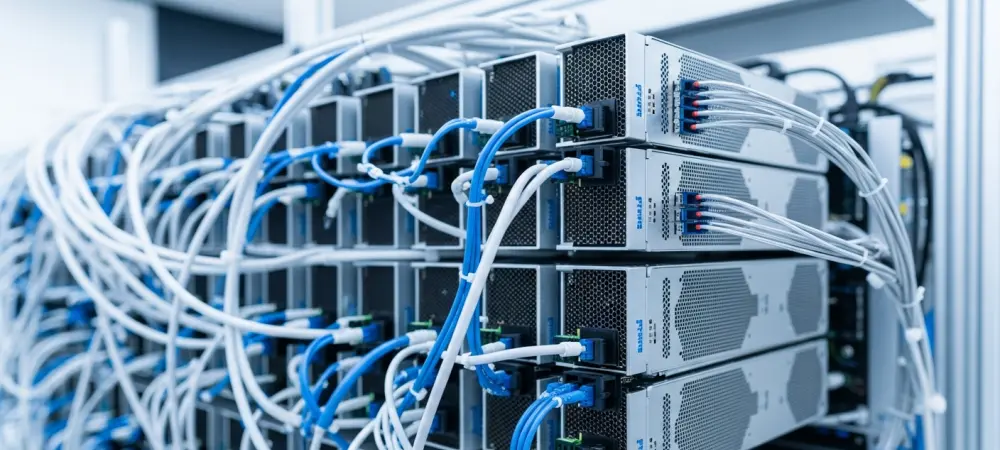
The massive surge in global artificial intelligence spending has shifted the focus from the sheer compute speed of specialized chips to the complex architecture that binds them together. While massive graphics processing unit (GPU) clusters provide the necessary horsepower for modern workloads, the networking fabric has emerged as the true arbiter of performance and scalability. This transition marks a departure from general-purpose virtualization toward specialized “AI factories” and sovereign AI clouds. In this landscape, the legacy methods of managing connectivity are being challenged by a new generation of automated systems designed to handle the unique demands of high-performance computing.
The strategic importance of this shift is underscored by the significant capital flowing into the sector, such as the $15 million Series A investment led by Andreessen Horowitz (a16z) into Netris. This funding, involving industry veterans like Guido Appenzeller, Martin Casado, and Raghu Raghuram, highlights a consensus that AI infrastructure requires a fundamental rethink. The total AI infrastructure market, projected to reach $800 billion during the current 2026 cycle, is no longer just about raw compute; it is about the software-defined intelligence that makes these trillion-dollar investments viable.
Key industry players including Nvidia, Cisco, Arista, and VMware are now operating in an environment where networking is no longer a utility but a critical bottleneck. As organizations move toward sovereign AI and private clouds, the focus has shifted to how products like the Netris Network Automation, Abstraction, and Multi-Tenancy (NAAM) platform can simplify what has historically been a manual and error-prone process. This evolution reflects a broader industry trend where the focus on raw hardware is balanced by the necessity for sophisticated orchestration layers that can bridge the gap between different vendor technologies.
Evolution of Infrastructure: From Traditional Connectivity to AI-Centric Networking
The traditional data center was built on the premise of general-purpose virtualization, where Ethernet served as the primary medium for connectivity. In that era, the goal was to provide steady, reliable access to distributed applications and storage. However, the rise of AI factories has fundamentally altered these requirements, demanding ultra-low latency and massive bandwidth that traditional networking was never designed to provide. These modern clusters require a specialized focus on the networking fabric to ensure that thousands of GPUs can communicate without delay, effectively turning the entire data center into a single, massive computer.
Sovereign AI clouds have also emerged as a critical component of the global infrastructure landscape, as nations and large enterprises seek to maintain control over their data and compute resources. This trend has moved the industry away from a total reliance on a few hyperscalers and toward a more decentralized model. Within these environments, the ability to rapidly deploy and manage complex hardware is paramount. Technology from firms like Netris is designed to provide the abstraction necessary to manage these environments, mirroring the revolutionary impact that Nicira and VMware had on server virtualization over a decade ago.
The influence of a16z and other major investors suggests that the industry is in the early stages of a massive growth phase that will extend from 2026 through the end of the decade. As compute growth accelerates, the focus must remain on the networking stack to prevent hardware from sitting idle. The goal of these new technologies is to ensure that the $800 billion being invested in infrastructure results in actual performance gains rather than becoming a logistical burden for IT departments struggling with outdated tools.
Technical Divergence: Evaluating Legacy Models Against Automated Orchestration
Operational Efficiency and Software-Defined Abstraction
Legacy networking has long relied on manual configuration through command-line interfaces (CLI), a method championed by established giants like Cisco and Arista. While these systems offer granular control, they are increasingly seen as a liability in the fast-paced world of AI. Manual configuration is slow, prone to human error, and difficult to scale across thousands of nodes. In contrast, Netris offers a unified control plane that abstracts the underlying hardware, allowing operators to manage the entire network as a single software-defined entity. This “New SDN” approach is gaining traction because it focuses on agility and speed, which are essential for modern AI workloads.
The demand for this type of automated orchestration is reflected in the market performance of specialized software providers. For instance, Netris reported an 800% increase in annual recurring revenue over the past twelve months, a clear indicator that organizations are moving away from traditional management methods. By automating the configuration and monitoring of the network, these platforms allow teams to focus on higher-level tasks rather than spending hours troubleshooting individual switch settings. This shift mirrors the transition from physical server management to the automated cloud environments that define modern computing.
Management of Heterogeneous Network Fabrics
A modern AI cluster is rarely a homogeneous environment; it often requires the simultaneous management of several distinct network fabrics. General connectivity typically relies on standard Ethernet, while the high-speed communication between GPUs requires specialized technologies like InfiniBand or Nvidia’s NVL72 scale-up fabrics. Legacy systems often require separate, siloed management tools for each of these fabrics, creating a fragmented operational environment. This fragmentation leads to synchronization issues, where a change in one part of the network is not correctly reflected in another, leading to performance degradation or downtime. Automated orchestration layers like those provided by Netris are designed to synchronize these disparate fabrics automatically. When a new cluster is provisioned or a tenant is added, the software handles the reconfiguration of Ethernet, InfiniBand, and other specialized fabrics in parallel. This holistic approach ensures that the entire network operates in harmony, which is a technical necessity for maintaining the low-latency requirements of large language model training. In contrast, legacy models struggle to maintain this level of coordination, often requiring manual intervention that slows down the deployment of critical AI resources.
Hard Multi-Tenancy and Partitioning Capabilities
For “AI-as-a-Service” models to be commercially viable, secure data isolation is mandatory. This requires “Hard Multi-Tenancy,” a feature that ensures multiple customers can share the same physical infrastructure without any risk of data leaks or performance interference. Traditional networking giants have often struggled to maintain this level of isolation, especially in complex, multi-vendor setups where proprietary tools might not communicate effectively with hardware from other manufacturers. This lack of robust partitioning can become a significant security risk for providers hosting sensitive AI training data.
Netris has addressed this challenge by building hard multi-tenancy into the core of its platform. This capability has been a major factor in its adoption by “neoclouds” such as TensorWave and Lightning AI, which require the ability to securely partition high-end GPU resources for their clients. Sovereign providers like Telus and Yotta have also utilized these automated partitioning features to build secure, national-level AI infrastructures. By providing a vendor-agnostic layer that handles isolation at the software level, automated systems offer a more flexible and secure solution than the hardware-centric approaches of legacy vendors.
Implementation Hurdles and Strategic Considerations
The “Networking Bottleneck” remains one of the most significant risks for organizations scaling their AI capabilities. Manual configuration errors in legacy systems can lead to catastrophic cluster failures, where a single mistake in a switch setting causes the entire GPU fabric to become unstable. Beyond the performance risks, there is also the danger of data leaks between tenants if partitioning is not handled perfectly. These risks are exacerbated by the shortage of skilled network engineers who are familiar with the intricacies of both traditional Ethernet and modern high-performance fabrics like InfiniBand.
Proprietary orchestration tools, such as Cisco’s Cloud Control, offer some level of automation but often come with the limitation of vendor lock-in. These tools are typically designed to work best, or only, with the manufacturer’s own hardware, which limits the flexibility of organizations that want to build multi-vendor environments. In a rapidly evolving hardware landscape where new chips and switches are released frequently, being tied to a single vendor’s ecosystem can be a strategic disadvantage. Vendor-agnostic software provides the necessary bridge to integrate the latest hardware from various suppliers without needing to overhaul the entire management stack.
Industry Outlook and Selecting the Right Networking Architecture
When selecting a networking architecture for the current era, organizations must weigh the reliability of established legacy hardware against the agility of specialized automation. While Cisco and Arista continue to produce world-class hardware, their management software is often viewed as a secondary consideration compared to the specialized NAAM solutions. For large-scale GPU clusters and sovereign AI projects, prioritizing automated orchestration is becoming the standard recommendation to avoid configuration bottlenecks. The ability to deploy hardware quickly and manage it with a small team is a significant competitive advantage in the AI market.
The decision between proprietary vendor tools and open, multi-vendor platforms should be based on the specific requirements of the ecosystem. If an organization is fully committed to a single hardware stack, proprietary tools may offer deep integration. However, for those seeking flexibility and rapid scaling, platforms like Netris provide a universal translator that simplifies the management of complex, heterogeneous environments. As the AI infrastructure market continues its rapid expansion from 2026 onward, the software layer will likely remain the most critical component for ensuring that compute investments deliver their promised value.
The transition to automated networking systems proved to be a decisive factor for the success of AI-focused enterprises. Managers recognized that the complexity of multi-fabric environments exceeded the capabilities of manual, legacy configuration methods. The industry successfully moved toward abstraction layers that treated the network as a unified resource, which allowed for the secure and efficient scaling of GPU clusters. Organizations that invested in vendor-agnostic orchestration realized significant gains in operational speed and avoided the security pitfalls associated with manual partitioning. These strategic choices established a new baseline for high-performance data center management that defined the current infrastructure landscape.