

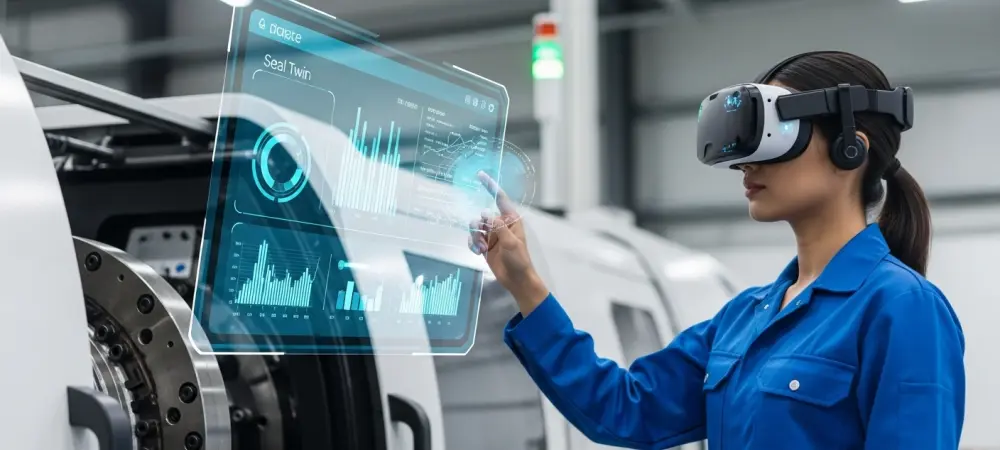
The promise of a perfect digital replica—a tool that could mirror every gear turn and temperature fluctuation of a physical asset—is no longer a distant vision but a bifurcated reality with two distinct evolutionary paths. On one side stands the legacy digital twin, a powerful but often isolated marvel of engineering simulation. On the other is its successor, the Industry 4.0 digital twin, an interconnected and intelligent entity poised to redefine the very fabric of modern manufacturing. This divergence is not merely a matter of technological advancement; it represents a fundamental shift in philosophy, moving from contained digital models to expansive, autonomous cyber-physical ecosystems. Understanding the profound differences between these two paradigms is crucial for any organization navigating the complex landscape of digital transformation, as the choice between them dictates not just the scope of a project, but the future trajectory of the entire enterprise.
Foundational Concepts: Defining the Digital Twin Evolution
The concept of a digital twin first emerged as a sophisticated tool for product lifecycle management, primarily within the aerospace and high-tech manufacturing sectors. These early, or legacy, digital twins were born from the need to create high-fidelity virtual models for design validation, performance simulation, and failure analysis. Their primary objective was to provide a digital sandbox where engineers could test and optimize a physical product or system without the costs and risks associated with real-world prototypes. Typically, a legacy twin represented a single asset, such as a jet engine or a wind turbine, and its functionality was confined to specific phases of the lifecycle, most often design and maintenance. The data flow was often unidirectional or asynchronous, with information from the physical asset manually uploaded or periodically synced to update the digital model, which then ran simulations to provide insights. While revolutionary for their time, these twins were largely descriptive and diagnostic, answering questions about what has happened or why it happened within a controlled, self-contained digital environment.
In stark contrast, the Industry 4.0 digital twin is conceived not as an isolated model but as a native citizen of a connected industrial ecosystem. Its genesis lies in the principles of the fourth industrial revolution: interoperability, decentralization, real-time capability, and service orientation. The primary objective of an Industry 4.0 twin extends far beyond mere simulation; it aims to create a dynamic, bi-directional link between the physical and digital worlds, enabling not just monitoring and analysis but also predictive, prescriptive, and ultimately autonomous control. This new breed of twin is designed to be a component within a larger network, capable of communicating with other twins, enterprise systems, and supply chain partners. Its applications span the entire value chain, from self-optimizing production lines and proactive maintenance scheduling to dynamic supply chain adjustments. It leverages a continuous, real-time stream of data from IoT sensors to maintain a state of perfect synchronization with its physical counterpart, using this live data to power artificial intelligence and machine learning algorithms that drive intelligent actions back in the physical world.
The evolution from legacy to Industry 4.0 digital twins is therefore a story of expanding scope, intelligence, and connectivity. Where the legacy twin provided a powerful but static lens to examine a physical asset in isolation, the Industry 4.0 twin acts as a dynamic, intelligent agent that actively participates in the operational fabric of the entire enterprise. It represents a shift from a tool for analysis to a core component of a self-aware, self-optimizing industrial system. This transition is underpinned by foundational changes in architecture, data exchange protocols, and the very definition of functionality, moving the concept from a digital representation to a true cyber-physical counterpart that learns, adapts, and acts with increasing levels of autonomy. This fundamental re-imagining of the digital twin’s role is what sets the stage for its central position in the ongoing digital-physical revolution.
A Head-to-Head Comparison: Key Differentiators
The distinction between a legacy digital twin and its Industry 4.0 counterpart becomes most apparent when their core attributes are placed in direct comparison. While both share the fundamental premise of a virtual representation linked to a physical entity, the way they are designed, how they communicate, and what they are capable of achieving are worlds apart. The legacy twin, a product of an earlier technological era, often functions as a high-fidelity but cloistered digital island, meticulously detailed yet difficult to connect to the broader mainland of enterprise operations. In contrast, the Industry 4.0 twin is architected as a bustling, interconnected hub within a digital metropolis, built on principles of openness, standardization, and collaborative intelligence.
This comparative analysis will explore these differences across three critical dimensions: their underlying architecture and system design, their capacity for interoperability and data exchange, and the scope of their functionality and embedded intelligence. By dissecting these areas, a clearer picture emerges of two fundamentally different approaches to digital representation. One is a powerful but rigid tool designed to solve specific, bounded problems, while the other is a flexible, extensible framework designed to serve as a building block for the smart, autonomous factories of the future. This deep dive reveals not just a technological gap, but a strategic chasm between isolated optimization and integrated, ecosystem-wide intelligence.
Architecture and System Design: From Monoliths to Modular Ecosystems
The architectural philosophy of a legacy digital twin is typically monolithic and custom-built. Conceived to address a specific, high-value problem—such as simulating stress on a mechanical component or optimizing the performance of a particular machine—these twins were often developed as standalone applications. Their software architecture was tightly coupled, meaning the user interface, business logic, data processing, and simulation models were all interwoven into a single, cohesive unit. This approach allowed for highly optimized performance for the intended task but created a rigid structure that was difficult to modify, scale, or integrate with other systems. Expanding the twin’s capabilities, such as adding a new type of analysis or connecting it to a new data source, often required a significant re-engineering effort, akin to renovating a building by altering its foundation. This bespoke, monolithic design resulted in powerful but isolated digital assets that, while valuable, remained siloed within specific engineering departments, unable to easily share their insights or data across the organization.
Conversely, the Industry 4.0 digital twin is founded on a modular, service-oriented architecture (SOA) that treats functionality as a collection of independent, reusable services. This modern architectural paradigm fundamentally decouples the core components of the twin. A key innovation in this model is the separation of business logic—the “brain” of the twin that orchestrates tasks and makes decisions—from the domain logic, which consists of the specific functions or services the twin can perform, such as running a prediction algorithm or accessing historical data. These domain-logic services are designed to be stateless, meaning they execute a task without retaining memory of previous interactions, which allows them to be shared and reused across multiple digital twins and applications. This structure is facilitated by an interoperability middleware layer that acts as a universal translator, enabling standardized communication between the twin’s “brain” and its various functional services, regardless of the underlying technology they use.
This shift from a monolithic structure to a modular ecosystem has profound implications for flexibility and scalability. In an Industry 4.0 framework, adding new capabilities to a digital twin is no longer a major architectural overhaul but rather a matter of developing a new service and connecting it to the ecosystem through the standardized middleware. If a company develops a sophisticated machine learning model for predictive maintenance on one production line, that model can be deployed as a service and made available to digital twins on other lines, or even in different factories, without reinventing the wheel. This creates a library of shared functionalities that can be composed in various ways to create new, more complex digital twin capabilities at runtime. The result is not a collection of static, isolated twins, but a dynamic, evolving digital ecosystem that can adapt and grow in lockstep with the needs of the business, fostering innovation and breaking down the digital silos that characterized the legacy approach.
Interoperability and Data Exchange: The Standardization Imperative
In the realm of legacy digital twins, data exchange was often an afterthought, governed by proprietary protocols and custom data formats. Because these twins were designed as self-contained systems, the primary concern was ensuring a reliable data link between the physical asset and its digital counterpart. This connection was frequently point-to-point, using communication standards specific to the vendor of the machine or the software used to build the twin. The lack of a common language meant that integrating a legacy twin with other enterprise systems, such as a Manufacturing Execution System (MES) or an Enterprise Resource Planning (ERP) system, was a complex and costly custom integration project. Furthermore, the data itself often lacked semantic context; for example, a sensor value of “150” might be transmitted without a clear, machine-readable definition of whether it represents temperature in Celsius, pressure in PSI, or a vendor-specific error code. This ambiguity created data silos where information was locked within the twin’s environment, requiring human interpretation to be useful elsewhere.
The Industry 4.0 digital twin, by contrast, is built upon the foundational principle of interoperability, which is achieved through a rigorous commitment to standardization. The cornerstone of this approach is the Asset Administration Shell (AAS), a standardized digital representation that acts as a universal “nameplate” for any industrial asset, be it a physical machine, a software component, or the digital twin itself. The AAS provides a structured, machine-readable format for describing everything about an asset—its properties, its current state, its capabilities, and its documentation—using a system of standardized submodels. These submodels serve as templates for different types of information, ensuring that data about, for example, technical specifications or maintenance history is presented in a consistent format across all assets, regardless of their manufacturer. This creates a common language that enables seamless, plug-and-play communication between different digital twins and other Industry 4.0 components.
This emphasis on standardization transforms data exchange from a bespoke integration challenge into a fluid, automated process. By using standardized APIs to access the information contained within an AAS, systems can discover, understand, and interact with each other autonomously. This enables advanced use cases like proactive, peer-to-peer communication, where the digital twin of a machine nearing a maintenance threshold can automatically communicate with the ERP system to order spare parts and with the scheduling system to book a maintenance slot. Moreover, the use of ontologies embedded within the AAS submodels provides the semantic context that was missing in legacy systems, ensuring that data is not just exchanged but truly understood. This imperative of standardization is what elevates the Industry 4.0 digital twin from a mere data repository to an active, communicative participant in a collaborative, intelligent industrial network.
Functionality and Intelligence: From Simulation to Autonomous Operation
The functional scope of legacy digital twins was primarily centered on simulation and visualization. They served as powerful digital laboratories where engineers could replicate physical processes to understand performance, diagnose faults, or test design modifications under various conditions. The intelligence embedded within these twins was often based on physics-based models or pre-defined rule sets. For instance, a twin could run a finite element analysis to simulate mechanical stress or use a computational fluid dynamics model to optimize airflow. While highly valuable for design and analysis, these capabilities were largely passive and backward-looking. The twin could tell you what would happen if you made a change, or why a failure occurred in the past, but it had limited ability to predict future events or recommend proactive measures in real-time. Its role was to provide insights for human decision-makers, who would then translate those insights into action in the physical world.
The Industry 4.0 digital twin dramatically expands this functional horizon by integrating artificial intelligence and machine learning, shifting the focus from simulation to prediction, prescription, and autonomous operation. Instead of relying solely on pre-programmed models, these modern twins continuously learn from the real-time data streaming from their physical counterparts. This allows them to move beyond simple monitoring to perform predictive analytics, such as forecasting a specific component failure on a packaging line with enough lead time for operators to intervene. The intelligence is no longer just diagnostic; it becomes prognostic. The case study of a packaging machine demonstrates this leap, where a machine learning model was trained on historical data to classify internal machine states and predict not just that a failure was imminent, but the specific fault code that would cause it.
Furthermore, this enhanced intelligence enables the twin to take the next step toward prescriptive and autonomous action. A predictive insight—such as an impending machine failure—can trigger a prescriptive recommendation, advising operators on the precise steps to take to prevent the stoppage. In its most advanced form, this leads to autonomous operation, where the digital twin can directly influence the physical asset or surrounding processes. For example, upon predicting a critical failure, the twin could automatically adjust the operating parameters of the machine to a safer level, notify upstream and downstream systems to slow production, and trigger the maintenance workflow, all without human intervention. This evolution transforms the digital twin from a passive analytical tool into an active, intelligent agent that not only mirrors the physical world but actively works to optimize and control it, driving efficiency and resilience with a level of speed and complexity that surpasses human capabilities.
Implementation Challenges and Strategic Considerations
Deploying a legacy digital twin, despite its relative simplicity compared to its Industry 4.0 successor, presents a distinct set of challenges rooted in its custom-built nature. The primary obstacle is often the significant upfront investment in time and resources required for development. Building a high-fidelity, physics-based model for a complex asset requires deep domain expertise and extensive software engineering, making it a costly and lengthy endeavor. This investment yields a solution that is often highly specific, leading to issues of scalability and reusability. A twin developed for one type of machine cannot be easily adapted for another, resulting in duplicated efforts and spiraling costs as an organization seeks to digitize more assets. Moreover, the proprietary nature of these systems can lead to vendor lock-in, tying the organization to a single technology provider for maintenance and future upgrades. Strategically, the value of a legacy twin is often confined to a specific use case or department, providing localized optimization but failing to contribute to a broader, enterprise-wide digital strategy. It can become a “point solution” that solves one problem well but ultimately adds to the landscape of disconnected data silos. In contrast, the implementation challenges of an Industry 4.0 digital twin are less about bespoke development and more about navigating the complexities of standardization and system integration within a distributed ecosystem. While the use of off-the-shelf components and service-oriented architectures can accelerate development, the initial setup requires careful planning to ensure true interoperability. A significant hurdle is the proper implementation of standards like the Asset Administration Shell. As noted in research, AAS submodel templates can be abstract and lack concrete examples, which can make it difficult for development teams to create optimal, semantically rich digital representations of their assets. There is a risk of implementing the standard in a superficial way that fails to unlock its full potential for autonomous communication. Furthermore, the introduction of an interoperability middleware layer adds architectural complexity and requires ongoing administration. This approach also carries higher computational demands, as data must be continuously processed, standardized, and exchanged between various services, which can have implications for cost and energy consumption.
From a strategic perspective, however, the adoption of an Industry 4.0 digital twin framework offers transformative value that far outweighs its implementation complexities. While the initial learning curve for standardization may be steep, it lays the foundation for a scalable, flexible, and future-proof digital infrastructure. By breaking down data silos and enabling seamless communication across the value chain, this approach creates a fertile ground for innovation. The strategic value lies not in optimizing a single asset, but in creating an interconnected network of intelligent components that can collaborate to optimize entire systems. It enables an organization to move beyond reactive problem-solving toward a state of proactive, data-driven operations, opening the door to new business models and competitive advantages. The decision to pursue this path is therefore a long-term strategic investment in enterprise-wide agility and intelligence, rather than a short-term tactical fix.
The Verdict: Choosing the Right Path for Digital Transformation
The distinction between legacy and Industry 4.0 digital twins is not merely technical but fundamentally strategic, representing two different visions for the role of digital technology in the industrial enterprise. The legacy digital twin stands as a powerful tool for deep, focused analysis. Its strength lies in creating a highly accurate, self-contained virtual environment perfect for design validation, complex simulations, and forensic diagnostics. This approach is best suited for scenarios where the primary goal is to solve a specific, high-stakes problem for a single asset or a contained process, such as optimizing the aerodynamic design of a new product or analyzing the root cause of a recurring mechanical failure. It provides immense value within a defined scope, delivering precise insights that can guide critical engineering and operational decisions. However, for organizations embarking on a comprehensive digital transformation journey aimed at creating an interconnected, intelligent, and agile smart factory, the Industry 4.0 digital twin is the clear and necessary path forward. Its modular, standardized, and service-oriented architecture is designed not for isolated problem-solving but for ecosystem-wide integration and intelligence. This model is the enabler of true cyber-physical systems, where digital entities do not just reflect reality but actively and autonomously shape it. It is the appropriate choice when the goal is to break down departmental silos, enable seamless data flow from the shop floor to the top floor, and leverage AI to drive predictive and autonomous operations across the entire value chain.
Ultimately, the choice hinges on an organization’s ambition. If the objective is to create a digital model for analysis, a legacy approach may suffice. But if the goal is to build a living, breathing digital nervous system for the entire enterprise—one that can learn, adapt, and self-optimize in real time—then the principles of interoperability, standardization, and distributed intelligence embodied by the Industry 4.0 digital twin are not just preferable; they are indispensable. This path represents a more complex journey, but it leads to a destination where the factory itself becomes a dynamic, data-driven organism, capable of unprecedented levels of efficiency, resilience, and innovation.