

Dominic Jainy is a veteran IT professional whose work explores the synergy between artificial intelligence and the backbone of our digital world: telecommunications infrastructure. With a career rooted in machine learning and blockchain, he has spent years dissecting how these technologies can stabilize and scale complex systems. Today, we discuss a breakthrough in 5G mmWave technology—specifically, Kyocera’s multi-hop relay systems—and how this architecture is finally solving the range and obstruction issues that have long plagued high-frequency wireless networks. We delve into the mechanics of multi-hop paths, the economic shift from traditional base stations, and the role of autonomous network scanning.
How does a three-hop relay architecture specifically address the persistent issue of physical obstructions in high-frequency environments?
High-frequency mmWave signals are notoriously fragile, often getting stopped cold by something as simple as a leafy tree or a concrete corner. In the recent validation at the Qualcomm campus in San Diego, the three-hop relay architecture proved it could literally bend the network’s reach around these obstacles. By using three repeaters to create a chain, the system successfully pushed coverage into non-line-of-sight zones like shadowed parking spaces and building alcoves that were previously dead zones. It’s a sensory shift for the network; instead of one powerful base station trying to scream through a wall, you have a coordinated relay team passing the baton smoothly. This multi-hop path ensures that the signal maintains its high speed and capacity without requiring a direct, unobstructed view of the primary donor station.
The automation aspect of these nodes seems critical for scalability. How does the 360-degree scanning capability change the reality of day-to-day network operations?
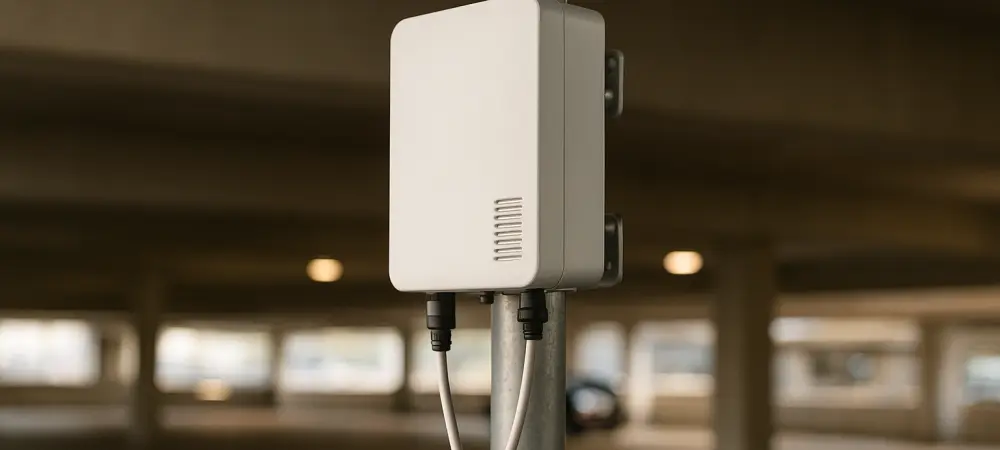
Traditionally, setting up a cell site is a logistical nightmare involving fiber permits, power sourcing, and meticulous manual alignment. These new repeater nodes change the game by scanning 360 degrees to autonomously locate the best donor signal, which drastically cuts down on the manual labor required during installation. Once they find that signal, they start relay operations automatically, creating a self-configuring mesh that feels more like a living organism than a static piece of hardware. This architecture also brings a newfound resilience to the field; if one path is blocked by a moving truck or a new construction project, the traffic can be rerouted through another path. It moves us away from the brittle “one-and-done” setup of the past and toward a more flexible, reliable infrastructure that can survive the chaos of a dense urban environment.
The results from the Tokyo trials are staggering, particularly regarding coverage jumps. How do these metrics reshape the conversation around total cost of ownership for operators?
The financial data coming out of the Tokyo trial with KDDI is a wake-up call for the industry, showing a jump in road-level 28 GHz coverage from a meager 33% to a near-perfect 99%. Even more impressive is the eighteen-fold increase in downlink traffic, which proves that when you make mmWave accessible, users will absolutely flood the network with data. From a business perspective, the most compelling figure is the projected 50% reduction in total ownership costs over the next nine years when compared to the old model of deploying individual base stations. Operators are no longer forced to sink capital into massive amounts of fiber and site permits for every few hundred feet of coverage. By using these repeaters as building blocks, they can achieve high-density capacity in stadiums or airports at a fraction of the historical cost.
As we look toward the integration of AI and the eventual shift to 6G, how do these repeaters serve as a foundation for even higher frequency bands?
We are entering an era where network designs must be smarter, not just bigger, and these repeaters are the first step toward a coordinated AI-driven ecosystem. As we move through 2026 and beyond, we expect to see AI tools dynamically choosing the best signal paths and adjusting coverage footprints in real-time based on traffic patterns. This flexibility is absolutely vital for the 6G era, which will likely utilize even higher frequencies that have even shorter ranges than what we see today. By perfecting this multi-hop architecture now, we are building the blueprint for a network that can overcome the extreme physical limitations of those future bands. It’s about creating a flexible, intelligent layer that can respond to environmental changes without human intervention.
What is your forecast for the adoption of multi-hop architectures in complex industrial and urban environments over the next decade?
I predict that from 2026 to 2035, the traditional “base station only” model will become an antique, replaced by a hybrid approach where multi-hop repeaters are the standard for smart cities, factories, and enterprise campuses. We will see these nodes tucked into streetlights and factory rafters, creating a seamless blanket of high-capacity wireless that feels invisible yet omnipresent. As total ownership costs continue to plummet and AI integration matures, even mid-sized enterprises will be able to afford the kind of low-latency, high-speed connectivity that was once reserved for tech giants. The success of these trials confirms that the future of wireless isn’t just about the raw power of the signal, but the intelligence and efficiency with which we distribute it.