

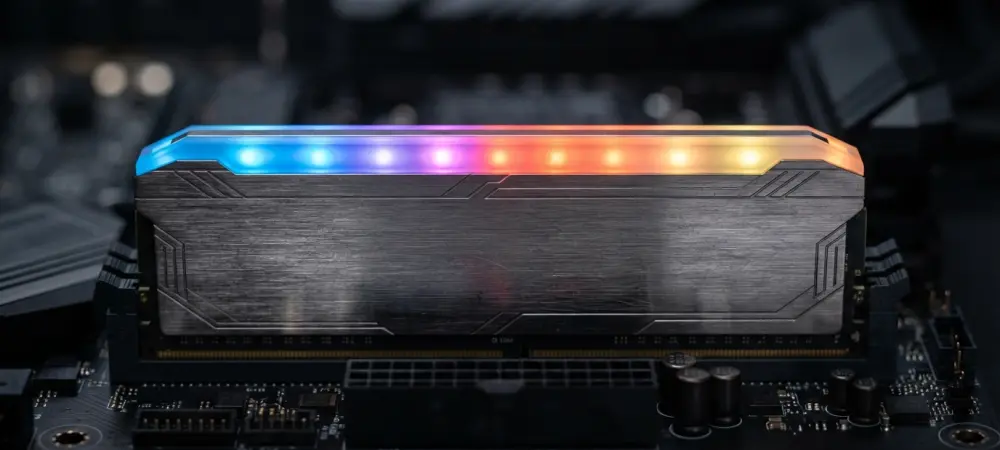
Achieving the perfect balance between raw throughput and instantaneous responsiveness has become the ultimate hurdle for modern hardware enthusiasts seeking to eliminate the architectural bottlenecks that plague current high-performance computing platforms. The KLEVV CRAS V RGB PRIME represents a significant advancement in the high-performance memory sector by bridging this gap. This review explores the evolution of DDR5 technology, its key features, and the impact it has on various high-end computing applications. Understanding the current capabilities of these modules provides a clear view of how enthusiast hardware continues to push the boundaries of system efficiency.
Introduction to Ultra-Low Latency DDR5 Evolution
The industry has witnessed a rapid transition from standard DDR5 frequencies toward specialized, high-frequency modules that prioritize low latency. While early iterations focused purely on raw megatransfers, the market in 2026 demands responsiveness that matches the increased core counts of modern processors. KLEVV has positioned itself as a central player in this landscape by introducing the CRAS V RGB PRIME series to target the enthusiast segment.
Optimizing memory for modern multi-core systems is no longer optional but a necessity for maintaining data flow without congestion. This series addresses these requirements by integrating advanced firmware profiles with high-grade physical components. The emergence of such hardware reflects a broader shift in consumer expectations toward components that offer both speed and reliability under heavy workloads.
Technical Architecture and Core Performance Features
AMD EXPO Ultra-Low Latency (ULL) Technology
A standout feature of this series is the implementation of the industry-first EXPO ULL technology, which specifically optimizes secondary sub-timings. Unlike standard profiles that focus on primary timings, ULL dives deeper into the memory controller’s logic to reduce wait states during data cycles. This granular optimization results in a reported 4% performance uplift in gaming scenarios compared to standard kits.
For AMD-based enthusiast systems, this technology is vital for maintaining the performance of the Infinity Fabric. By tightening the latency between the processor and the memory, the system achieves a more cohesive synchronization. This implementation distinguishes KLEVV from competitors who often rely on generic overclocking profiles that do not account for the nuances of specific CPU architectures.
High-Frequency Specifications and Signal Integrity
The hardware reaches a speed ceiling of 8000 MT/s, which is complemented by aggressive configurations such as CL26 at 6000 MT/s. Achieving these figures requires a 10-layer PCB designed to minimize electromagnetic interference and maintain data stability at high voltages. The use of high-quality memory ICs ensures that the modules can withstand the thermal stress of sustained high-speed operation. Technical stability is further bolstered by the inclusion of a dedicated Power Management IC (PMIC) and On-Die ECC. The PMIC provides precise voltage regulation, while the error correction code manages data integrity in real-time. These features are essential for users who push their hardware to the limit, as they prevent system crashes and data corruption during intensive tasks.
Emerging Trends in Memory Performance and Efficiency
Current market trends indicate a move toward prioritizing latency reduction over raw clock speed in high-end gaming. While high frequencies are impressive on paper, lower latency provides a more tangible improvement in frame time consistency. Additionally, there is an increasing demand for dual-channel kits with massive capacities, often reaching up to 128 GB to accommodate modern software requirements. Universal compatibility has also become a standard expectation for premium modules. The CRAS V RGB PRIME facilitates this by supporting both Intel XMP and AMD EXPO ecosystems. This versatility allows users to migrate between platforms without needing to replace their memory, ensuring a longer lifecycle for the investment in 2026 and beyond.
Real-World Applications and Use Cases
In high-frame-rate gaming, the primary benefit of low-latency memory is the elimination of micro-stuttering. By ensuring that the CPU is never waiting for data from the RAM, the system maintains a smoother visual experience even in CPU-bound titles. Professional content creators also benefit from the high-capacity 128 GB kits, which streamline video editing and complex 3D rendering tasks.
Aesthetic integration plays a significant role in premium PC builds, where hardware must look as good as it performs. The customizable RGB synchronization allows the modules to blend into various design themes through major motherboard software. This combination of visual appeal and professional-grade performance makes the series suitable for both creative workstations and show-piece gaming rigs.
Challenges and Technical Barriers to Adoption
Despite the performance gains, high-voltage and low-latency operations present significant thermal hurdles. Keeping the memory ICs cool requires efficient aluminum heat spreaders, especially when running at the tightest CL26 timings. Overcoming these thermal limits is a constant challenge for manufacturers trying to maintain a balance between speed and longevity. Platform-specific limitations also dictate market accessibility. Achieving the full 8000 MT/s speed requires top-tier motherboards with specialized traces, which limits the potential user base to the highest end of the market. Furthermore, the premium pricing of these modules creates a barrier for users who must weigh the cost against the marginal performance gains in everyday tasks.
The Future of High-Performance Memory Modules
Looking ahead, the path toward DDR6 from 2026 to 2028 will likely build upon the stability established by current DDR5-8000+ standards. Automated AI-driven sub-timing optimization in future BIOS versions could eventually replace manual tuning, making ultra-low latency accessible to a wider audience. This evolution will further reduce the technical knowledge required to maximize system potential.
The long-term impact of these standards will be felt most in professional workstation efficiency. As datasets grow larger, the reliance on ultra-low latency memory will become even more pronounced. This trajectory suggests that the innovations seen today in the CRAS V RGB PRIME will soon become the baseline for all high-performance computing.
Final Assessment of the KLEVV CRAS V RGB PRIME
The KLEVV CRAS V RGB PRIME successfully established a new standard for high-performance DDR5 memory by focusing on the harmony between speed and latency. The integration of EXPO ULL technology provided a measurable advantage for users on modern platforms, proving that sub-timing optimization was just as critical as raw clock cycles. The design choices, from the 10-layer PCB to the customizable lighting, catered effectively to the aesthetic and functional needs of the enthusiast market.
Ultimately, the series offered a compelling value proposition for those who required the absolute peak of memory performance in 2026. While the hardware demanded high-end supporting components to reach its full potential, the resulting stability and speed justified the investment. The move toward ultra-low latency signaled a maturation of the DDR5 era, setting the stage for future developments in workstation and gaming hardware.