

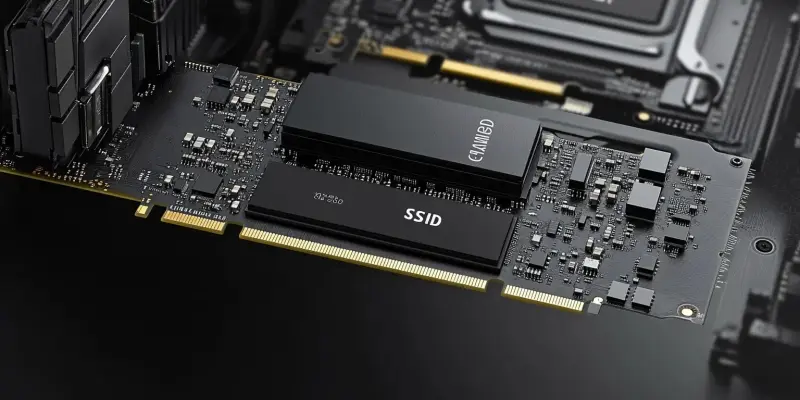
In a move to rival Samsung’s dominance in the high-speed SSD market, Kingston is gearing up to release its new Fury Renegade G5 SSD. The competitive landscape of SSD technology is heating up, with Kingston’s offering promising to match the current market leader in terms of performance and potentially offer even better write speeds. However, the timing and pricing of the release will likely play a crucial role in the competition between these two tech giants.
Kingston’s High-Speed Fury Renegade G5 SSD
Performance Specifications
Kingston’s upcoming Gen5 SSD, the Fury Renegade G5, is set to challenge Samsung’s 9100 Pro SSD series with impressive performance specifications. The Fury Renegade G5 is anticipated to boast read and write speeds of up to 14,800MBps and 14,000MBps, respectively. This impressive write speed surpasses Samsung’s current offerings, while the read speed matches that of the 9100 Pro series.
Despite the Fury Renegade G5’s promising performance, the competition is fierce. Samsung has established itself as a market leader with its 9100 Pro series. The battle for supremacy in the SSD market will continue to be driven by factors beyond just raw speed, with pricing and availability playing significant roles. Kingston’s ability to deliver its new SSDs to market promptly and at competitive prices could determine its success against Samsung.
Storage Capacities and Controller Technology
Kingston is expected to offer the Fury Renegade G5 SSD in similar capacities to Samsung’s 9100 Pro series. The Fury Renegade G5 will likely be available in 1TB, 2TB, and 4TB variants, catering to various storage needs of consumers. However, Kingston has not yet indicated whether an 8TB version will be released, which Samsung has announced for its 9100 Pro series.
The two brands employ different controller technologies for their SSDs. Kingston’s Fury Renegade G5 utilizes Silicon Motion’s SM2508 controller, while Samsung relies on its proprietary controller. The 1TB model of Kingston’s Fury Renegade G5 boasts 2,200,000 IOPS for read operations and 2,250,000 IOPS for write operations. For the 2TB and 4TB versions, a uniform performance of 2,200,000 IOPS is expected. These specifications position Kingston’s SSDs as formidable competitors in terms of IOPS performance.
Samsung’s Strong Industry Position
Current Market Leadership
Samsung has long been a dominant player in the SSD market, and its 9100 Pro series is currently the fastest on the market. Priced at $200 for 1TB, $300 for 2TB, and $550 for 4TB, the 9100 Pro series offers customers a range of storage capacity options at competitive pricing levels. Additionally, the upcoming 8TB model is expected to further solidify Samsung’s market leadership, providing users with high-capacity solutions for their storage needs.
One advantage that Samsung currently holds over Kingston is market availability. The 9100 Pro series is already available for purchase, giving Samsung a head start in the market. In contrast, Kingston has not yet announced an official launch date for the Fury Renegade G5 SSD, although the recent leak of the press images suggests that its release might be imminent. The timing of Kingston’s product launch will be critical in determining its ability to capture market share from Samsung.
Strategic Focus and Market Trends
As high-speed SSD technology advances, both Samsung and Kingston are strategically focusing on larger storage capacities to meet consumer demands. This trend is evident in their respective product offerings, as both companies have eschewed 512GB options in favor of higher-capacity models. The competition in this segment is expected to bring innovations and improvements in SSD technology, benefiting consumers with faster and more efficient storage solutions.
While Samsung’s 9100 Pro series has set a high benchmark in the market, Kingston’s Fury Renegade G5 SSD is poised to offer strong competition. The introduction of the Fury Renegade G5 with its faster write speeds presents an opportunity for Kingston to position itself as a credible contender. However, the overall success of Kingston’s SSD will depend on its pricing strategy and ability to meet market demand promptly.
Looking Ahead: Consumer Benefits and Market Impact
Implications for Consumers
The competition between Kingston and Samsung is likely to have positive implications for consumers. As both companies vie for supremacy in the high-speed SSD market, users can expect to see advancements in technology and potentially more competitive pricing. The availability of high-performing SSDs with increased storage capacities offers consumers a broader range of options to suit their specific needs, whether for gaming, video editing, or other data-intensive applications.
The differing controller technologies and performance specifications between Kingston’s Fury Renegade G5 and Samsung’s 9100 Pro series provide consumers with choices tailored to their preferences. Users who prioritize superior write speeds may find Kingston’s offering more appealing, while those who value an established brand with a proven track record may lean towards Samsung. Ultimately, the decision will come down to individual requirements and budget considerations.
Conclusion: Future Developments and Market Dynamics
In a strategic effort to challenge Samsung’s stronghold in the high-speed SSD market, Kingston is preparing to launch its innovative Fury Renegade G5 SSD. The landscape of SSD technology is becoming increasingly competitive, and Kingston’s new offering is poised to match, if not surpass, the leading performance benchmarks set by Samsung. With the promise of potentially superior write speeds, this new SSD could significantly shift the balance of power in the market. However, the success of Kingston’s Fury Renegade G5 will heavily depend on the timing of its market introduction and its pricing strategy. The precise launch date and price point will be vital in determining whether Kingston can successfully lure customers away from Samsung and establish itself as a formidable competitor. As the SSD market evolves, consumers are paying close attention to innovations and improvements in speed, reliability, and cost. Kingston’s ability to deliver on these fronts will be crucial in its bid to compete fiercely with Samsung and capture a significant share of the market.