

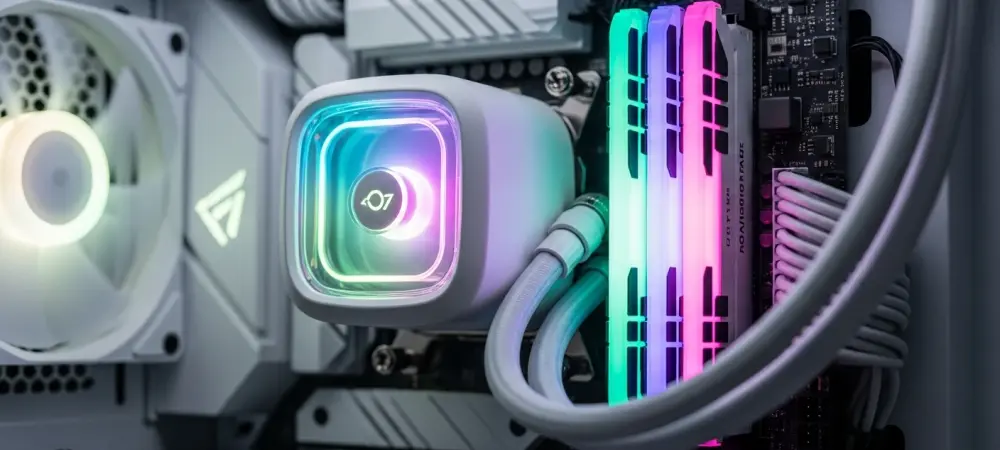
The quest for optimal PC performance often leads builders to a critical crossroads where thermal management intersects with budget constraints, making the choice of a CPU cooler a pivotal decision. In this competitive landscape, the Kingcool Pure Flow 360 emerges as a compelling new All-In-One (AIO) liquid cooling solution that aims to disrupt the market by blending high-end performance with a strikingly accessible price point of around $90. Despite Kingcool being a recent entrant, having been established in 2023, the brand is built on a solid foundation of expertise, with its engineering team hailing from a sister company with decades of experience in manufacturing GPU heatsinks. This heritage is evident in the design of the Pure Flow 360, the brand’s flagship offering. Available in both 360mm and 240mm radiator sizes and finished in either matte black or a pristine matte white, this cooler is engineered not just to cool effectively but to deliver the sophisticated aesthetic of a custom water-cooling loop within a user-friendly, closed-loop system.
Unboxing the Aesthetics and Build
A Clean and Cohesive Look
The Kingcool Pure Flow 360 makes an immediate and powerful visual impression, particularly in its matte white variant, which offers a uniform and immaculate finish across the radiator, fans, and pump housing. This thoughtful color-matching makes it a prime candidate for the increasingly popular all-white PC build aesthetic, where every component contributes to a clean, cohesive look. The 360mm radiator, with its dimensions of 397x120x27mm, features aluminum fins that are also meticulously coated in white paint, ensuring no detail is overlooked. However, the undisputed centerpiece of the design is the CPU water block. It incorporates a substantial, transparent acrylic housing that provides an unobstructed view of the coolant flowing within, a dynamic effect that is beautifully amplified by integrated Addressable RGB (ARGB) lighting. This design choice cleverly emulates the appearance of a premium, custom-built waterblock, transforming a functional component into a captivating visual focal point that elevates the entire system’s appeal without the complexity or cost of a full custom loop.
Inside the Machine
Beneath its visually striking exterior, the Pure Flow 360 houses a suite of well-engineered components designed for performance and reliability. The CPU block is built around a screwless, full-plate copper base, a design innovation that enhances the unit’s water-tightness by eliminating the traditional screw perforations that can be potential points of failure. Efficient heat dissipation is achieved through a 0.1mm micro-channel design etched into the copper plate, a technique that significantly increases the surface area for more effective thermal transfer from the CPU. The cooler is equipped with three 120mm Fluid Dynamic Bearing (FDB) fans, which are not only known for their quiet operation and long lifespan but also come conveniently pre-installed on the radiator. These fans feature a practical daisy-chain connection system for both their 4-pin PWM power and 3-pin ARGB lighting cables, which greatly simplifies the installation process and aids in managing cable clutter. The fans offer a variable speed range of 800 to 2000 RPM, while the pump operates between 2600 and 3400 RPM with a nearly inaudible maximum noise output of just 20 dBA.
Putting Performance to the Test
Real-World Performance and Versatility
In practical application, the Kingcool Pure Flow 360 demonstrated that its impressive specifications translate directly into commendable cooling capabilities. When subjected to the thermal demands of a high-end processor like the AMD Ryzen 9 7950X3D, the cooler maintained temperatures that were comfortably on par with other mainstream 360mm AIO solutions. This achievement is particularly significant given that many of its competitors occupy a much higher price bracket, firmly positioning the Pure Flow 360 as a standout value proposition in the market. The combination of its effective thermal management and the quiet operation of both its FDB fans and low-noise pump creates a balanced performance profile that appeals to enthusiasts and everyday users alike. Further enhancing its value is its broad compatibility, offering support for all modern CPU sockets, including Intel’s LGA 1700 and 1851 series, as well as AMD’s AM5 and AM4 platforms. This ensures versatility for a wide range of current and upcoming builds, backed by the long-term confidence of a 6-year warranty that rivals those of many premium brands.
The Good and the Noteworthy
The overall assessment of the Kingcool Pure Flow 360 was overwhelmingly positive, presenting a package that successfully balanced performance, style, and affordability. Its ability to deliver excellent cooling performance comparable to more expensive 360mm AIOs was its most significant strength, proving that budget-conscious builders no longer need to compromise on thermal headroom. This was complemented by the low noise output from both the pump and the fans, ensuring a quiet computing environment even under heavy load. The unique aesthetics, centered on the transparent, waterblock-style pump head with its vivid ARGB lighting, provided a distinct visual flair that set it apart from conventional AIO designs. Furthermore, user-friendly touches like the pre-installed and daisy-chained fans streamlined the installation process, a welcome feature for builders of all experience levels. While the cooler excelled in most areas, a couple of minor points were noted. Despite the daisy-chain system, overall cable management could still present a slight challenge in some cases. Additionally, the prominent and transparent pump housing, while a defining feature, might have a polarizing aesthetic that may not seamlessly integrate with every build’s specific style.