

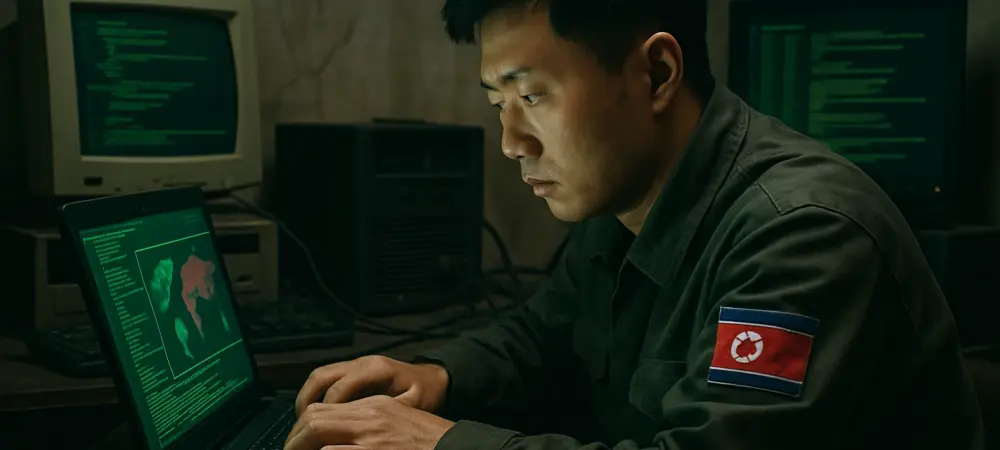
In a startling revelation that has sent ripples through the cybersecurity community, a massive data leak from North Korea’s notorious Kimsuky Advanced Persistent Threat (APT) group has come to light on a dark-web forum in recent weeks. This breach, encompassing virtual machine images, server infrastructure details, custom malware, and thousands of stolen credentials, offers a rare and detailed glimpse into the sophisticated cyber espionage tactics employed by a state-sponsored actor targeting critical networks across South Korea, the United States, Japan, and Europe. Analyzed by expert researchers, the exposed materials lay bare the meticulous strategies behind phishing campaigns, persistence mechanisms, and detection evasion techniques. This incident not only highlights the persistent threat posed by the Democratic People’s Republic of Korea (DPRK) in the digital realm but also underscores the urgent need for heightened defenses against such covert operations.
Unveiling the Tools and Techniques
Dissecting the Malware Arsenal
The leaked data provides an in-depth look at the diverse and highly customized toolkit wielded by Kimsuky, showcasing their technical sophistication in cyber espionage. Among the most striking discoveries are artifacts like the Tomcat Kernel Rootkit, a stealthy Linux module designed to hook network functions and establish reverse shells, making it nearly undetectable by conventional security tools. Additionally, a tailored Cobalt Strike beacon, updated recently, features unique command-and-control profiles over HTTP on a specific port, demonstrating a blend of proprietary code with open-source frameworks. These tools are engineered to bypass standard defenses, revealing a calculated approach to maintaining access within compromised systems. The adaptability of such malware highlights how state-sponsored actors continuously evolve to exploit vulnerabilities in targeted infrastructures, posing significant challenges to cybersecurity professionals tasked with safeguarding sensitive networks.
Beyond the rootkits and beacons, the leak exposes nearly 20,000 browser history records that map out spear-phishing targets, often high-value individuals or entities. This meticulous targeting is complemented by tools like a Java-based application used to crack South Korean Government Public Key Infrastructure (GPKI) certificates, enabling the impersonation of officials and the forging of critical documents. Such capabilities illustrate a deep understanding of the administrative and technical environments of their targets, allowing Kimsuky to craft convincing lures for their campaigns. The integration of these specialized tools with broader phishing strategies points to a multi-layered operation that prioritizes both precision and scale, ensuring that once access is gained, it can be exploited for prolonged intelligence gathering without triggering immediate suspicion or response from defenders.
Operational Infrastructure Insights
Delving into the operational side, the leaked data includes virtual machine images from a Deepin Linux setup and details of a public-facing Virtual Private Server (VPS), shedding light on the group’s working environment. Logs from the VPS reveal active spear-phishing efforts aimed at prominent South Korean institutions, such as the Defense Counterintelligence Command and the Supreme Prosecutor’s Office, indicating a clear focus on entities with access to sensitive national security information. The preservation of host drive contents within the VM images further exposes the tailored environments used to orchestrate these attacks, complete with specific browser extensions and desktop configurations. This level of detail in the operational setup suggests a highly organized approach, where every element is fine-tuned to support espionage objectives while minimizing the risk of exposure.
Equally revealing are the persistence mechanisms embedded within the infrastructure, particularly the use of kernel-level implants to maintain long-term access. Techniques such as port knocking and encrypted reverse shells ensure that backdoors remain hidden from user-space monitoring tools, only activating under pre-authorized conditions. This strategic emphasis on stealth over disruption reflects a broader trend among state-sponsored groups to prioritize sustained access for intelligence collection rather than immediate destructive impact. The sophistication of these tactics necessitates advanced host-based detection strategies from cybersecurity teams, as traditional perimeter defenses are often insufficient against such deeply embedded threats. The leaked infrastructure details serve as a stark reminder of the resources and planning invested in these operations, challenging defenders to rethink their approaches to identifying and mitigating persistent threats.
Strategic Implications of the Breach
Stealth and Long-Term Espionage Focus
A key takeaway from the analysis of this data leak is Kimsuky’s unwavering commitment to stealth and prolonged access within targeted networks, a hallmark of their espionage strategy. By leveraging kernel-level implants alongside encrypted command-and-control traffic, the group ensures that their presence remains masked amid normal network activity, with backdoors only accessible through specific authentication methods like port knocking. This methodical approach to evasion allows for extended periods of undetected operation, during which sensitive intelligence can be systematically extracted. Such tactics are emblematic of a broader shift among state-sponsored actors, where the goal is not merely to breach systems but to embed within them, creating a persistent threat that can be exploited over months or even years.
The implications of this focus on stealth are profound for organizations in the crosshairs of such threats, as it underscores the difficulty of detecting deeply entrenched adversaries. The use of customized tools alongside commercial frameworks like Cobalt Strike further complicates attribution and response efforts, as defenders must contend with a blend of familiar and novel attack vectors. The diversity of the leaked materials, from phishing email addresses to internal guides in multiple languages, paints a picture of a highly coordinated operation with a nuanced understanding of target environments. This breach serves as a critical wake-up call for enhancing detection capabilities, emphasizing the need for continuous monitoring and advanced threat hunting to uncover hidden footholds before they can be leveraged for significant intelligence theft or strategic disruption.
Broader Landscape of State-Sponsored Threats
Examining the leaked data within the context of global cyber threats reveals how Kimsuky fits into the larger ecosystem of DPRK-sponsored operations, characterized by calculated and multi-faceted approaches to espionage. The exposure of SSL certificates, authentication logs, and stolen credentials alongside custom malware illustrates a comprehensive strategy that targets both technical and human vulnerabilities. This duality—combining sophisticated implants with social engineering tactics like spear-phishing—enables the group to penetrate high-value networks while maintaining a low profile. The ability to seamlessly merge bespoke and commercial tools further amplifies their reach, allowing them to adapt to diverse defensive postures across different regions and sectors.
Looking ahead, this incident highlights the evolving nature of state-sponsored cyber threats, where persistence and evasion often take precedence over overt disruption. The insights gained from analyzing thousands of compromised credentials and phishing targets underscore the scale of Kimsuky’s ambitions, particularly in regions with geopolitical significance to the DPRK. As researchers anticipate years of actionable intelligence from this data dump, the cybersecurity community faces a pressing need to adapt. Strengthening defenses against such adversaries requires not only technological innovation but also international collaboration to share threat intelligence and develop proactive strategies. The lessons learned from this exposure urge a collective push toward resilience, ensuring that critical networks remain secure against the stealthy and persistent dangers posed by state-backed actors.