

Short introductionI’m thrilled to sit down with Dominic Jainy, an IT professional with deep expertise in artificial intelligence, machine learning, and blockchain, who also brings a unique perspective on technology infrastructure projects. Today, we’re diving into the €3 billion data center campus near Naas, Ireland, recently approved by Kildare County Council. Our conversation explores the project’s ambitious scope, energy strategies, potential challenges, and its broader implications for sustainable tech development in Ireland.
What inspired the development of this massive data center campus at Jigginstown, Halverstown, and Newhall near Naas?
The primary goal of this campus is to meet the growing demand for data storage and processing power in Ireland, which is becoming a hub for tech infrastructure in Europe. The location near Naas, close to the M7 Business Park, offers strategic access to connectivity and transport networks. It’s about supporting the digital economy—think cloud services, AI, and big data applications—that are driving global innovation. This project is positioned to bolster Ireland’s reputation as a key player in the tech space.
Can you break down the scale of this campus in terms of its size and capacity once it’s fully operational?
Absolutely. The campus spans three hectares, which is a significant footprint for a data center project. It will consist of six two-storey buildings, each housing a data hall of about 24,755 square meters, with a capacity of 30 megawatts per building. Once fully built, the entire campus will deliver a whopping 180 megawatts of capacity, making it one of the largest facilities of its kind in the region.
What types of facilities or technologies are planned for the six data center buildings to support their operations?
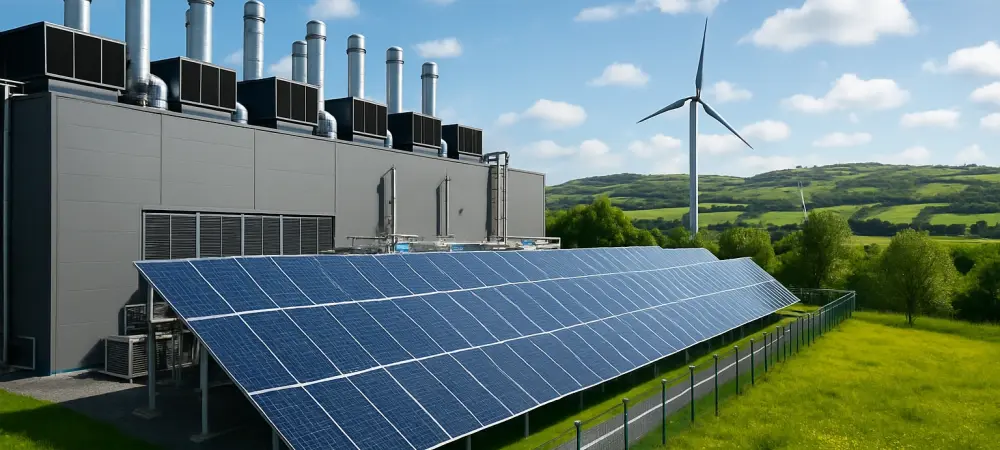
Each building will be equipped with state-of-the-art infrastructure, including gas turbines, gas engines, and battery energy storage systems. These components are designed to ensure a reliable power supply and operational efficiency. The data halls themselves will be fitted with advanced cooling and server systems to handle the intense computational demands while maintaining energy efficiency, which is critical for such a large-scale operation.
Can you share some insights into Herbata Limited and their role in spearheading this €3 billion initiative?
Herbata Limited is the operator behind this ambitious project. They’re a company focused on developing high-capacity tech infrastructure, and this campus is a flagship endeavor for them. Their expertise lies in managing large-scale data center projects, ensuring they meet both technical and regulatory standards. Herbata’s vision here is not just about building capacity but also about integrating sustainability into their operations, which we’ll touch on later.
How is the campus planning to address its substantial energy requirements, especially in terms of balancing renewable and non-renewable sources?
The energy strategy for this campus is a blend of practicality and ambition. Herbata has committed to sourcing 50 percent of the power from renewable energy through Power Purchase Agreements, which is a step toward greener operations. The other half will come from an on-site gas-fired power plant. While natural gas isn’t ideal from an environmental standpoint, it provides a stable energy supply for now, with plans to transition to cleaner alternatives down the line.
Why did Herbata opt for an on-site gas-fired power plant for half of the energy supply, and what are the trade-offs involved?
The decision to use an on-site gas-fired plant is largely about reliability. Data centers require uninterrupted power, and gas provides a consistent, controllable energy source, unlike some renewables that can be intermittent. The trade-off, of course, is the environmental impact—natural gas is a fossil fuel and contributes to carbon emissions. However, it’s a bridging solution until more sustainable options, like hydrogen, become viable at scale.
Speaking of hydrogen, can you elaborate on Herbata’s long-term goal of transitioning to hydrogen power and how feasible that vision is?
The plan to eventually power the entire campus with hydrogen is forward-thinking. Hydrogen, when produced using renewable energy, is a clean fuel that emits only water vapor when burned. Herbata sees this as the future of data center energy. However, the challenge lies in production costs and infrastructure—hydrogen isn’t yet widely available or economically competitive compared to gas. That said, with advancements in technology and growing investment in green hydrogen, it’s a realistic goal, though likely a decade or more away.
What prompted Herbata to revise their development plans in July 2024, and how did those changes reflect broader priorities?
In July 2024, Herbata updated their plans primarily to emphasize sustainability. There’s increasing scrutiny on data centers due to their high energy consumption, and Herbata responded by enhancing their commitment to renewable energy. This revision wasn’t just about meeting regulatory expectations; it was also about aligning with global trends toward greener tech infrastructure and addressing public concerns about environmental impact.
What potential opposition does this project face, and how has Herbata’s leadership responded to those concerns?
Opposition to data centers in Ireland isn’t uncommon, often due to concerns over energy use and environmental impact. Herbata’s CEO has publicly acknowledged the likelihood of appeals against the project, expecting challenges to be escalated to Ireland’s planning body. Their stance is to engage transparently with stakeholders, emphasizing their sustainability commitments and the economic benefits, like job creation, that the campus will bring to the area.
Can you walk us through the appeal process with An Coimisiun Pleanala and its potential impact on the project’s timeline?
If an appeal is filed with An Coimisiun Pleanala, Ireland’s national planning authority, the body will review the project’s approval to ensure it complies with planning and environmental standards. By law, they aim to decide within 18 weeks, though complex cases can take longer. If permission is upheld, the project moves forward; if not, it could face delays or even cancellation. Appeals can also be challenged further through judicial review, but only on procedural or legal grounds, which adds another layer of uncertainty.
How common are appeals or legal challenges for data center projects in Ireland, and what does this trend suggest about public sentiment?
Appeals are quite frequent for data center projects in Ireland. Recent cases, like challenges in County Louth and Mayo, show a pattern of public and organizational pushback, often driven by environmental concerns and fears of overtaxing the national grid. This trend reflects a broader tension between Ireland’s role as a tech hub and the public’s growing awareness of sustainability issues. It’s a balancing act—economic growth versus ecological responsibility.
What is your forecast for the future of large-scale data center projects in Ireland, given the challenges and opportunities on the horizon?
I think the future of data centers in Ireland is promising but will require careful navigation. The demand for digital infrastructure isn’t going away—it’s only going to grow with AI and cloud computing. However, projects will need to prioritize sustainability, whether through renewable energy or innovative cooling technologies, to gain public and regulatory support. I foresee stricter policies on energy use, but also more collaboration between tech companies and government to find solutions. Ireland can remain a leader in this space if it balances growth with environmental stewardship.