

Introduction
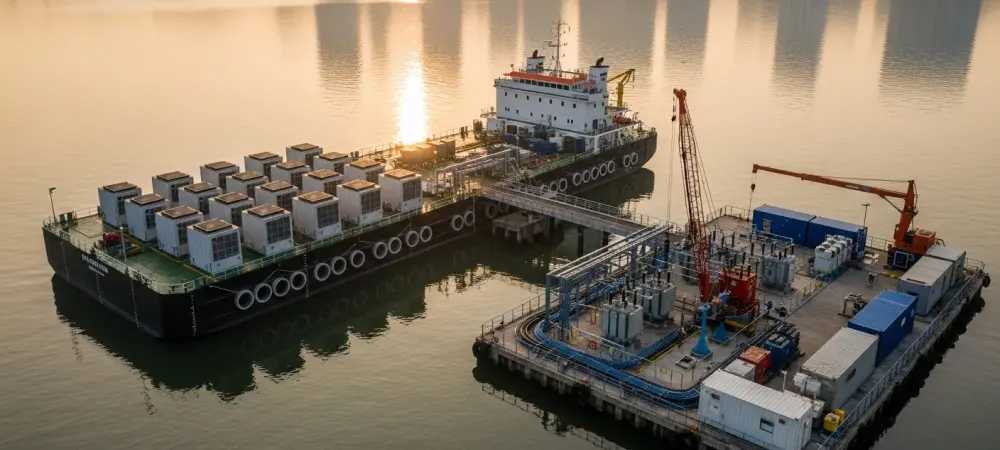
Singapore’s data appetite vaulted past available land, power headroom, and cooling water long ago, forcing bold ideas to the surface and turning the waterfront into a frontier for critical digital infrastructure. Along a near‑shore berth at 25 Loyang Crescent, Keppel is building a 25MW floating data center designed to shift load off crowded streets and onto the sea, where colder ambient conditions and modular hulls open new options. The project, known as Keppel DC SGP 9, pairs a four‑story, 19.2MW waterborne module with shoreside systems and a direct link to Keppel’s Genting Lane campus. Engineers emphasize redeployability: if policies, grid paths, or demand patterns change, the platform can move, expand, or be refitted faster than a landlocked build.
Nut Graph
This facility matters because Singapore’s state‑directed capacity allocation sets strict gates for emissions and efficiency even as AI and cloud services surge. Operators now compete not only on megawatts and fiber paths but on power usage effectiveness, renewable share, and water stewardship. Keppel’s approach aligns with that rubric. The target PUE is 1.25 or better at full IT load, at least half of consumed power must come from green sources, and the design aims for Green Mark for Data Centres 2024 Platinum. By leaning on seawater cooling instead of potable or industrial supplies, the platform addresses both heat and water stress while keeping siting near cable landings and grid nodes.
Body
At the core is a modular barge‑like structure berthed near shore, occupying about 7,580 m² of sea surface and 9,870 m² of adjacent land for transformers, switchgear, and support rooms. “Designing the hull and MEP stack together let thermal economics and maintainability drive the layout,” said a project engineer involved in early studies. The plan is funded by Keppel Data Centre Fund II and slated to go live by 2028, with phased activation to match customer ramps.
Cooling is the swing factor. High‑delta‑T exchangers and filtered seawater circuits reduce chiller loads and cut reliance on municipal supplies, while corrosion protection and biofouling control keep efficiency stable. “You do not win on day one; you win by holding performance in year five,” noted a marine O&M advisor, pointing to vibration damping, access planning, and spare‑parts staging as decisive details. The design fits Singapore’s broader strategy: concentrate growth where grid capacity is coordinated, pair sites with subsea cable clusters, and encourage greener procurement through long‑term PPAs or RECs. In contrast, earlier experiments showed the market’s uneven maturity. Nautilus operated a 6.5MW barge in California before shifting focus to cooling IP and putting the asset up for sale. Denv‑R’s French unit proved localized viability but not scale. Japanese pilots off Yokohama explored platforms with solar and batteries, while concepts from Mitsui O.S.K. Lines with Kinetics and Hitachi remained in collaborative development. Practitioners now converge on a pragmatic checklist: map bathymetry and berth access early; integrate shore power interconnects and backup generation with clear interface risk across shipyard, MEP, and IT scopes; and model PUE at full load, not partial. Permitting also becomes multidisciplinary, harmonizing maritime, environmental, and data‑center codes. “Capacity will flow to teams that master these seams,” said a regional infrastructure strategist.
Conclusion
The floating build reframed site scarcity as a solvable engineering and policy problem, and it placed clear metrics—PUE, renewable share, water savings, and uptime—at the center of design. Next steps pointed toward disciplined execution: secure green power contracts aligned with load curves, finalize corrosion and biofouling regimes for lifecycle stability, and stage modular expansions to track allocation windows. If those pieces held, Singapore’s standards would have nudged floating data centers from scattered pilots to dependable production assets, giving coastal hubs a template to add capacity without tripping grid or land limits.