

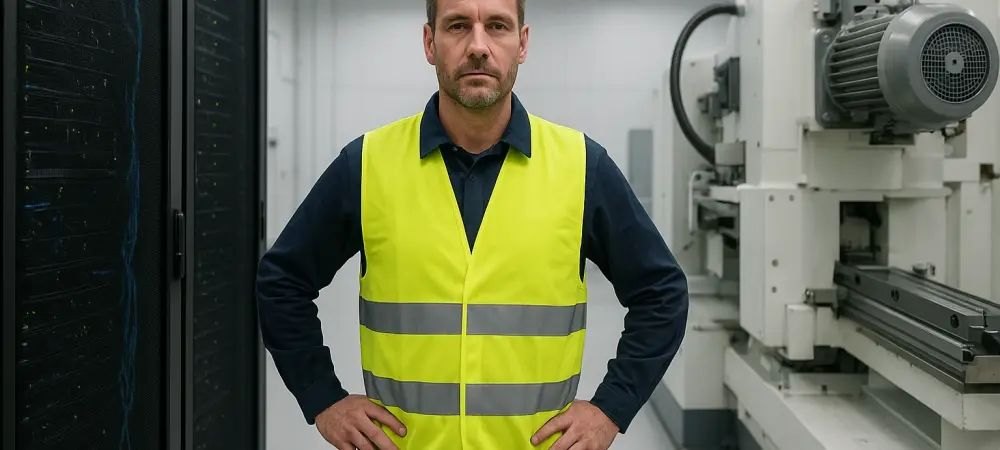
The invisible barrier that once protected the mechanical heart of global industry from the volatile currents of digital data has effectively dissolved, leaving modern enterprises in a race to synchronize their physical assets with complex computational intelligence. As organizations strive for unprecedented levels of efficiency and agility, the integration of these two domains has moved from a speculative advantage to a fundamental requirement for survival in the modern industrial landscape.
The challenge of this convergence lies not just in the hardware, but in the radical realignment of organizational philosophies that have remained stagnant for decades. Bridging these worlds requires more than just connecting cables; it necessitates a common language where digital insights can dictate physical outcomes with sub-millisecond accuracy. This review explores how this integration is reshaping the architecture of global commerce and why the path to a fully synchronized enterprise is fraught with both immense opportunity and significant risk.
Part 1: The Foundations of IT/OT Integration
The strategic integration of data-centric computing with the physical monitoring and control of industrial equipment is built upon a fundamental reimagining of what constitutes an industrial asset. To achieve a more responsive and transparent enterprise architecture, organizations must now dismantle these silos to create a unified operational environment where information flows freely between the boardroom and the assembly line.
Moving beyond traditional isolation requires a deep understanding of the core principles that govern both domains. This allows a company to move from a reactive posture, where maintenance occurs only after a breakdown, to a proactive posture where machines signal their own need for repair. The convergence effectively transforms “dumb” physical hardware into intelligent, communicative components of a broader business strategy.
This unification is not merely about technical compatibility but about creating a strategic synergy that enhances the visibility of the entire supply chain. By merging digital insights with physical actions, an organization can achieve a level of transparency that was previously impossible. This level of synchronization reduces waste, optimizes energy consumption, and allows for a more personalized approach to mass production, marking the end of the era where the business side of a company was blind to the realities of its production floor.
Part 2: Core Technical Components and Architectures
The Role of Industrial IoT and Sensor Networks
Modern convergence relies heavily on the deployment of Industrial Internet of Things devices that act as the sensory nervous system for industrial environments. This connectivity allows for real-time data flow from the factory floor to the enterprise level, providing a granular view of every mechanical process as it happens.
The intelligence of these sensor networks is what differentiates modern convergence from the simple remote monitoring systems of the past. By only transmitting relevant changes or critical alerts, these sensors ensure that the most important information is prioritized. This allows human operators and automated algorithms to focus on the data that truly impacts performance, rather than getting lost in a sea of inconsequential telemetry.
Furthermore, the shift toward intelligent sensors has enabled a more nuanced approach to asset management. By running simulations on the digital twin, an organization can test the impact of different operational parameters without risking the physical hardware. This creates a feedback loop where the digital world informs the physical world, leading to optimized performance and extended equipment life cycles that were previously unattainable through traditional maintenance practices.
Edge Computing and Standardized Communication
To handle the massive volume of data generated by industrial processes, edge computing has emerged as a vital component of the converged architecture. Edge computing provides the localized computational power necessary to make split-second decisions at the point of action, ensuring that the physical system remains stable and responsive.
This localized processing is supported by a fundamental shift from proprietary, closed protocols to standardized networking protocols like TCP/IP and MQTT. The adoption of open standards facilitates seamless communication between legacy hardware and modern cloud platforms, allowing for a truly heterogeneous industrial environment. This interoperability is what enables the horizontal integration of the supply chain, where systems from different vendors can share data and coordinate actions without the need for expensive and complex custom middleware.
Moreover, the move toward standardized communication has democratized access to industrial data. This bridge between the specialized world of industrial protocols and the ubiquitous world of enterprise networking allows for a more holistic view of the business. It empowers analysts to correlate machine performance with financial outcomes, providing a level of business intelligence that was once the exclusive domain of companies with massive engineering budgets.
Part 3: Current Trends and Strategic Shifts
The landscape of IT/OT convergence is currently shaped by the move toward Industry 4.0 and the increasing adoption of autonomous systems across all sectors. This shift means that the boundaries between departments are fading; the supply chain manager, the maintenance engineer, and the data scientist now work from the same set of real-time data. This alignment ensures that every decision made at the corporate level is grounded in the physical reality of the production floor, reducing the friction that often exists between strategic planning and tactical execution.
Furthermore, there is an increasing shift in industry behavior toward “Physical Convergence,” where organizations are retrofitting older “dumb” machinery with smart sensors to ensure all physical assets are visible within the digital framework. By adding connectivity to legacy assets, companies can extend the life of their current investments while still reaping the benefits of modern data analytics. This trend highlights a move away from the “rip and replace” mentality toward a more sustainable and incremental approach to digital transformation, ensuring that no asset is left behind in the transition to a connected enterprise.
Another defining trend of the current period is the rise of decentralized decision-making enabled by advanced AI at the edge. As machines become more intelligent, they are increasingly capable of negotiating with one another to optimize production flows without human intervention. This self-optimizing behavior represents a departure from the traditional top-down control hierarchies and moves the industry toward a more resilient, “mesh” style of operation. This shift not only increases efficiency but also makes the entire system more robust against localized failures, as the remaining components can automatically reconfigure themselves to maintain production.
Part 4: Real-World Applications and Sector Impact
Manufacturing and Industry 4.0
In the manufacturing sector, convergence allows for the deep integration of Manufacturing Execution Systems with Enterprise Resource Planning tools. This enables factories to automatically adjust production levels based on real-time inventory and market demand, significantly reducing the costs associated with overproduction and excess storage. In a modern “smart factory,” the system can track a customer order from the moment it is placed online to the moment the finished product leaves the loading dock.
The impact on quality control has been equally transformative. With IT/OT convergence, the system identifies the deviation the moment it occurs and either self-corrects the machinery or halts production immediately. This precision not only improves product quality but also drastically reduces the environmental footprint of manufacturing by minimizing scrap and rework.
Beyond the internal efficiencies of the factory, convergence is also redefining the relationship between manufacturers and their customers. Because the manufacturer can now monitor the health and usage of their machines remotely through integrated OT sensors, they can charge customers based on actual performance or uptime rather than a flat purchase price. This model aligns the interests of the manufacturer and the customer, as both parties benefit from the machine running as efficiently as possible for as long as possible, fostered by the continuous flow of data between the physical asset and the service provider’s IT systems.
Utilities, Healthcare, and Logistics
Beyond the factory floor, convergence is transforming critical infrastructure and public services in ways that directly impact daily life. Smart grids allow utility providers to monitor energy distribution in real-time, balancing the load between traditional power plants and intermittent renewable sources like wind and solar. By integrating weather forecasting data from IT systems with the physical switches and transformers of the power grid, utilities can anticipate surges or drops in demand and adjust the grid accordingly.
In the healthcare sector, the convergence of medical devices and information systems is saving lives by providing a more proactive approach to patient care. In a hospital setting, the integration of physical monitoring equipment with Electronic Health Records ensures that every change in a patient’s vital signs is instantly recorded and analyzed. This reduces the risk of human error and allows doctors to make more informed decisions based on a continuous stream of objective data rather than periodic manual checks.
In the world of logistics and transportation, convergence has become the backbone of modern global trade. Fleet management systems use integrated GPS and engine telemetry to optimize routes in real-time, taking into account traffic conditions, fuel efficiency, and the mechanical health of the vehicle. By predicting maintenance needs before a truck or ship breaks down, logistics companies can schedule repairs during natural idle times, ensuring that the physical movement of goods is never interrupted by avoidable mechanical failures.
Part 5: Challenges and Security Limitations
Cybersecurity Risks and Expanded Attack Surfaces
The primary challenge of IT/OT convergence is the removal of the traditional “air gap,” which leaves industrial systems vulnerable to a wide array of cyber threats. As these systems are connected to the corporate LAN and the broader internet, they become targets for sophisticated hackers and state-sponsored actors. Many legacy OT systems were not designed with modern security features like encryption, multi-factor authentication, or even basic password protection.
The consequences of a security breach in a converged environment are far more severe than in a traditional IT environment. While an IT breach might result in data theft or financial loss, an OT breach can lead to physical destruction, environmental disasters, or even the loss of life. This high-stakes reality requires a complete reimagining of industrial security, moving away from a perimeter-based defense toward a “Zero Trust” architecture where every device and every data packet is continuously verified regardless of its location on the network.
Moreover, the sheer number of connected devices in a converged environment creates a massive attack surface that is difficult for even the most well-funded security teams to monitor. To mitigate this risk, organizations must implement rigorous supply chain security standards and utilize automated threat detection tools that can identify anomalous behavior in real time. The goal is to move toward a “self-healing” security model where the network can automatically isolate a compromised device before it can spread malware to the rest of the industrial control system.
Organizational and Cultural Barriers
Successful adoption of IT/OT convergence is often hindered by a deep cultural divide between the professionals who manage these two disparate domains. IT teams are traditionally focused on the CIA triad—Confidentiality, Integrity, and Availability—of data, while OT teams prioritize physical safety and continuous uptime above all else. These conflicting priorities often lead to friction, as IT-driven security requirements can sometimes conflict with the immediate operational needs of the factory floor.
Bridging this gap requires a significant investment in cross-training and the establishment of new governance frameworks that prioritize shared goals. Organizations that succeed in convergence often create hybrid teams where IT and OT professionals work side-by-side on the same projects, learning each other’s languages and constraints. This cultural integration is often more difficult than the technical integration, as it requires changing the mindset of workers who have spent their entire careers in a siloed environment.
Furthermore, the lack of a standardized skillset for the converged era has created a significant talent gap. To address this, companies are increasingly turning to internal academies and specialized certification programs to build a workforce that understands both Python scripting and Programmable Logic Controller logic. This human-centric approach to convergence acknowledges that the most advanced technology is useless if the people tasked with managing it do not have the holistic understanding required to keep it running safely and efficiently.
Part 6: Future Outlook and Emerging Breakthroughs
The technology is heading toward a “Cognitive Age,” often referred to as Industry 5.0, where the lines between the physical and digital worlds become nearly indistinguishable. Future developments are expected to focus on the widespread integration of generative AI and reinforcement learning to manage fully autonomous operations. These systems will not just follow pre-programmed instructions but will actively learn from their environment, adapting to new challenges and optimizing their own performance in ways that human engineers might never have considered.
One of the most promising breakthroughs on the horizon is the maturation of the “Digital Thread,” which connects every stage of a product’s lifecycle—from design and manufacturing to usage and recycling—into a single, continuous loop of data. This will allow for “closed-loop engineering,” where data from a product in the hands of a consumer is fed back into the design software for the next version of that product. This level of integration turns the entire company into a single, learning organism that is constantly refining its output.
Additionally, the development of 6G and satellite-based industrial networking will likely eliminate the last remaining geographic barriers to convergence. From 2026 to 2029, the expansion of high-bandwidth, low-latency connectivity to the most remote corners of the planet will allow for the centralized management of global fleets and infrastructure in real-time. These breakthroughs will lead to a more equitable global industrial landscape, where the benefits of IT/OT convergence can be realized regardless of location, further accelerating the transition toward a more connected and efficient world.
Part 7: Summary of Findings and Assessment
The investigation into the current state of IT/OT convergence revealed that this transition was no longer a matter of choice but a structural necessity for any enterprise seeking to maintain its market position. The review found that the most successful implementations were those that did not treat convergence as a pure IT project, but rather as a fundamental redesign of the business’s operational DNA. It was clear that the historical “air-gap” served its purpose in a different era, but its continuation into the modern landscape only resulted in data blindness and operational inefficiency.
The assessment of the security landscape indicated that the risks associated with a larger attack surface were significant, yet they were not insurmountable when approached with a modern cybersecurity framework. The data suggested that the shift toward Zero Trust architectures and AI-driven threat detection provided a path forward that balanced the need for connectivity with the absolute requirement for physical safety. Furthermore, the economic benefits of convergence, particularly in the realms of predictive maintenance and mass customization, consistently outweighed the initial capital expenditure of retrofitting legacy systems.
Ultimately, the verdict reached by this review was that IT/OT convergence functioned as the essential foundation for the next generation of industrial evolution. The evidence gathered showed that organizations which embraced a holistic approach—valuing human collaboration and security as highly as technical connectivity—were significantly more resilient to market fluctuations and mechanical disruptions. For the forward-looking enterprise, the next logical step involved the aggressive pursuit of “cognitive” operations, where the integrated data stream is used not just for observation, but for the autonomous optimization of the entire business ecosystem.