

With over two decades of experience shaping global telecommunications and enterprise networks, our guest today is at the forefront of a monumental shift in digital infrastructure. He argues that the rise of artificial intelligence is not just an evolution but a breaking point for the internet as we know it, heralding an era he calls “Cloud 2.0.” We’ll explore why today’s networks are straining under the weight of AI, how the very design of data centers and enterprise wide-area networks must be reimagined, and what this transition means for CIOs who need to connect their data to a multi-cloud world.
You’ve introduced the term “Cloud 2.0,” suggesting the current internet infrastructure is fundamentally unequipped for AI. Moving beyond just the sheer increase in traffic, what specific architectural breaking points are you witnessing, and can you share an example of an enterprise workload hitting this wall?
Absolutely. The breaking points are less about simple volume and more about the character and gravity of the data itself. We’re seeing a hard ceiling imposed by latency and centralization. A classic example is a large retail client we worked with. They were trying to deploy a real-time inventory and logistics AI. Their architecture was a traditional hub-and-spoke model, where data from hundreds of stores had to travel back to a central corporate data center. From there, it was sent to a public cloud for model training and inference. The round-trip delay was simply too long; by the time the AI made a decision, the real-world situation had already changed. They were constrained by where they could connect to the cloud and how fast. This entire model, which worked fine for yesterday’s applications, becomes a crippling bottleneck when you need to process data at the edge and get instantaneous insights. That’s the wall enterprises are hitting.
The article points to a massive data center expansion, with nearly 1 billion square feet of new capacity expected by 2030. Besides just adding more space, how will the physical design and strategic function of these new facilities, especially those in emerging rural “cloud regions,” differ from the data centers we rely on today?
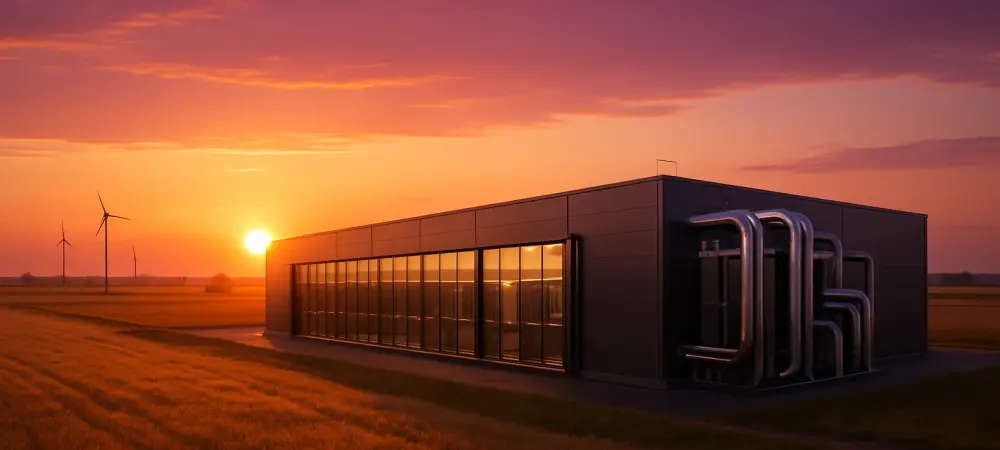
It’s a complete paradigm shift from just building bigger boxes. The new data centers are being designed from the ground up for the unique demands of AI. This means extreme power densification to support racks packed with power-hungry GPUs, which in turn necessitates advanced liquid cooling systems, as traditional air cooling can’t keep up. But the more profound change is their strategic function. The expansion into suburban and rural areas isn’t just about finding cheap land. These new “cloud regions” in places like the Midwest and Southwest are becoming crucial aggregation points. They are being built to process data closer to where it’s generated, supporting the low-latency needs of edge computing. Instead of a few massive data center hubs in the world, we’re building a more distributed, resilient mesh that reduces the distance data has to travel, which is a cornerstone of the Cloud 2.0 architecture.
You’re advising CIOs to move away from traditional hub-and-spoke network designs in favor of point-to-point connectivity. Could you elaborate on the performance bottlenecks and security risks that the old model creates for AI workloads and outline the first practical steps a CIO should take to start building their own “data cloud”?
The hub-and-spoke model is a relic of a time when everything had to flow through a central security stack at headquarters. For AI, it’s a disaster. Every data flow between, say, your private data lake and a GPU cluster in a public cloud has to hairpin through your central router. This creates a massive performance chokepoint, adding latency and consuming expensive bandwidth. From a security perspective, it’s a single, high-value target for attack. If that central hub goes down, your entire multi-cloud operation is blind. The first, most critical step for a CIO is to conduct a thorough data flow analysis. You need to map exactly where your data is, where your AI models are being trained, and where inference is happening. Once you have that map, the inefficient, high-latency routes become glaringly obvious. You can then strategically deploy direct, point-to-point connections between those key data centers and clouds, effectively creating your own private, high-speed data cloud.
You described a new kind of network fabric that intelligently combines fiber and aggregation services. For a company in the process of training a large language model, could you walk me through how this fabric would manage its data flows differently from a traditional WAN, and what key performance metrics would see the most significant improvement?
A traditional WAN is static; you buy a 10-gigabit circuit and that’s what you get, whether you’re using it or not. The fabric we envision is dynamic and application-aware. Let’s take your example of training a large model. In the initial phase, you might be moving petabytes of unstructured data from your on-premises storage to a cloud provider. The fabric would recognize this bulk data transfer and provision a massive, high-throughput connection optimized for raw speed. Later, when the actual training begins, the traffic pattern shifts to millions of small, rapid-fire communications between GPUs. The fabric would then re-architect the paths in real-time to provide the lowest possible latency between those specific compute nodes. The biggest improvements aren’t just in raw throughput or latency, but in the overall time-to-completion for the AI project. By matching the network to the specific stage of the workload, you drastically accelerate the entire process from data ingest to a fully trained model.
Your stated goal is to allow enterprises to design and control their networks without the burden of owning the equipment, all under a “pay for what you use” model. Can you provide an example of how this consumption-based approach has empowered a client to scale for an unexpected AI project more effectively than they could have otherwise?
We had a client in the financial services industry that was hit with a sudden, urgent regulatory requirement to build a sophisticated new AI-powered compliance model. Their timeline was incredibly aggressive. Under the old model, they would have spent months in a procurement cycle for new routers, switches, and high-capacity circuits, followed by a painful deployment process. They simply didn’t have the time. Using a consumption-based approach, they were able to use a software portal to design and provision the high-speed, low-latency connectivity they needed between their on-premises data and two different public clouds in a matter of days. They scaled their network capacity way up for the intense, two-month model training phase, and as soon as it was done, they scaled it right back down to a normal operational level. They paid only for that peak capacity when they actually used it, avoiding a massive capital expenditure on equipment they wouldn’t need long-term and, crucially, meeting a critical business deadline. That flexibility is the heart of the new model.