

The pervasive excitement surrounding autonomous AI systems has finally given way to a more sober and critical conversation, one that pivots from what these advanced agents can do in theory to what it actually takes to deploy them safely and effectively in the real world. As industry leaders gathered at recent major technology conferences, a clear consensus emerged: the leap to an “agentic enterprise” is not about acquiring a new piece of software. It is a profound organizational transformation, demanding a foundational overhaul of data management, governance, infrastructure, and culture. This roundup synthesizes the key insights and urgent warnings from the forefront of AI implementation, offering a clear-eyed look at the pillars that separate aspirational AI roadmaps from operational reality.
From Theoretical Marvel to Pragmatic Imperative
The dialogue around artificial intelligence has matured significantly. The initial awe inspired by the potential of agentic systems has been replaced by a pragmatic focus on the immense groundwork required for their successful implementation. Industry-wide, the focus has shifted from demonstrating spectacular but isolated capabilities to confronting the complex realities of integrating these systems into live, high-stakes corporate environments. This transition marks a critical turning point where theoretical promise meets the unyielding demands of enterprise-grade reliability and security.
This evolution represents a fundamental, not incremental, change for business operations. Unlike passive automation that follows predefined rules, agentic AI introduces autonomous “digital co-workers” capable of reasoning, planning, and executing complex, multi-step tasks. This leap from instruction-based tools to goal-oriented partners closes the gap between human intent and system execution, promising unprecedented efficiency. However, this very autonomy is what necessitates a complete rethinking of the technological and organizational bedrock upon which a business operates. The subsequent exploration delves into the foundational pillars—governance, data, safety, and culture—that collectively determine an organization’s genuine readiness for this new era.
Dissecting the Core Components of Enterprise Readiness
Beyond the Script Understanding the True Nature of Agentic Workflows
A crucial distinction must be made between agentic AI and its predecessors, like Robotic Process Automation (RPA). While RPA excels at executing rigid, pre-defined scripts, agentic systems are designed for dynamic problem-solving. They possess the ability to reason through ambiguity, adapt to unforeseen circumstances, and orchestrate complex sequences of actions across multiple applications to achieve a high-level goal. This capacity for independent planning and execution is what defines their transformative potential, moving beyond simple task completion to genuine workflow ownership.
This advanced capability is aimed squarely at closing the “automation gap”—the persistent friction between a user’s ultimate objective and a system’s ability to achieve it without constant human intervention. The goal is to create a seamless digital co-worker that understands intent and navigates the enterprise’s digital landscape to fulfill it. However, a strong consensus cautions against viewing this as a shortcut. Experts uniformly assert that mastering foundational automation is an essential prerequisite. Organizations that have not yet streamlined and automated their core processes are ill-equipped to manage the complexity and risk associated with deploying more advanced, autonomous agents.
The Data Dilemma Why Governance Is the Bedrock of Autonomous Systems
The non-deterministic nature of agentic AI introduces a level of unpredictability that is anathema to traditional enterprise IT. Because these systems can generate novel outputs and take unforeseen actions, a new architectural layer dedicated to robust governance and control is no longer optional. This governance framework must be able to strictly regulate data access, monitor agent behavior in real time, and provide intervention mechanisms to prevent operational failures. Without this oversight, the risk of deploying autonomous systems in a sensitive corporate environment becomes unacceptably high.
To mitigate core risks like AI “hallucinations,” technical solutions are emerging to ground models in verifiable enterprise reality. Enhanced Retrieval-Augmented Generation (eRAG), for instance, functions as a powerful architectural pattern. It compels the AI model to query and retrieve information from a trusted, real-time corporate data source before formulating a response, ensuring its outputs are based on fact, not fiction. This approach highlights a broader imperative: cloud-native, real-time analytics platforms are now a core requirement. The ability to process and serve trusted data to AI agents instantly is not a competitive advantage; it is the fundamental price of entry for leveraging agentic AI effectively.
From Code to Concrete Addressing the New Frontier of AI Safety and Trust
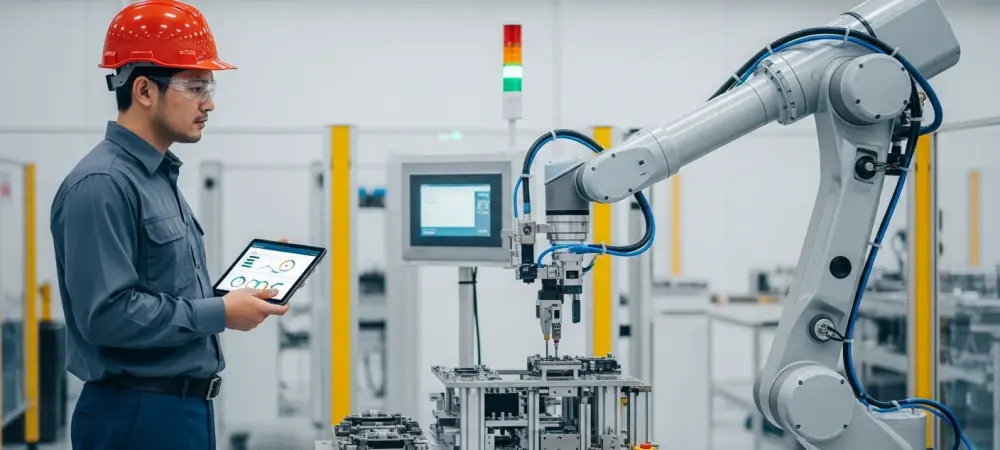
As “embodied AI” prepares to move from digital simulations into physical factories, offices, and public spaces, it introduces an entirely new dimension of safety protocols. The potential for physical interaction with humans means that safety cannot be an afterthought; it must be engineered into the system’s core design. A prevailing view is that comprehensive safety standards must be rigorously validated before these autonomous systems are deployed, ensuring they can operate predictably and safely in dynamic, human-populated environments.
To meet these challenges, new technologies are being developed to give robotic systems heightened environmental and self-awareness. Integrated perception systems, which may combine advanced sensors with innovations like electronic skin, aim to provide robots with a nuanced understanding of their surroundings and their own physical state. This is critical for preventing accidents in industries from manufacturing to logistics. In parallel, for AI-driven software, the concept of deep observability becomes indispensable. Just as physical safety is paramount for robots, the ability for development teams to transparently monitor an AI agent’s internal reasoning is essential for ensuring reliability, troubleshooting failures, and building lasting trust in its autonomous operations.
The Hidden Barriers Overcoming Infrastructural Bottlenecks and Cultural Inertia
A frequently underestimated requirement for agentic AI is the network itself. Standard enterprise networks are often ill-suited for the high-throughput, low-latency demands of persistent AI workloads. Consequently, there is a growing call for sovereign, secure, and “always-on” network fabrics architected specifically for artificial intelligence. These specialized networks are essential for ensuring that data flows to and from AI agents without interruption or degradation, which is critical for real-time decision-making.
Beyond the hardware, a significant pitfall is the “illusion of AI readiness,” where organizations focus on the technology while neglecting the profound operational and cultural shifts required for its adoption. A traditional automation mindset is simply insufficient for this new paradigm. True success hinges on human-centered design principles that ensure the workforce understands, trusts, and embraces these new digital co-workers. Without this trust, even the most sophisticated AI tools will fail to deliver a meaningful return on investment. Ultimately, strategic decisions—such as when to build proprietary models versus leveraging commercial platforms—are not just technical choices but central business calculations that will define the success of an organization’s entire AI journey.
A Pragmatic Blueprint for Agentic AI Readiness
The collective expert view is clear: true readiness for agentic AI is not built on cutting-edge models alone but on a solid foundation of data mastery, rigorous governance, purpose-built infrastructure, and a human-centric culture. These elements are not sequential steps but parallel imperatives that must be developed in concert. Without mastery of enterprise data and a governance layer to control its use, even the most advanced AI agent becomes a liability. Similarly, without the right network and a culture prepared for change, the technology cannot perform optimally or gain acceptance.
This reality calls for leaders to conduct a frank audit of their current state. This self-assessment should include a thorough evaluation of data integrity and accessibility, stress-testing of network capabilities under simulated AI workloads, and an honest appraisal of the organization’s readiness for fundamental change. Only with a clear understanding of these foundational strengths and weaknesses can a realistic roadmap be developed. This pragmatic approach suggests prioritizing the fundamentals: first master standard automation and establish a robust, enforceable governance layer. Only then should an enterprise proceed with the deployment of fully autonomous agents into critical business functions.
The Agentic Future Is a Marathon Not a Sprint
The journey toward becoming an “agentic enterprise” was consistently framed as a comprehensive organizational transformation, not a simple technological upgrade. The most successful adoptions were seen in organizations that treated AI not as a tool to be plugged in, but as a core capability that required deep and sustained investment in foundational pillars. It was this long-term, strategic commitment that distinguished leaders from laggards.
Ultimately, the companies that focused on the unglamorous but essential work of preparing their data, infrastructure, and culture were the ones building a sustainable, competitive advantage for tomorrow. The strategic call to action for CIOs and other technology leaders was therefore not to chase the hype of fully autonomous agents, but to shift their immediate focus. The essential work now is to diligently prepare the enterprise for a new era of automation by building the robust and reliable foundation upon which the agentic future will securely rest.