

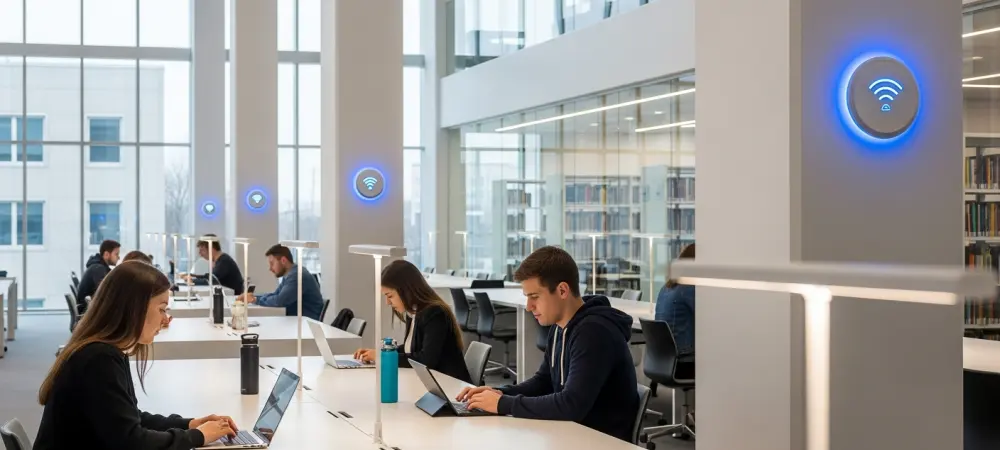
High-performance connectivity has transitioned from being a convenience for research universities to becoming the fundamental backbone upon which every facet of modern institutional operations and academic achievement now depends. As higher education enters 2026, the reliance on digital infrastructure has intensified due to the proliferation of high-definition virtual reality tools, real-time data analytics, and the ubiquitous presence of artificial intelligence across all disciplines. Campus networks are no longer viewed merely as utilities like electricity or water but as strategic assets that can dictate the quality of student engagement and the success of faculty research. When a network experiences latency or frequent downtime, the repercussions extend beyond mere annoyance, affecting the institution’s ability to compete in a global market and maintain its rigorous academic standards. Decision-makers must recognize that the digital environment serves as the primary gateway for all campus interactions, requiring a robust architecture capable of supporting thousands of simultaneous high-bandwidth connections.
Technological Infrastructure: The Bedrock of Academic Innovation
High-Density Connectivity: The Role of Wi-Fi 7
The implementation of Wi-Fi 7 technology represents a significant leap forward for campuses struggling to maintain consistent performance in high-density areas such as stadiums, libraries, and large lecture halls. This latest standard introduces Multi-Link Operation, which allows devices to transmit and receive data across multiple frequency bands simultaneously, effectively eliminating the bottlenecks that previously plagued older wireless protocols. By utilizing wider 320 MHz channels, Wi-Fi 7 provides the massive throughput required for seamless augmented reality experiences that have become standard in medical and engineering curricula. For institutions aiming to provide equitable access to digital resources, the increased efficiency of these networks ensures that even the most remote corners of the campus remain productive zones for learning and collaboration. This technical transition is not just about speed; it is about providing a reliable foundation for the next generation of pedagogical tools that require ultra-low latency and consistent connectivity to function effectively.
Intelligent Automation: Leveraging AIOps for Efficiency
Artificial intelligence for IT operations, commonly known as AIOps, has become an indispensable component of modern network management by providing proactive monitoring and automated troubleshooting capabilities. These systems utilize advanced machine learning algorithms to analyze massive volumes of telemetry data in real time, identifying potential failures before they impact the user experience. Instead of IT staff manually sifting through logs to find the cause of a slow connection, AIOps platforms can pinpoint the exact hardware or software issue and, in many cases, resolve it through automated scripts. This shift allows technical teams to focus on high-level strategic initiatives rather than basic maintenance, significantly reducing operational overhead while improving overall network uptime. Furthermore, the predictive nature of these tools enables institutions to plan for future capacity needs based on actual usage patterns rather than broad estimates. By integrating intelligent automation into the core of the network, colleges can ensure a frictionless digital experience that adapts to the dynamic needs.
Strategic Resilience: Protecting the Digital Learning Space
Cybersecurity Frameworks: Implementing Zero Trust Principles
Securing the vast array of personal devices and specialized laboratory equipment connected to the campus network requires a comprehensive Zero Trust security framework that replaces traditional perimeter-based models. In an era where cyber threats have become increasingly sophisticated, the assumption that any device inside the network can be trusted is a dangerous fallacy that leaves sensitive student data and intellectual property vulnerable. Zero Trust architecture operates on the principle of continuous verification, where every user and device must be authenticated and authorized before gaining access to specific resources, regardless of their location. This approach is particularly effective in educational environments characterized by a high turnover of users and a diverse range of IoT devices that often lack built-in security features. By implementing micro-segmentation, administrators can isolate different parts of the network, ensuring that a breach in one area does not lead to a catastrophic loss of data across the entire institution. This rigorous security posture is essential for maintaining trust.
Strategic Roadmaps: Future-Proofing the Educational Mission
The decision to modernize infrastructure proved to be a pivotal moment for institutions that sought to maintain their competitive edge in an increasingly digital academic marketplace. Those who prioritized early investment in scalable architectures discovered that their ability to attract top-tier faculty and research funding was directly linked to the robustness of their digital environment. Moving forward, the focus shifted toward the integration of edge computing and localized data processing to further reduce latency for mission-critical applications in science and medicine. Leaders who conducted thorough audits of their existing hardware found that replacing legacy systems with energy-efficient, software-defined networking solutions significantly lowered long-term utility costs while enhancing flexibility. Actionable steps involved establishing a multi-year technology roadmap that aligned IT spending with the broader goals of the university’s strategic plan. By treating the network as a dynamic ecosystem rather than a static asset, these organizations ensured that their digital foundations remained resilient.