

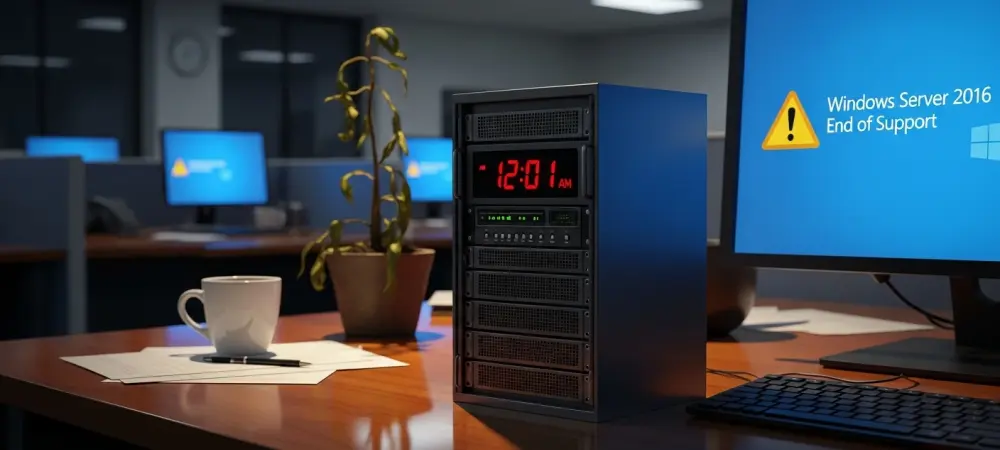
The countdown for legacy infrastructure has reached a critical juncture as organizations operating on the Windows 2016 framework face a rapidly narrowing window for maintaining secure and compliant digital environments. With the October 13, 2026, deadline for Windows 10 Enterprise LTSB and its IoT counterpart effectively arriving, the cessation of monthly security patches and technical assistance presents a formidable barrier to operational continuity. This shift is not merely a routine software update but a fundamental change in how enterprises must manage their long-term servicing channels. Relying on aging systems creates a vacuum where emerging vulnerabilities remain unaddressed, inviting sophisticated cyber threats that target unpatched kernels and outdated protocols. As the industry moves toward more resilient architectures, the decision to remain on legacy software shifts from a cost-saving measure to a significant liability. Navigating this transition requires a clear understanding of the risks associated with the inevitable loss of bug fixes and the broader impact on regulatory standing. Furthermore, Windows Server 2016 follows closely with its final support date set for January 12, 2027, marking the end of an era for the 2016-era ecosystem.
Strategic Migration Paths: Modernizing the Enterprise Core
Transitioning away from these legacy platforms necessitates a strategic pivot toward modern iterations that offer enhanced security features and improved hardware utilization. For those managing server-side operations, the jump to Windows Server 2025 represents the most logical progression, providing a robust foundation designed to handle contemporary cloud-native workloads and advanced virtualization needs. Meanwhile, the client-side landscape offers a few distinct trajectories. If existing hardware supports the latest TPM requirements and processor specifications, Windows 11 Enterprise LTSC 2024 stands as the gold standard for specialized devices requiring long-term stability without the frequent feature updates seen in standard builds. For hardware that lacks the power to jump to the newest version, Windows 10 Enterprise LTSC 2021 remains a viable secondary option. This path allows organizations to maintain a familiar environment while extending the lifecycle of their current assets. However, this is often a temporary fix compared to the comprehensive security hardening found in the 2024 LTSC release, which integrates deeper AI-driven threat detection and more efficient memory management.
Extended Security Updates: A Temporary Bridge to Modernization
For environments where immediate migration proved impossible due to complex legacy dependencies, the Extended Security Updates program functioned as a vital, albeit expensive, safety net. This program provided a three-year bridge, delivering only critical and important security patches while explicitly excluding new features, design improvements, or general technical support. The financial structure was intentionally punitive, with costs doubling annually to incentivize a swift departure from the aging 2016 codebase. Enrollment for the 2016 LTSB updates opened in the second quarter of 2026, while IoT variants required direct coordination with original equipment manufacturers. Decision-makers prioritized a comprehensive hardware refresh to avoid the cumulative expenses of the ESU program. They established a clear timeline for decommissioning remaining legacy nodes and accelerated the deployment of Windows 11-ready endpoints. By shifting budgets toward new infrastructure rather than maintaining decaying systems, IT departments secured their perimeters against modern exploits. Proactive auditing of the entire software stack ensured that no unpatched silos remained after the support windows closed.