
Is Yeston’s RTX 4060 Ti Sakura Worth Its $529 Price Tag?

Yeston’s recent unveiling of the GeForce RTX 4060 Ti Sakura edition has sparked the interest of the PC community, merging top-notch hardware specs with a distinctive aesthetic. Priced at $529, it finds itself nestled in the mid-range market, offering considerable value for tech aficionados ready to invest in their rig’s performance and style.

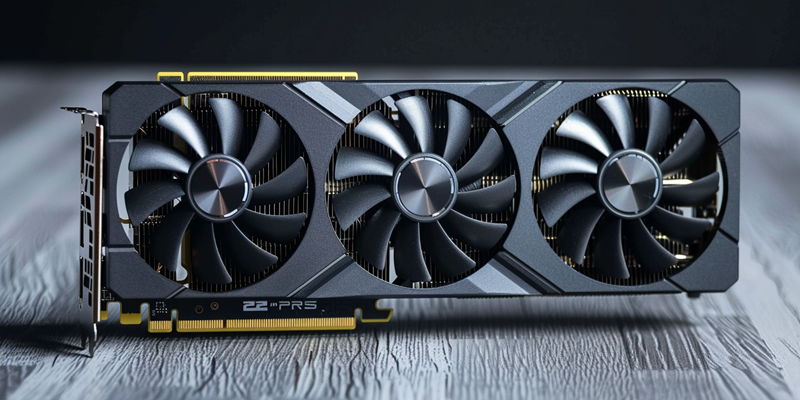
The RTX 4060 Ti is not only eye-catching with its pastel hues and RGB flair; it’s a powerhouse, too. Equipped with a triple-fan setup and boosted to 2595 MHz out of the box, it stands poised to tackle intensive gaming and creative tasks. Under the hood, you’ll find an AD106 core, 4352 shaders, and 16GB of GDDR6 memory, which ensure a blend of efficiency and raw power. Yeston caters to enthusiasts with a penchant for performance enveloped in a unique package, ensuring that the Sakura series remains a blend of function and form. The RTX 4060 Ti balances the scale of visual charm and practical prowess for users wanting more than the mundane from their PC components.

Delving into the Details

The Yeston RTX 4060 Ti Sakura is a robust offering for gamers, boasting a cutting-edge 5nm AD106 chip and a hefty 16GB of GDDR6 RAM, coupled with a 2310MHz base clock and a swift 18Gbps data rate. It’s well-equipped to deal with contemporary gaming demands, including high-definition textures. The card’s thermal design is also noteworthy, featuring a 2.5-slot form factor, an aluminum heatsink, and 6mm heat pipes, ensuring efficient cooling.

Connectivity and Aesthetics

With regard to connectivity, the card is versatile, sporting HDMI 2.1a and three DisplayPort 1.4a ports, perfect for multiple displays or high-refresh-rate experiences. Aesthetic appeal isn’t overlooked, with dual RGB lighting modes that bring a vibrant gradient and synchronizing abilities to your rig. The 8-pin power connector is standard fare for this caliber of GPU, indicating an expected energy consumption.

Weighing the Worth

The Yeston RTX 4060 Ti Sakura commands a $529 price tag, and for enthusiasts who appreciate a harmonic convergence of performance, style, and a hint of rarity, it might be a fitting choice. However, for those who seek maximum power efficiency and cost-effectiveness, alternative GPUs might align better with their goals.

Explore more

AI and Generative AI Transform Global Corporate Banking

The high-stakes world of global corporate finance has finally severed its ties to the sluggish, paper-heavy traditions of the past, replacing the clatter of manual data entry with the silent, lightning-fast processing of neural networks. While the industry once viewed artificial intelligence as a speculative luxury confined to the periphery of experimental “innovation labs,” it has now matured into the

Is Auditability the New Standard for Agentic AI in Finance?

The days when a financial analyst could be mesmerized by a chatbot simply generating a coherent market summary have vanished, replaced by a rigorous demand for structural transparency. As financial institutions pivot from experimental generative models to autonomous agents capable of managing liquidity and executing trades, the “wow factor” has been eclipsed by the cold reality of production-grade requirements. In

How to Bridge the Execution Gap in Customer Experience

The modern enterprise often functions like a sophisticated supercomputer that possesses every piece of relevant information about a customer yet remains fundamentally incapable of addressing a simple inquiry without requiring the individual to repeat their identity multiple times across different departments. This jarring reality highlights a systemic failure known as the execution gap—a void where multi-million dollar investments in marketing

Trend Analysis: AI Driven DevSecOps Orchestration

The velocity of software production has reached a point where human intervention is no longer the primary driver of development, but rather the most significant bottleneck in the security lifecycle. As generative tools produce massive volumes of functional code in seconds, the traditional manual review process has effectively crumbled under the weight of machine-generated output. This shift has created a

Navigating Kubernetes Complexity With FinOps and DevOps Culture

The rapid transition from static virtual machine environments to the fluid, containerized architecture of Kubernetes has effectively rewritten the rules of modern infrastructure management. While this shift has empowered engineering teams to deploy at an unprecedented velocity, it has simultaneously introduced a layer of financial complexity that traditional billing models are ill-equipped to handle. As organizations navigate the current landscape,