

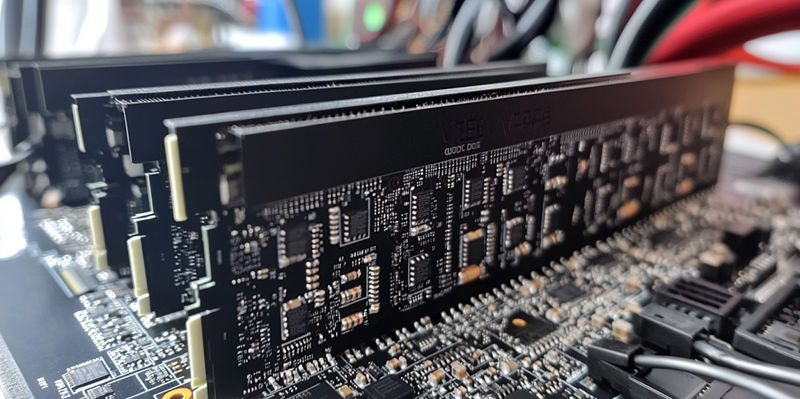
XPG has made a significant stride in the workstation market with the introduction of its AICORE DDR5 Overclocked R-DIMM memory, marking their maiden venture into this domain. This high-performance memory module is specifically designed for AMD Ryzen Threadripper 7000 and PRO 7000WX processors, as well as Intel’s Xeon 4th gen platforms. Capable of achieving speeds up to 8000 MT/s, it’s engineered to provide robust performance suitable for tasks like AI generation, 3D rendering, graphics, and video production. The addition of a Registered Clock Driver further enhances its high-speed, low-latency operations, making it an ideal choice for demanding computing environments.
Exceptional Speed and Reliability
One of the key selling points of the AICORE DDR5 R-DIMM is its integrated ECC (Error Correction Code) for ensuring data integrity by automatically fixing errors, an essential feature for computing tasks requiring utmost accuracy. Utilizing both on-die ECC and side-band ECC, the module guarantees precise data transmission, mitigating risks of data corruption. Real-time temperature monitoring is another notable feature facilitated by integrated sensors, promising consistent performance even under heavy loads. Although it lacks the high-end heatsinks seen in gaming memories, the AICORE DDR5 R-DIMM employs efficient graphene-based heatsinks for effective heat dissipation. This choice ensures longevity and reliability, critical factors for sustained performance in high-stress environments. Additionally, the modules are plated with 30µ gold to enhance durability and conductivity while preventing oxidation, an important factor for long-term use.
Overclocking and Future Prospects
XPG has made a groundbreaking entry into the workstation market with its AICORE DDR5 Overclocked R-DIMM memory, marking the company’s first foray into this sector. This advanced memory module is specifically optimized for AMD Ryzen Threadripper 7000 and PRO 7000WX processors, as well as Intel’s 4th generation Xeon platforms. It boasts impressive speeds of up to 8000 MT/s, designed to deliver exceptional performance in demanding applications such as AI generation, 3D rendering, graphics, and video production. One of its standout features is the Registered Clock Driver, which significantly enhances its high-speed and low-latency operations. This makes the AICORE DDR5 R-DIMM an ideal choice for professionals looking to maximize their computing capabilities in high-pressure environments. Whether you’re tackling complex simulations, intensive graphics work, or sophisticated video editing, this memory module is engineered to meet the needs of modern, high-end workstations. With XPG’s commitment to pushing the boundaries of technology, this release marks an exciting development for the industry.