

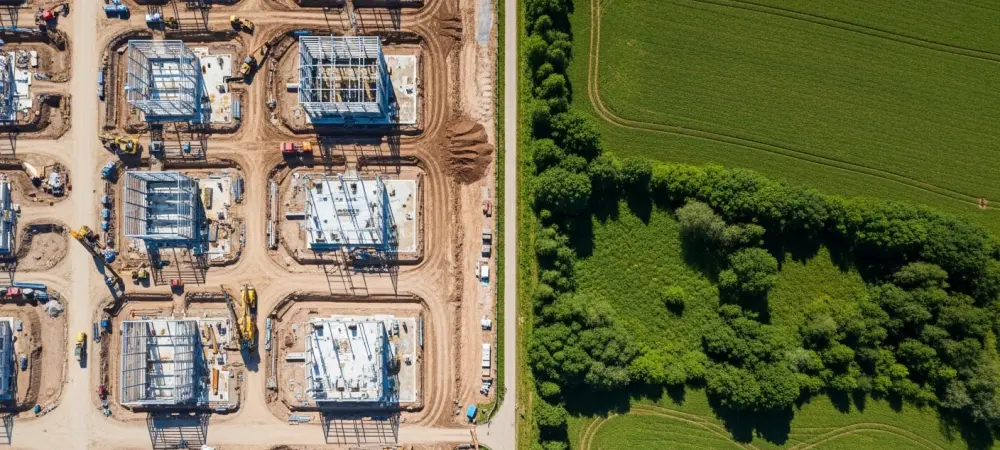
The immense, power-hungry infrastructure that underpins our digital lives is no longer hidden in remote deserts or anonymous industrial parks; it is now knocking on the door of suburban communities like Van Buren Township, Michigan, sparking a contentious debate about the future. This once-quiet corner of the American Midwest has unexpectedly become a flashpoint in the global expansion of the digital economy, a place where the abstract need for data storage meets the tangible concerns of a local community.
A Quiet Township at the Center of a Digital Storm
Nestled on the western fringe of metropolitan Detroit, Van Buren Township has long been characterized by its blend of suburban living and accessible industrial corridors. However, this relative tranquility is being disrupted as the global demand for data processing power turns its gaze toward the township’s open spaces and strategic location. The community now finds itself at the heart of a burgeoning conflict, pitting the promise of high-tech investment and economic growth against the preservation of its local character and environmental resources.
This local dispute is far from an isolated event. Instead, it serves as a compelling microcosm of a nationwide trend where the voracious appetite of the tech industry collides with the anxieties of towns and cities unaccustomed to development on this scale. The questions being asked in Van Buren—about resource consumption, noise pollution, and corporate responsibility—are being echoed in communities across the country, making its story a crucial case study for the digital age.
Why Van Buren? The Makings of a Data Hub
The township’s appeal to data center developers is not accidental. Its position on the outskirts of a major city provides a crucial balance of affordable land and proximity to fiber optic networks and a skilled workforce. Furthermore, its location along major transportation routes like I-94 offers logistical advantages for construction and operations, making it an ideal candidate for industrial-scale projects that require significant infrastructure support.
More importantly, Van Buren’s leadership made a strategic decision years ago that paved the way for this current boom. The township’s master plan proactively designated specific parcels of land for industrial use, explicitly including data centers as a desired development. This pre-zoning created a streamlined path for companies like Panattoni, which were able to target land that already carried the necessary approvals, thereby avoiding the often lengthy and contentious process of seeking a zoning change from agricultural or residential to industrial.
The Projects Fueling the Boom
The tension currently gripping the township is not the result of a single proposal but rather the combined scale of multiple significant developments. The debate is being driven by two key projects that, while different in scope and origin, together represent a massive influx of data infrastructure. One is a colossal, speculative campus proposed by a global real estate firm new to the data center space, while the other is a more calculated expansion from an established provider already operating in the area.
Panattoni’s Gigawatt Ambition: “Project Cannoli”
At the forefront of the development push is logistics real estate giant Panattoni, which has unveiled an ambitious plan known as “Project Cannoli.” The proposal outlines a sprawling 282-acre campus featuring three massive buildings and a dedicated, on-site electrical substation. The sheer scale of the project suggests a potential capacity reaching a gigawatt of power—a level of energy consumption that would place it among the largest data center hubs in the nation and signal a major new node in the country’s digital infrastructure.
This venture marks a strategic pivot for Panattoni, a company traditionally known for developing warehouses and logistics centers for clients like Amazon and FedEx. By forming a dedicated data center team and setting a goal to develop one gigawatt of capacity in North America by 2030, the firm is making a bold entry into one of the most competitive and capital-intensive sectors of the real estate market. “Project Cannoli” is not just a local development; it is a key piece of Panattoni’s global strategy.
US Signal’s Calculated Expansion
In contrast to Panattoni’s massive new proposal, established provider US Signal is pursuing a more measured expansion of its existing footprint in Van Buren. Having operated in the township for years, the company is seeking to modify a plan first approved in 2019. The new request consolidates two previously planned phases into a single, 35,000-square-foot addition to its facility at the corner of Haggerty and Tyler Roads, with another phase planned for the future.
This expansion, which would bring the facility’s total size to over 87,000 square feet, represents a continuation of investment rather than a brand-new venture. Backed by its new owner, Igneo Infrastructure Partners, US Signal’s move underscores a sustained confidence in Van Buren as a viable data hub. The project’s more incremental nature and the company’s existing presence in the community have positioned it for a smoother approval process.
The Heart of the Conflict: Community vs. Corporation
The prospect of such rapid, large-scale development has ignited significant local opposition. Recent township meetings have been filled with residents voicing their concerns, and a Change.org petition opposing the Panattoni project has garnered more than a thousand signatures. Activism has been further organized by groups like the Economic Development Responsibility Alliance of Michigan, a nonprofit lobbying for a statewide moratorium on new data centers, amplifying the local dispute into a broader political issue.
In response, Panattoni has attempted to assuage community fears by highlighting a key aspect of its strategy. Adam Kramer, the company’s head of data centers, has emphasized that Panattoni deliberately selected land that was already zoned for industrial use and identified for data centers in the township’s master plan. This, the company argues, differentiates its project from more controversial developments elsewhere that require converting farmland. Panattoni frames its approach as responsible development that aligns with the community’s own long-term planning, even if many residents now disagree with the outcome of that plan.
Where Things Stand Today
As of now, the future of data center development in Van Buren remains in a delicate balance. Panattoni’s “Project Cannoli,” the largest and most contentious of the proposals, is still navigating a path forward. The company has yet to secure an anchor tenant, a critical milestone for a speculative project of this magnitude, and continues to face determined public resistance that could complicate the approval process.
Meanwhile, US Signal’s smaller-scale expansion appears to be on a more straightforward trajectory. City staff have already recommended approval for the company’s modified site plan, signaling confidence from local officials. This divergence suggests that the community and its leaders may be more receptive to incremental growth from known corporate citizens than to massive, transformative projects from powerful newcomers.
Reflection and Broader Impacts
The events unfolding in Van Buren are more than a simple zoning dispute; they are a defining moment for the community and a bellwether for the data center industry. The outcome of these projects will have lasting consequences, shaping the township’s economic and environmental future while also offering valuable lessons for other communities facing the pressures of the digital gold rush.
Reflection
The core of the conflict in Van Buren lies in a fundamental tension between abstract economic potential and tangible quality of life. The proposed developments promise a significant boost to the local tax base and potential job creation. However, these benefits are weighed by residents against legitimate concerns over the immense strain on the electrical grid, the consumption of water for cooling, the potential for constant noise from HVAC systems, and the irreversible transformation of the township’s landscape and character.
Broader Impact
The situation in Van Buren is poised to become a critical precedent. How this conflict is resolved—whether through compromise, litigation, or outright approval or denial—will be closely watched by other suburban and rural communities across the nation. A successful community-led opposition could empower other towns to resist similar developments, while a victory for the developers could create a replicable playbook for using pre-zoned industrial land to bypass common points of friction, reshaping how the industry approaches expansion.
Van Buren’s Digital Crossroads
Van Buren Township currently stands at a digital crossroads, defined by the convergence of global tech ambitions and local community values. The massive scale of Panattoni’s “Project Cannoli” and the steady expansion of US Signal have transformed this Detroit suburb into a battleground over the physical footprint of the internet. The central conflict pits a pre-approved master plan against a wave of public opposition, forcing a referendum on what kind of future the residents truly want.
Ultimately, the township’s journey through this complex landscape became a pivotal moment. The decisions made here did not just determine the fate of a few hundred acres of land; they established a powerful narrative about the friction between the digital economy and the communities it seeks to inhabit, serving as either a model for collaboration or a cautionary tale for the decades to come.