

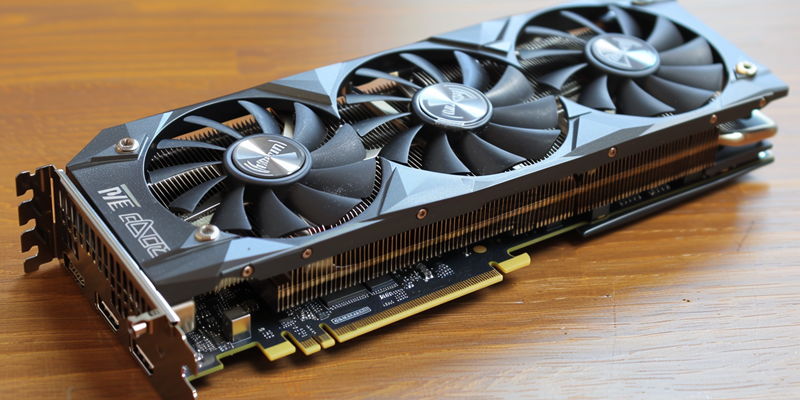
As the battleground of technological advancements shifts predominantly towards artificial intelligence (AI), the interplay between innovative chip designs and AI capabilities has become front and center. This is where Taiwan Semiconductor Manufacturing Company (TSMC), a leader in the semiconductor industry, is making waves with its advanced packaging technologies—Chip-on-Wafer-on-Substrate (CoWoS) and System on Integrated Chips (SoIC). These sophisticated techniques are proving to be pivotal in the development and deployment of efficient, high-performance AI applications.
TSMC’s CoWoS: A Game-Changer for GPUs
TSMC’s CoWoS technology has emerged as a game-changing innovation, especially for companies like NVIDIA and AMD who are at the forefront of AI and machine learning hardware. CoWoS allows for the integration of different chiplets onto a single wafer, providing a cost-effective method to create large, high-performing GPU dies. This advancement is not only a testament to TSMC’s prowess in the semiconductor space but also underlines the company’s strategic collaboration with industry leaders, given NVIDIA’s Hopper and Blackwell GPUs and AMD’s MI300 accelerators are heavily reliant on this technology.
The demand for computing power in AI is insatiable, and keeping pace requires the best in chip innovation. NVIDIA’s Hopper and Blackwell GPUs are integral to AI-driven applications, and AMD’s MI300 accelerators are at the heart of deep learning computations. Both use TSMC’s CoWoS technology, which promises to deliver unparalleled performance. By locking in TSMC’s CoWoS supply until 2025, NVIDIA and AMD have not only secured a competitive edge in the market but also showcased their commitment to advancing AI technology.
TSMC Scaling Up for AI’s Insatiable Needs
The competition in tech is increasingly centered around artificial intelligence (AI), with chip innovation playing a crucial role. The Taiwan Semiconductor Manufacturing Company (TSMC) is at the forefront of this movement, with its advanced packaging technologies like Chip-on-Wafer-on-Substrate (CoWoS) and System on Integrated Chips (SoIC) leading the charge. These methods are instrumental for AI development, enabling more efficient and powerful applications.
TSMC’s CoWoS links multiple chips on a single wafer, creating a compact substrate that boosts performance and reduces power consumption, crucial for AI tasks. Meanwhile, SoIC fuses various components into an integrated system, slashing data transfer times and enhancing processing speeds. TSMC’s innovations are setting industry standards and are key to the AI revolution, ensuring faster, smarter, and more reliable technology. The synergy between TSMC’s cutting-edge chip designs and AI advancements represents a crucial step in the evolution of technology and its applications.