

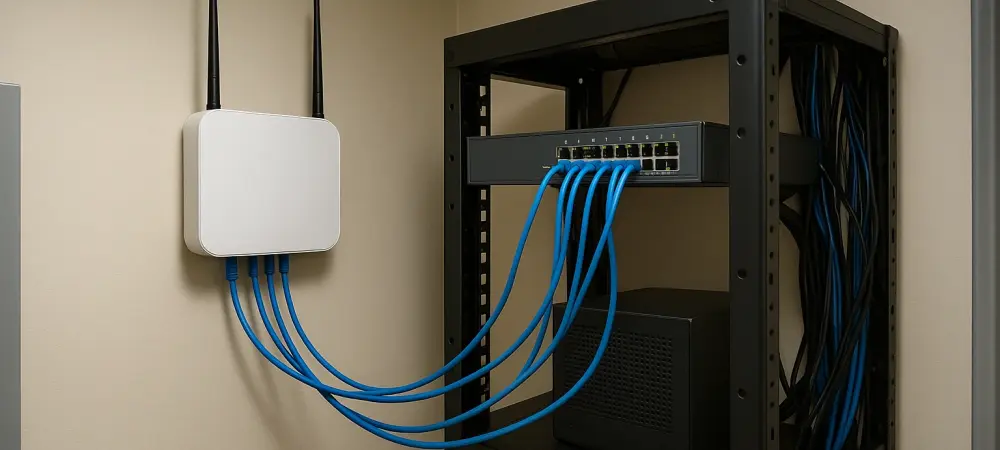
The unassuming plastic box flickering with green lights on a hallway shelf has quietly evolved from a basic utility into a primary battleground for international espionage and digital sovereignty. Most American households consider their router a set-it-and-forget-it appliance, yet these devices serve as the literal gatekeepers of every digital interaction, from banking to private conversations. As of 2026, the scrutiny surrounding TP-Link has intensified, transforming what was once a technical debate into a multi-state legal confrontation that challenges the very foundation of how the United States handles foreign technology in its critical infrastructure. While the convenience of high-speed Wi-Fi remains a priority for consumers, the growing consensus among security professionals and state regulators is that the hardware facilitating this connectivity may double as a silent digital backdoor for foreign adversaries. This transition from civilian hardware to a national security concern highlights a fundamental shift in the American technological landscape, where the origins of a device are now as important as its performance metrics. The current litigation involves a coalition of five states—Texas, Florida, Iowa, Montana, and Nebraska—each alleging that TP-Link Systems has systematically misled the public about its security posture. These legal strikes are not isolated consumer protection cases; they represent a coordinated effort to address the risks posed by companies that maintain deep operational ties to regions with aggressive intelligence mandates. From 2026 to 2028, the outcomes of these cases will likely define the regulatory framework for all foreign-made IoT devices, forcing a choice between inexpensive global electronics and the integrity of domestic data networks. As the line between civilian technology and state-sponsored espionage continues to blur, the router in the hallway has become the front line of a modern geopolitical conflict.
The Invisible Gatekeepers of the Modern American Household
The ubiquity of TP-Link hardware in the United States is difficult to overstate, as the company’s products power everything from modest apartments to complex small business networks. These devices occupy a unique “edge” position in the digital ecosystem, meaning they are the first and last point of contact for every packet of data entering or leaving a private network. This strategic positioning makes them the ultimate prize for intelligence gathering, as a compromised router can monitor traffic, hijack DNS settings, and serve as a jumping-off point for attacks on other connected devices like smart cameras or laptops. Unlike a smartphone or a computer, which often has robust, frequently updated operating systems, the router often sits forgotten, running outdated firmware that may contain undetected vulnerabilities. State governments have recognized this vulnerability and are now treating the hardware as a matter of public safety rather than mere consumer electronics. Led by attorneys general in states like Texas and Florida, a series of lawsuits has targeted TP-Link’s marketing claims, particularly the promise of a secure “home shield.” These officials argue that the presence of such devices in millions of homes creates a systemic risk to the national interest, as the aggregate data collected from these networks could provide foreign adversaries with a high-resolution map of American life. The legal offensive seeks to peel back the layers of marketing to reveal whether these gatekeepers are working for the consumer or for a foreign state interest.
Why Your Router Is the New Frontier of Geopolitical Conflict
The scrutiny facing TP-Link is part of a broader, fundamental clash between the efficiency of global supply chains and the necessity of national sovereignty. For years, the consumer electronics industry benefited from a general lack of curiosity regarding where components were manufactured or who wrote the underlying code. However, that era is ending as the distinction between a commercial product and a tool of statecraft becomes increasingly thin. The federal government has begun to shift its focus toward the physical origins of hardware, recognizing that software patches cannot always fix vulnerabilities that are baked into the silicon itself.
Regulatory bodies like the FCC are currently weighing whether to implement a total ban on new foreign-made routers that do not meet stringent security clearances from the Department of Defense. This regulatory pivot reflects a growing fear that a single manufacturer with a dominant market share could be compelled by their home government to execute a “kill switch” or a mass surveillance event. The multi-state legal offensive serves as a laboratory for these concerns, testing the ability of state consumer protection laws to address gaps in federal national security policy. By alleging that TP-Link misled consumers about its independence, these states are attempting to force a level of transparency that has historically been absent in the tech industry.
Unpacking the Allegations: Vulnerabilities, Data, and Deception
The legal challenges against TP-Link rest on a foundation of documented security failures and claims of corporate deception. One of the most significant points of contention is the 2024 corporate restructuring, which the company claimed would separate its U.S. operations from its Chinese affiliate, TP-Link Technologies; investigators, however, have described this as a “distinction without a difference,” pointing out that the two entities continued to share thousands of employees well into 2025. Furthermore, while final assembly for the American market may take place in Vietnam, the vast majority of the internal components are still sourced from China, leaving the hardware vulnerable to interference during the manufacturing process long before it reaches a shelf in the United States.
Security failures have further eroded trust in the “HomeShield” marketing campaign, which promised comprehensive protection for all security scenarios. Documented breaches have shown that many devices, such as the Archer AX21, were transitioned to “End of Life” status shortly after purchase, leaving them without critical security updates while they remained in active use by millions. Even more concerning were the vulnerabilities discovered in the Aginet line, which is supplied directly by internet service providers. These devices were found to have “Superadmin” flaws that allowed remote attackers to bypass login screens and gain total control. The delay in addressing these flaws—sometimes stretching to 20 months—suggests a reactive rather than proactive approach to consumer safety. The technical risks are not merely theoretical; they are backed by evidence of exploitation by sophisticated state-sponsored hacking groups. In 2024, a report from Microsoft detailed how a Chinese-linked group compromised a massive network of routers, the majority of which were TP-Link devices, to conduct password-spray attacks against sensitive targets. Similarly, the FBI confirmed that Russian military intelligence exploited specific flaws in these routers to steal credentials and redirect network traffic. These incidents demonstrate that regardless of the manufacturer’s intent, the hardware has become a preferred vehicle for state-sponsored operations aimed at undermining American digital security.
Expert Perspectives on the “China Connection”
National security experts argue that the primary risk associated with TP-Link hardware is not necessarily a hidden line of code, but the legal framework under which the company must operate. A 2017 statute in China compels any organization with significant domestic ties to cooperate with national intelligence efforts, essentially turning private companies into potential extensions of the state. This law creates a permanent cloud of suspicion over any hardware that maintains deep operational or supply-chain connections to the region. Experts testify that this legal mandate creates a situation where the company may be forced to provide access or data to intelligence agencies without the knowledge or consent of the end user.
The data harvest performed by router-management apps like Tether and Deco further complicates the privacy landscape. These applications collect precise location data, unique device identifiers, and even email addresses, creating a detailed profile of the user’s habits and movements. Attorney General Brenna Bird of Iowa has expressed concerns that firmware updates could be used to push malicious code or data-collection tools directly to devices in American homes. This “Typhoon” of activity, as described by former NSA officials, suggests that the goal of such exploitation is persistent access to U.S. infrastructure, allowing adversaries to remain dormant within a network until they are ready to strike.
Strategies for Mitigating Network Risks in the Current Climate
Mitigating these risks required a proactive approach from both individual consumers and small business owners who realized that their networks were only as secure as their weakest link. One of the first steps users took was a comprehensive audit of their hardware lifecycle to determine if their devices had reached the “End of Life” stage. When a router no longer received firmware updates, it was considered a liability and replaced with a model from a manufacturer with a more transparent security record. This shift in purchasing behavior forced the market to prioritize long-term support over initial cost, leading to a higher standard of security across the board. Disabling remote management and cloud access features became a standard security protocol for tech-savvy households. By limiting the admin panel to local access only, users significantly reduced the attack surface available to external hackers who specialized in exploiting remote vulnerabilities. For those using equipment provided by an internet service provider, the focus shifted toward demanding more frequent patches and better transparency regarding the firmware versions being used. These users began to hold their service providers accountable for the security of the devices they leased, creating a ripple effect that reached the manufacturers themselves.
The implementation of secondary firewalls and outbound traffic monitoring also gained popularity as a way to identify suspicious communication with foreign IP addresses. By observing where their data was going, users were able to detect anomalies that suggested their hardware might have been compromised. This era of heightened awareness fostered a new culture of digital hygiene, where the router was no longer viewed as a simple appliance but as a critical piece of security infrastructure. These actions collectively reinforced the domestic network, proving that a combination of legal pressure, regulatory oversight, and individual vigilance could effectively mitigate the risks posed by foreign-made technology. Finally, the move toward domestic manufacturing and verified supply chains provided the long-term solution needed to protect the national interest.