

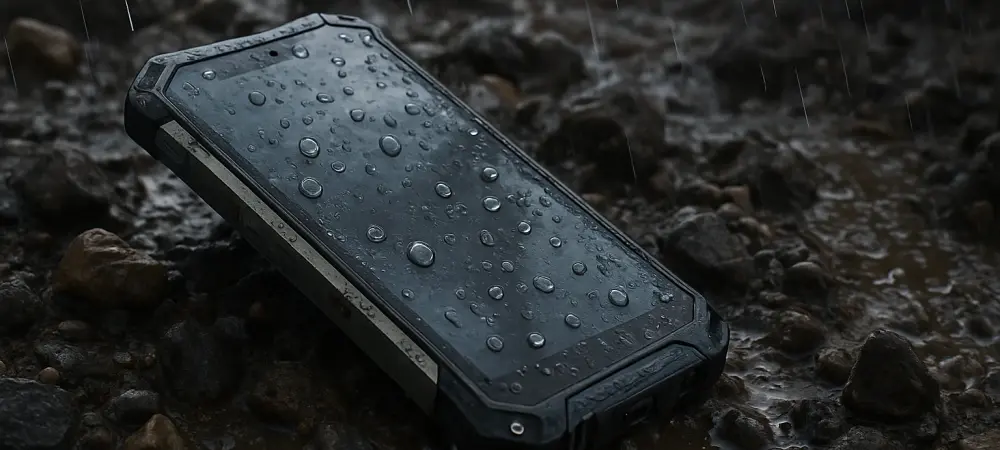
I’m thrilled to sit down with Dominic Jainy, an IT professional whose deep knowledge of cutting-edge technologies like artificial intelligence, machine learning, and blockchain gives him a unique perspective on the latest innovations in mobile devices. Today, we’re diving into the world of rugged smartphones with a focus on the Ulefone Armor 29 Ultra, a device that pushes boundaries with its massive battery, dual AMOLED screens, and extreme durability. In our conversation, we explore what sets this phone apart, how its design caters to specific users, and the technology behind its standout features. Let’s get started!
Can you walk us through what makes the Ulefone Armor 29 Ultra different from other rugged smartphones on the market today?
Absolutely. The Armor 29 Ultra stands out primarily due to its incredible 21,200 mAh battery, which is almost unheard of in smartphones, even rugged ones. Beyond that, it offers dual AMOLED screens—a main 6.67-inch display and a secondary 1.04-inch screen on the back—which adds a layer of functionality not often seen in this category. Add to that its durability certifications like IP68/IP69K and MIL-STD-810H, and you’ve got a device built for extreme conditions while still packing modern features like 5G connectivity and a powerful MediaTek Dimensity 9300+ processor.
How did the team behind this phone manage to fit such a massive 21,200 mAh battery into the device?
It’s a feat of engineering, no doubt. The key lies in optimizing the internal layout and likely using high-density battery cells that maximize capacity without unnecessarily increasing size. They’ve also prioritized battery over sleekness, which is why the phone is quite thick at 33.8 millimeters. It’s a deliberate design choice to cater to users who need extended power over portability, ensuring the battery tech is both safe and efficient for long-term use in harsh environments.
Speaking of size, how does the battery capacity affect the phone’s weight and thickness, and was that a difficult balance to strike?
The impact is significant—688 grams and 33.8 millimeters thick is hefty by any standard. That’s the trade-off for such a large battery. I think the designers accepted this as a necessary compromise because their target audience isn’t looking for a pocket-friendly device; they want reliability in the field. Balancing durability, battery life, and usability likely took careful thought, but the focus here is clearly on function over form, which makes sense for a rugged device.
The battery life claims are staggering—1140 hours of standby and 114 hours of call time. How are these numbers tested, and do they translate to real-world scenarios?
Those figures are typically derived from controlled lab tests under ideal conditions—minimal network activity, screen off for standby, and standardized call settings. In the real world, factors like network strength, app usage, and environmental conditions can reduce these numbers. However, with a 21,200 mAh battery, even heavy users in remote areas—like outdoor workers or adventurers—should still get days, if not weeks, of use without a charge, which is the real value here.
This phone also supports 10W reverse charging. Can you explain how that works and what devices users might power with it?
Reverse charging turns the phone into a power bank, allowing it to share its massive battery capacity with other devices via a USB cable. At 10W, it’s not the fastest, but it’s enough to juice up smaller gadgets like earbuds, smartwatches, or even another smartphone in a pinch. It’s a practical feature for someone in the field who might not have access to other power sources and needs to keep multiple devices running.
Given its bulky design at 688 grams, who do you think is the ideal user for the Armor 29 Ultra?
This phone is clearly designed for people who work or play in extreme environments. Think construction workers, field engineers, or outdoor enthusiasts like hikers and campers. These are users who prioritize durability and battery life over a slim profile. It’s not for the average consumer looking for a daily driver; it’s for those who need a device that can take a beating and keep going without needing a charge for days.
How does the reinforced design with protected corners play a role in handling tough conditions?
The reinforced corners and rugged build are critical for drop protection and shock absorption. In environments like construction sites or rocky terrains, drops are inevitable. Those corners are likely made with impact-resistant materials that dissipate force, preventing damage to internal components. It’s a small but vital detail that extends the phone’s lifespan in scenarios where regular smartphones would crack or fail.
Let’s talk about the dual AMOLED screens. What’s the purpose of having a secondary 1.04-inch display on the back of the phone?
The secondary screen is a clever addition for quick-access information without flipping the phone or waking the main display. It’s likely there to show notifications, time, battery status, or incoming calls, which is especially useful when the phone is face down or in a protective case. For users in rugged settings, this saves time and battery life since they don’t need to engage the larger screen for basic updates.
Can you break down the durability standards of this phone? What do IP68/IP69K and MIL-STD-810H certifications mean for the average user?
These certifications are a big deal. IP68 means the phone is fully dustproof and can be submerged in water up to a certain depth for a prolonged time—great for accidental drops in water or working in wet conditions. IP69K takes it further, ensuring resistance to high-pressure, high-temperature water jets, which is rare and useful for industrial settings. MIL-STD-810H is a military-grade standard covering a range of environmental tests like drops, vibration, and temperature extremes. For users, it means the phone can survive harsh conditions—whether it’s a dusty desert, a rainy forest, or a clumsy fall—that would destroy most devices.
How does the MediaTek Dimensity 9300+ processor stack up against other chips in the rugged smartphone space, and what does it bring to the table?
The Dimensity 9300+ is a high-end chip, especially for a rugged phone. It offers strong performance for multitasking, gaming, and 5G connectivity, which isn’t always a given in this category where older or less powerful processors are often used to cut costs. Compared to other rugged devices, this chip provides a smoother experience and future-proofs the phone for demanding apps or network speeds, making it a standout for users who need both durability and modern performance.
Looking ahead, what’s your forecast for the future of rugged smartphones like the Armor 29 Ultra in terms of technology and user demand?
I think we’ll see rugged smartphones continue to evolve as niche but vital tools. Demand will grow from industries like construction, logistics, and emergency services, as well as from outdoor enthusiasts, especially as remote work and adventure travel increase. Technologically, I expect better integration of AI for things like environmental hazard detection, improved battery tech for even longer life, and lighter materials to reduce bulk without sacrificing durability. These devices will likely keep pushing the boundary between toughness and cutting-edge features, catering to users who need both in equal measure.