

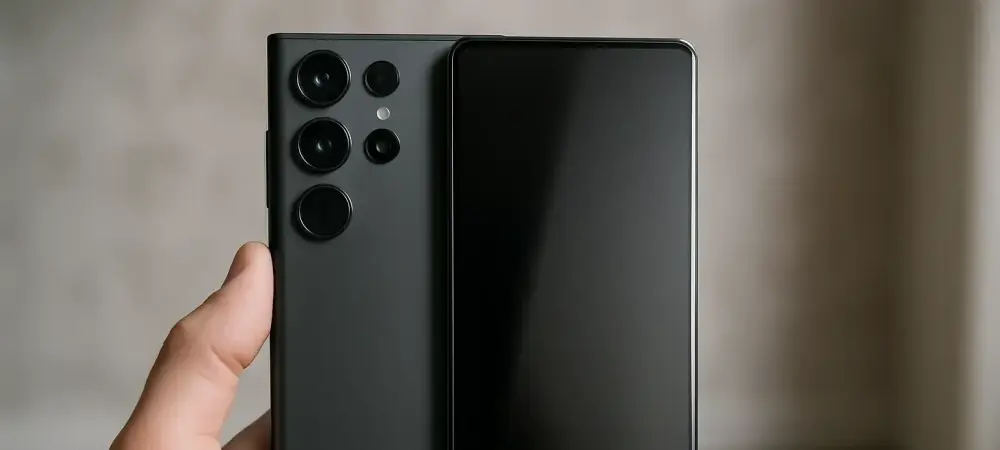
The subtle but persistent anxiety of a stranger’s gaze landing on your private messages while on a crowded commute may soon become a relic of the past, as new information points toward a fundamental shift in on-screen security.
From Accessory to Asset Why an Integrated Privacy Screen Is a Mobile Game Changer
For years, protecting on-screen data from prying eyes, a practice known as “shoulder surfing,” has been a persistent concern in public spaces. The primary defense has been the application of cumbersome, third-party privacy protectors that permanently darken the display and often degrade image quality. This solution has always felt like a compromise, trading visual clarity for a static layer of security.
The conversation is now shifting toward a more elegant and powerful solution: a built-in, software-controlled privacy function. Such a feature represents a significant leap forward, transforming privacy from a physical accessory into an intelligent, integrated asset. The recent discovery of a new function within a One UI 8.5 beta build suggests Samsung is on the verge of pioneering this next-generation feature, promising unprecedented user convenience and data security.
Deconstructing the Rumors A Deep Dive into Samsungs Leaked Privacy Display
Unveiling the Functionality How Your Screen Could Vanish from Unwanted Viewers
The core concept of the rumored “Privacy Display” is both simple and revolutionary. Leaks originating from the Samsung Tips app describe an AI-powered feature that intelligently narrows the screen’s viewing angle on demand. When activated, the display selectively darkens from the sides, making content virtually invisible to anyone not positioned directly in front of the device.
This integrated system stands in stark contrast to traditional physical filters. Instead of a permanent, dimming film, users would gain the ability to toggle privacy protection instantly. This on-demand functionality ensures the screen remains bright and clear for personal viewing but can be secured with a simple tap when in a public setting, offering the best of both worlds.
The Tech Behind the Trick Exploring Samsungs Flex Magic Pixel Innovation
Industry analysis indicates this is not a feature that can be retroactively applied to older devices through a software update. Its implementation is reportedly dependent on a new, proprietary hardware innovation from Samsung Display, referred to as “Flex Magic Pixel” technology.
This advanced display technology is believed to enable precise control over the directionality of light emitted by individual pixels, allowing the screen to actively “steer” the image toward the user. Mastering this at a mass-production scale presents significant manufacturing challenges, but it would give Samsung a formidable competitive advantage, creating a hardware-based feature that rivals cannot easily replicate with software alone.
Seamless Control From Manual Toggles to Intelligent Automated Secrecy
User interaction with the Privacy Display is expected to be seamless and intuitive. The most direct method of control will likely be a straightforward toggle located in the Quick Panel and the main Settings menu, allowing for quick manual activation and deactivation whenever the user deems it necessary.
The true sophistication, however, appears to lie in its integration with Samsung’s Modes and Routines app. This would unlock the potential for intelligent, automated secrecy. Users could configure the Privacy Display to engage automatically based on specific triggers, such as entering a designated work location, connecting to public Wi-Fi, or boarding a train, creating a truly hands-off security experience.
An Ultra Exclusive Perk Gauging the S26 Lineup and Its Flagship Ambitions
A critical question remains: will this cutting-edge feature be available across the entire S26 lineup, or will it be reserved for the top-tier model? Situating the Privacy Display alongside other rumored S26 Ultra specifications—such as the formidable Snapdragon 8 Elite Gen 5 chipset and an expansive 6.9-inch display—positions it as a powerful differentiator.
Samsung has a well-established strategy of reserving its most groundbreaking innovations for its Ultra device to justify its premium standing. Making the Privacy Display an “Ultra-only” perk would further elevate its flagship ambitions, creating a compelling reason for power users and privacy-conscious consumers to opt for the most expensive model in the series.
What This Means for You Key Takeaways and Practical Considerations
The collection of rumors points to a few critical insights for consumers. The feature is understood to be hardware-based, enhanced with artificial intelligence, and designed to offer unparalleled convenience for anyone who frequently uses their device in public. It moves beyond a simple accessory to become a core component of the user experience.
For potential buyers, this development introduces a new factor to consider. The value of an integrated privacy screen must be weighed against individual daily usage patterns. Furthermore, tech enthusiasts should monitor how competitors like Apple and Google respond, as a successful launch by Samsung could establish a new and important industry benchmark for all future flagship smartphones.
The Future of On Screen Privacy Is Built In Not Snapped On
Ultimately, the emergence of technologies like the rumored Privacy Display signaled a fundamental move away from external accessories and toward intelligent, native security. The focus on protecting sensitive on-screen information underscored the growing importance of digital privacy in an increasingly connected world.
The discussion surrounding the S26 Ultra’s potential feature set ultimately highlighted a new benchmark for flagship innovation. It became clear that the most impactful advancements were no longer just about raw power but about features that silently and seamlessly integrated security into the fabric of daily life.