

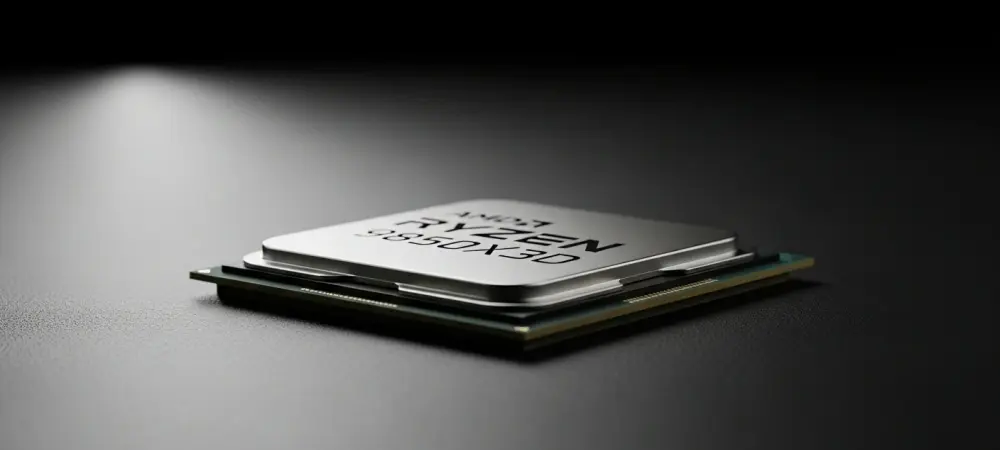
The relentless pursuit of higher frame rates and lower latency has defined the enthusiast PC gaming landscape, a battle where every microsecond and every instruction per clock cycle matters profoundly. The AMD Ryzen 7 9850X3D emerges as a significant advancement in the consumer CPU sector, specifically targeting high-performance gaming. This review will explore the evolution of AMD’s 3D V-Cache technology, its key architectural features, comprehensive performance metrics, and the impact it has on gaming and productivity applications. The purpose of this review is to provide a thorough understanding of the processor, its current capabilities, and its position within the competitive market.
The Next Generation of Gaming Supremacy
The Ryzen 7 9850X3D represents a calculated evolution, building upon the foundational success of its predecessors to claim the gaming performance crown. Its design philosophy centers on leveraging the new Zen 5 architecture and a refined 3D V-Cache to deliver unparalleled gaming throughput. This processor arrives as the direct successor to the highly acclaimed Ryzen 7 9800X3D, a chip that cemented the value of stacked cache in the minds of gamers.
Positioned at the apex of the gaming CPU market, the 9850X3D’s relevance extends beyond its own specifications. It serves as a benchmark for the industry, pushing competitors to innovate and signaling AMD’s continued commitment to the AM5 platform. Its release challenges system builders and enthusiasts to re-evaluate what constitutes the ultimate gaming experience, making it a pivotal component in the current generation of high-end hardware.
Architecture and Key Technical Enhancements
Zen 5 Core Architecture and IPC Gains
At the heart of the Ryzen 7 9850X3D lies the Zen 5 microarchitecture, a significant redesign focused on increasing Instructions Per Clock (IPC). This fundamental uplift in single-threaded performance is achieved through a wider execution engine and improved branch prediction, allowing the CPU to process more work in each cycle. These core-level improvements are the bedrock upon which all other performance gains are built.
Manufactured on an advanced process node, Zen 5 not only enhances performance but also maintains a focus on efficiency. The core configuration remains optimized for mainstream enthusiast builds, ensuring that the architectural benefits translate directly into tangible speed improvements for both complex applications and, most critically, the demanding logic of modern game engines.
Clock Speeds and Power Profile
A notable enhancement over its predecessor is the 400 MHz increase in the maximum boost clock, a direct result of architectural refinements and process maturity. This higher clock speed allows the 9850X3D to excel in lightly threaded tasks, which are common in many gaming scenarios, providing a snappier and more responsive user experience. Despite the clock speed increase, the processor maintains a 120W Thermal Design Power (TDP), indicating a focus on power efficiency. This profile means that while a high-performance cooler is recommended to achieve maximum boost clocks, the 9850X3D does not demand exotic or excessively expensive cooling solutions. This balance makes it a more accessible option for a wider range of enthusiast builds.
The Evolution of 3D V-Cache
The defining feature of the 9850X3D is its massive 96 MB of L3 cache, made possible by AMD’s 3D V-Cache technology. By stacking an additional layer of cache directly on top of the core complex, AMD drastically reduces the latency associated with fetching data from system memory. This is particularly beneficial in gaming, where large datasets for textures and game logic must be accessed rapidly.
Compared to previous generations, this implementation of 3D V-Cache benefits from the underlying speed of the Zen 5 architecture. The synergy between the high-IPC cores and the low-latency cache creates a powerful combination that minimizes CPU-bound bottlenecks, unlocking higher and more consistent frame rates in a wide variety of titles.
Performance Benchmarks
High-Fidelity Gaming Performance
In CPU-bound gaming scenarios, particularly at 1080p and 1440p resolutions, the Ryzen 7 9850X3D demonstrates its clear advantage. Benchmark results from a suite of modern AAA titles show a significant uplift in average and 1% low frame rates compared to both its predecessor and competing processors. The massive L3 cache effectively feeds the GPU, mitigating stutter and ensuring a smoother gameplay experience.
Even at 4K, where the performance bottleneck often shifts to the GPU, the processor’s strengths remain evident in maintaining higher minimum frame rates. This consistency is crucial for competitive and immersive gaming, proving that the 3D V-Cache technology provides a tangible benefit across all resolutions by creating a more stable performance floor.
Productivity and Application Workloads
While gaming is its primary focus, the 9850X3D delivers competent performance in productivity tasks. In workloads like video editing and software compilation, the high IPC of the Zen 5 cores ensures it remains competitive. It capably handles demanding applications, making it a viable option for users who split their time between content creation and gaming. However, when compared to non-X3D counterparts with higher all-core clock speeds, a performance trade-off becomes apparent in heavily multi-threaded rendering tasks. While it is by no means a slow processor, those whose primary use case is professional content creation may find better value in standard Ryzen or competing CPUs designed for maximum multi-core throughput.
Thermal Performance and Power Consumption
Under heavy stress tests, the 9850X3D exhibits manageable thermal output, a testament to the efficiency of the Zen 5 architecture and the 120W TDP. The design of the 3D V-Cache can create thermal hotspots, so a quality air or liquid cooler is essential to sustain peak performance, but extreme cooling solutions are not a necessity for most users.
During typical gaming loads, its power draw is often lower than competitors, reflecting AMD’s ongoing focus on performance-per-watt. This efficiency not only helps with thermal management but also reduces the long-term cost of ownership.
Competitive Landscape and Value Proposition
Comparison Against Intel’s Flagship
When pitted against its primary competitor from Intel, the Ryzen 7 9850X3D establishes a clear lead in gaming performance. Benchmark data consistently shows it delivering higher frame rates in a majority of titles, solidifying its claim as the premier gaming CPU. This advantage is most pronounced in games that are sensitive to cache size and memory latency.
In productivity workloads, the race is much closer. Intel’s flagship often pulls ahead in heavily multi-threaded applications due to higher power limits and all-core frequencies. This creates a clear choice for consumers: the 9850X3D for gaming-first users, and its competitor for those prioritizing productivity throughput.
Generational Uplift from the Ryzen 7 9800X3D
The performance gains over the Ryzen 7 9800X3D are significant enough to be felt in real-world use. The combination of the Zen 5 architecture’s higher IPC and the increased boost clock provides a noticeable uplift in both gaming and general responsiveness. This generational leap makes the 9850X3D a compelling upgrade for those seeking the absolute best gaming performance.
For current owners of the 9800X3D, the decision to upgrade depends on their specific needs. While the performance increase is tangible, the predecessor remains a highly capable gaming processor. The upgrade is most justified for enthusiasts with top-tier GPUs who want to eliminate every possible bottleneck and gain a competitive edge.
Market Positioning and Price Analysis
With a Manufacturer’s Suggested Retail Price (MSRP) of $499, the Ryzen 7 9850X3D is positioned as a premium enthusiast product. Its price-to-performance ratio is exceptionally strong for its target audience: gamers who demand the highest possible frame rates. For this group, the cost is justified by the measurable in-game benefits.
For hybrid users or those on a tighter budget, the value proposition is more nuanced. The performance trade-offs in productivity and the premium price may lead them toward standard Ryzen CPUs or other market alternatives. Ultimately, its value is defined by how much a user prioritizes bleeding-edge gaming performance over all-around versatility.
System Integration and Platform Considerations
The AM5 Ecosystem and Motherboard Support
The Ryzen 7 9850X3D is built on the AM5 platform, which brings with it a host of modern features. Mandatory support for DDR5 memory ensures high-speed data access, while the inclusion of PCIe 5.0 provides future-proofing for next-generation graphics cards and ultra-fast NVMe storage. This robust ecosystem is a key part of the processor’s appeal.
Compatibility is broad across AM5 motherboards, although a BIOS update is typically required to ensure full support for the new Zen 5 architecture. The platform’s longevity, with AMD’s commitment to support it for years to come, adds significant value and provides a clear upgrade path for users investing in the ecosystem today.
Ideal PC Builds and Component Pairing
To unlock the full potential of the 9850X3D, a balanced system configuration is crucial. It pairs exceptionally well with high-end graphics cards like the GeForce RTX 5080, where the CPU’s ability to reduce bottlenecks allows the GPU to operate at its full potential.
For optimal performance, system builders should consider fast DDR5 memory, ideally in the 6000 MT/s range, to complement the processor’s Infinity Fabric clock. A robust cooling solution, such as a high-performance air cooler or a 240mm All-In-One (AIO) liquid cooler, is also recommended to ensure the CPU can maintain its maximum boost clocks under sustained load.
Challenges and Practical Limitations
The Productivity Performance Trade-Off
The specialized design of the 3D V-Cache introduces an inherent trade-off. The additional cache layer can limit maximum achievable clock speeds and slightly increase thermal density, which results in moderately lower performance in some all-core productivity tasks compared to its non-X3D siblings.
This compromise is a deliberate engineering choice aimed at maximizing gaming performance. While the processor is more than capable for general use and most creative work, users whose livelihoods depend on the absolute fastest rendering or compilation times may be better served by a CPU optimized for raw multi-threaded throughput rather than low-latency cache.
Overclocking and Tuning Headroom
Traditional overclocking is generally limited on X3D processors due to the voltage sensitivity of the stacked cache. Pushing frequencies manually carries a higher risk and yields minimal gains, making it an impractical approach for most users. This lack of conventional overclocking headroom may disappoint some enthusiasts.
However, performance can still be optimized through AMD’s own toolset. Precision Boost Overdrive (PBO) and Curve Optimizer allow for sophisticated, automated tuning that can extract additional performance safely. These tools enable users to fine-tune the voltage and frequency curve to their specific chip and cooling solution, providing a modern alternative to manual overclocking.
The Future of Gaming Processors
The Ryzen 7 9850X3D offers a compelling glimpse into the future of CPU design for gaming. Its success reinforces the idea that raw clock speed and core count are not the only paths to performance; specialized architectural innovations like stacked cache can provide more meaningful benefits for specific workloads. This approach is likely to influence processor design across the industry.
With the long-term viability of the AM5 platform, the 9850X3D stands as both a powerful component for today and an investment in a future-proof ecosystem. As games become more complex, the importance of large, low-latency caches is only expected to grow, positioning this processor and its underlying technology at the forefront of gaming hardware for the foreseeable future.
Final Verdict
This review ultimately revealed a processor that excelled in its designated role as the ultimate gaming CPU. The Ryzen 7 9850X3D’s combination of the Zen 5 architecture and enhanced 3D V-Cache delivered a tangible and often significant performance advantage in a wide range of games. Its efficiency and integration into the modern AM5 platform further strengthened its position.
The analysis also highlighted its nature as a specialized tool; the trade-offs in productivity performance and limited overclocking headroom were evident. In the end, the AMD Ryzen 7 9850X3D stood as an exceptional processor. It earned a definitive recommendation for enthusiasts who prioritize gaming performance above all else and are building a high-end system designed to push the boundaries of modern titles.