

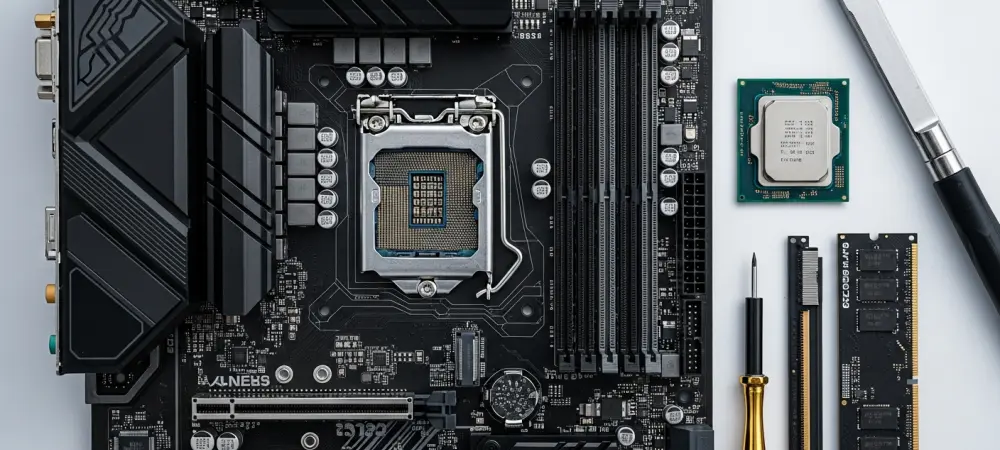
Navigating the complexities of the modern high-end computer hardware market often requires a delicate balance between achieving frame-rate dominance and maintaining a realistic budget for peripheral upgrades. As software demands continue to escalate in the middle of 2026, many enthusiasts find themselves caught between the allure of flagship components and the pragmatic need for cost-effective reliability. A strategic solution has emerged in the form of a hardware bundle that pairs the legendary Ryzen 7 7800X3D with a Gigabyte B850 Gaming X motherboard. This combination, currently offered at a competitive price of five hundred and forty-nine dollars, provides a robust foundation for building a modern gaming rig without the excessive premiums typically seen with standalone, unbundled parts. By focusing on essential performance metrics rather than aesthetic fluff, this package appeals to builders who prioritize raw efficiency and long-term system stability over flashy branding or redundant features.
The Technical Edge: Dominance of 3D V-Cache Technology
The Ryzen 7 7800X3D continues to dominate the conversation among performance enthusiasts due to its groundbreaking 3D V-Cache technology. By integrating a massive 96MB L3 cache directly onto the processor die, this architecture drastically reduces the time required for the CPU to access critical game data. In practical terms, this technical achievement means that the processor can handle complex calculations for modern physics engines and artificial intelligence routines with significantly lower latency than traditional chip designs. This advantage becomes particularly evident in simulation-heavy titles and competitive esports environments where every millisecond of processing time contributes to a more responsive user experience. Furthermore, the specialized cache layout allows the CPU to maintain high performance in demanding scenarios such as high-resolution virtual reality, where consistent frame delivery is mandatory for maintaining immersion.
Beyond its raw speed, the efficiency of the Zen 4 architecture within the 7800X3D provides a level of consistency that many newer chips struggle to replicate at a similar price point. While raw clock speeds are often highlighted in marketing materials, the real-world benefit of the X3D series lies in its ability to smooth out the bottom one percent of frame times, which effectively eliminates the stuttering that can plague high-end builds. In the current landscape of 2026, where modern game engines utilize increasingly complex asset streaming techniques, having that extra cache buffer ensures that the system remains fluid even during rapid scene transitions. This stability is a key differentiator, as it allows gamers to push their settings to the limit without fearing the sudden performance drops that characterize less optimized hardware. Consequently, the 7800X3D remains a benchmark for what a dedicated gaming processor should achieve, proving that smart design often outweighs mere core counts.
Architectural Stability: Power Delivery and Efficiency
Supporting a processor of this caliber requires a motherboard that can provide unwavering stability, and the Gigabyte B850 Gaming X meets this challenge through its sophisticated 12+2+2 digital VRM design. This power phase configuration is essential for ensuring that the Ryzen 7 7800X3D receives clean, consistent electricity, especially during the intense power spikes that occur during heavy gaming sessions or multi-threaded workloads. To complement this electrical robustness, the board integrates a series of oversized heatsinks and premium thermal pads that facilitate rapid heat dissipation from the voltage regulator modules. By keeping these critical components cool, the motherboard not only prevents thermal throttling but also extends the operational lifespan of the entire system. This focus on durability is a hallmark of the B850 chipset, which was designed to offer the stability of high-end boards while remaining accessible to the broader enthusiast community.
In addition to its power stability, the B850 platform is engineered to embrace the latest advancements in data transfer speeds, ensuring that the system does not become a bottleneck for other components. The inclusion of a PCIe 5.0 x16 slot provides a future-ready interface for the newest generation of high-end graphics cards, allowing for maximum bandwidth and performance in GPU-bound scenarios. Furthermore, the dedicated Gen5 M.2 slot enables the use of the fastest NVMe storage drives currently available on the market, which drastically reduces loading times and improves overall system responsiveness. These features are not merely luxury additions; they represent a necessary evolution for systems operating in 2026, where massive file sizes and real-time data streaming are the norms for professional and gaming software alike. By integrating these high-speed lanes, the motherboard ensures that users can upgrade their secondary components over several years without needing to replace the underlying platform.
Strategic Investment: Market Analysis and Actionable Insights
The comparative landscape in 2026 shifted toward specialized hardware that offered tangible benefits rather than just higher clock speeds. It was observed that while the Intel Core Ultra and the newer Ryzen 9000 series attempted to capture the market with increased core counts, the 7800X3D bundle provided a price-to-performance ratio that remained unmatched for gaming applications. Analysts noted that the integration of a feature-rich B850 motherboard allowed for a level of system responsiveness that exceeded many higher-priced configurations. This specific pairing effectively addressed the primary bottlenecks that gamers faced, such as memory latency and storage throughput limitations. By evaluating these metrics, enthusiasts concluded that the immediate gains in frame time consistency outweighed the potential benefits of more expensive, general-purpose processors. This realization led to a broader acceptance of high-value bundles as the standard for efficient building. Strategic recommendations for those entering the high-performance computing space emphasized the importance of balancing current power with future compatibility. The Ryzen 7 7800X3D and Gigabyte B850 bundle functioned as a pivotal tool for users who sought to maximize their investment while ensuring a clear path for subsequent hardware iterations. Builders who prioritized this combination discovered that they could achieve elite gaming performance while maintaining the flexibility to adopt newer storage and networking standards as they emerged. It was ultimately determined that focusing on established, high-efficiency architectures provided a more reliable foundation than chasing unproven, bleeding-edge releases. Moving forward, the lesson remained that the most effective builds were those that integrated robust power delivery, advanced thermal management, and persistent socket support into a single, cohesive package. This approach allowed for a seamless transition into the next era of gaming.