

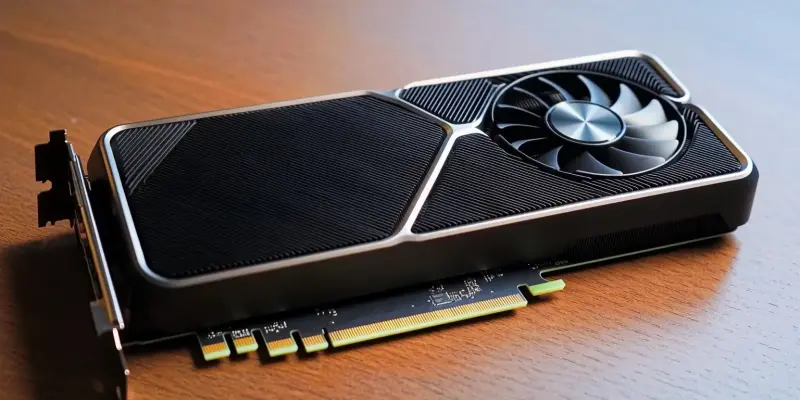
Nvidia’s recent announcement of the RTX 5090 at CES 2025 has generated significant excitement and curiosity among gamers and tech enthusiasts. The anticipation surrounding the RTX 5090 was unquestionably high given the incredible performance of its predecessor, the RTX 4090. With initial benchmark results beginning to surface, the debate on whether the RTX 5090 truly warrants an upgrade from the RTX 4090 has started to gain traction. This article delves deep into the performance metrics, gaming capabilities, and overall value of the RTX 5090 compared to the RTX 4090, assisting potential buyers in making an informed decision.
Understandably, users are questioning if the differences between these two powerhouse GPUs are substantial enough to justify the steep prices and whether the performance improvements align with the kicked-up marketing buzz. Nvidia has set the expectation bar high with decades of delivering cutting-edge technology, and the RTX 5090 is no exception, boasting new features and enhancements. However, examining raw benchmark scores, we must scrutinize the real-world applications and discern if the statistical highs translate into a meaningful improvement in user experiences.
Benchmark Performance Analysis
Released during CES 2025, the RTX 5090’s early benchmark results have provided intriguing insights into its raw performance capabilities. One of the first tests was conducted using the Geekbench 5 OpenCL test, where the RTX 5090 managed to score a stirring 367,740 points—a 15 percent increase over the RTX 4090. Other noteworthy results stemmed from the Vulkan tests, where the RTX 5090 scored 359,742 points, signifying a 37 percent uptick. Preliminary benchmarks using the CUDA API showcased a 27 percent improvement over the RTX 4090, which fell short of the enormous expectations given the 32 percent increase in CUDA cores.
Additionally, the RTX 5090 underwent assessments using Blender 3.6.0, scoring a median of 17,822.17. This translated to a 36 percent improvement over the RTX 4090’s mark of 13,064.17. These metrics are bolstered further with the China-exclusive RTX 5090D outperforming the RTX 4090D by 40 percent in tests using Blender v4.3.0. Although these benchmark results suggest commendable increments in performance, they often don’t provide a comprehensive understanding of a GPU’s capabilities in everyday gaming scenarios. Thus, while the synthetic benchmarks lay the foundational expectations, the true impact on gaming remains to be thoroughly evaluated.
An equally critical aspect is the price point of these advanced GPUs. Nvidia set the RTX 5090’s price at $1,999, which inevitably steers the value discussion into sharper focus. The data suggests that while there is an improvement in performance metrics, the quantifiable enhancements relative to the costs are what truly stir the debate on upgrading from the RTX 4090. Thoughtful consideration of both financial investment and tangible performance gains is essential before making a final decision on purchasing the RTX 5090.
Real-World Gaming Performance
Although the benchmark tests illustrate the theoretical power contained within the RTX 5090, gamers are primarily focused on real-world performance, particularly in AAA titles and graphically demanding platforms. The gap between synthetic benchmarks and actual gaming experience can be substantial, which is why many prefer to analyze game-specific performance. For instance, GPU-intensive titles often reveal different aspects of performance that benchmarks alone cannot fully elucidate, such as frame rates, resolutions, and overall smoothness during intense gameplay moments.
Comprehensive reviews on gaming performance for the RTX 5090 are presently awaited, promising to paint a more accurate and holistic picture of its capabilities. Initial expectations lean towards the RTX 5090 delivering a more fluid and visually stunning experience; however, real-world testing in top-tier games such as Cyberpunk 2077 or Resident Evil Village would provide concrete proof whether it lives up to the hype. These game reviews will also offer practical insights regarding thermal efficiency, system compatibility, and power consumption in various gaming setups, further influencing user decisions about an upgrade.
Another aspect to consider is future-proofing regarding new technological advancements and gaming requirements. The RTX 5090, armed with increased CUDA cores and enhanced processing frameworks, might serve users well for several years, accommodating advancements in game development and graphics-intensive applications. Still, a pragmatic approach should account for whether the present performance improvements substantially push the envelope beyond the already capable RTX 4090 to ensure the investment is justified.
Conclusion: Value and Recommendation
Nvidia’s recent unveiling of the RTX 5090 at CES 2025 has sparked considerable excitement and curiosity among gamers and tech aficionados. The buzz surrounding the RTX 5090 is immense, especially considering the stellar performance of its predecessor, the RTX 4090. As initial benchmark results start to roll out, discussions about whether the RTX 5090 is a worthy upgrade over the RTX 4090 are heating up. This article thoroughly examines the performance metrics, gaming capabilities, and overall value of the RTX 5090 in comparison to the RTX 4090 to help potential buyers make well-informed decisions.
Understandably, many users are questioning if the differences between these powerhouse GPUs justify their high prices and if the performance enhancements live up to the heightened marketing promise. Nvidia has a long history of delivering top-notch technology, and the RTX 5090 is no different, with its new features and improvements. However, as we analyze raw benchmark numbers, it’s vital to evaluate the real-world applications and determine if the statistical peaks result in a real, significant improvement in user experience.