

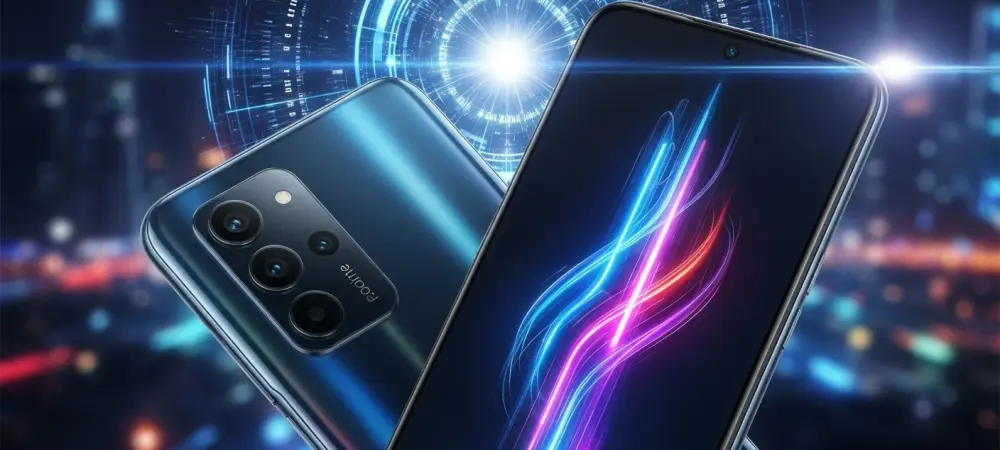
As an industry veteran with years of experience navigating the intersection of hardware engineering and user experience, Dominic Jainy offers a rare glimpse into the technical marvels behind modern mobile technology. With a background rooted in high-performance computing and a keen eye for market shifts, Jainy is uniquely positioned to dissect the nuances of the latest smartphone releases. In this discussion, we explore the intricate balance of design and power, focusing on the engineering feats required to fit massive energy reserves into slim form factors and the long-term software strategies that define the next generation of 5G handsets.
The conversation covers the engineering challenges of high-capacity battery integration, the thermal management strategies of sealed chassis, and the market positioning of mid-range devices. We also delve into the technical specifications of high-brightness displays and the strategic planning behind multi-year software support.
Managing a 7,000mAh battery within an 8.1mm slim profile is a significant design challenge. How did the engineering team keep the weight at just 183g, and what specific safety protocols are in place to manage 60W fast charging in such a high-density cell?
Maintaining a weight of 183g while housing a massive 7,000mAh battery required a radical approach to internal architecture and materials. The engineering team utilized high-density battery chemistry that allows for more energy storage in a smaller footprint, effectively keeping the profile at a sleek 8.1mm. To ensure safety during 60W fast charging, the device incorporates multiple layers of thermal protection and real-time voltage monitoring to prevent heat buildup. These protocols are essential because charging such a high-capacity cell generates significant kinetic energy, and without these safeguards, the structural integrity of the slim chassis could be compromised.
With a peak brightness of 4,200 nits, outdoor visibility is prioritized. How does the display controller balance this extreme brightness with power efficiency, and what role does the DT Star D+ glass play in maintaining the integrity of the 120Hz AMOLED panel?
The display controller is the unsung hero here, using intelligent algorithms to modulate power based on ambient light conditions, ensuring that 4,200 nits is only reached when absolutely necessary. This AMOLED panel supports 1.07 billion colors and a 100 percent DCI-P3 color gamut, which requires precise electrical regulation to prevent rapid battery drain. The DT Star D+ cover glass provides the necessary structural rigidity to protect the delicate 120Hz refresh rate components from external pressure. It acts as a durable shield that doesn’t just resist scratches, but also maintains the optical clarity required for a 397 ppi pixel density, ensuring the visual experience remains crisp even in harsh sunlight.
Achieving an IP69 rating requires a tightly sealed chassis against dust and high-pressure water. How does the 6,050 sq mm vapour chamber cooling system dissipate heat from the Dimensity 6400 Turbo chipset when the device is under heavy load and lacks traditional ventilation?
When you have an IP69 rating, you are essentially dealing with a hermetically sealed environment where traditional air cooling is impossible. The 6,050 sq mm vapour chamber is massive for this category, acting as a high-speed thermal highway that pulls heat away from the Dimensity 6400 Turbo chipset. It spreads the thermal load across a wider surface area of the 158.30mm tall body, allowing the heat to dissipate through the frame rather than pockets of trapped air. This prevents the Mali G57 MC2 GPU from throttling during intense tasks, ensuring that the octa-core performance stays consistent even though the phone is shielded against high-pressure water jets.
Integrating a 50-megapixel front camera and a physical selfie mirror on the rear module targets a specific user demographic. Could you walk through the technical workflow for processing high-resolution video at 60 fps, and how does the software optimize the dual 50-megapixel sensor setup?
The technical workflow for 1080p/60 fps video involves high-speed data throughput from the 50-megapixel f/2.4 front sensor to the Image Signal Processor within the MediaTek silicon. By including a physical selfie mirror on the rear module, users can utilize the primary 50-megapixel f/1.8 main shooter for high-quality self-portraits, which is a clever hardware workaround for content creators. The software optimizes this dual-sensor setup by using the 2-megapixel monochrome sensor to assist with depth and light mapping, which enriches the final image data. It’s a specialized setup that prioritizes high-resolution clarity for both social media enthusiasts and professional vloggers.
Providing three years of OS upgrades starting from Android 16 suggests a focus on longevity. What optimizations are made to the Realme UI 7.0 and the MediaTek hardware to ensure that the 12GB of RAM continues to deliver a smooth experience as software becomes more demanding?
Realme UI 7.0 is built with a lean kernel designed to minimize background processes, which is crucial for maintaining the efficiency of the 12GB LPDDR4x RAM over several years. As Android 16 and subsequent versions evolve, the software utilizes aggressive memory compression techniques to ensure the MediaTek Dimensity 6000-series chipset isn’t overwhelmed. We also focus on “aging software” simulations to predict how the UFS 2.2 storage will handle fragmented data over a four-year period of security updates. By optimizing how the OS interacts with the hardware, we ensure that the 256GB of storage remains fast and responsive, preventing the typical slowdown users often see in older devices.
The mid-range market often forces a trade-off between performance and battery life. How does the combination of UFS 2.2 storage and the 6000-series chipset position this device against competitors, and what were the primary metrics used to justify the pricing for the 256GB storage variants?
The choice of UFS 2.2 and the Dimensity 6400 Turbo allowed us to hit a sweet spot where we could offer a 7,000mAh battery without making the phone prohibitively expensive. Pricing the top-tier 12GB+256GB variant at Rs. 36,999 was a strategic decision based on the cost-to-performance ratio of these specific components. We looked at consumer data showing a high demand for long-lasting battery life in the Indian market, which justified the investment in the high-density cell and the 60W charging tech. By offering storage configurations starting from 128GB at Rs. 31,999, the device remains competitive while providing premium features like the IP69 rating and the AMOLED display.
What is your forecast for the 5G smartphone market?
I anticipate that the 5G market will shift away from merely providing high-speed connectivity toward a focus on “extreme endurance” and “specialized sensors.” As 5G modems become more power-efficient, we will see more devices like this one that can easily last two full days on a single charge while maintaining a slim profile. Consumers will no longer accept the trade-off between a bulky “rugged” phone and a stylish “flagship”; instead, the industry will move toward high-density batteries and IP69 durability as standard features in the mid-range segment. We are entering an era where the 5G phone is not just a tool for communication, but a long-term, indestructible companion for digital life.