

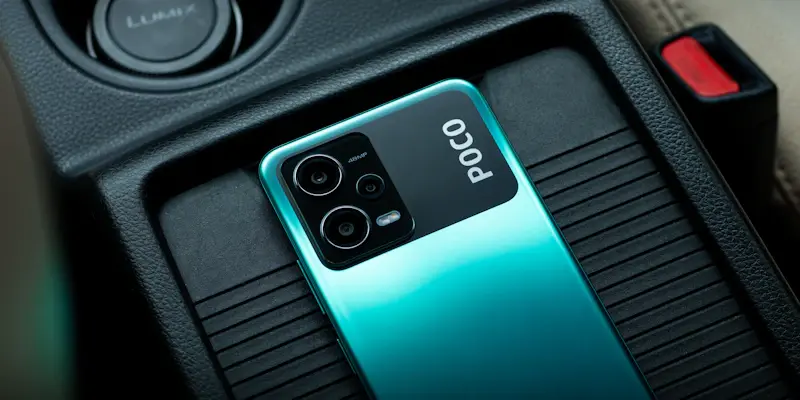
In the ever-evolving world of smartphones, users are often faced with the dilemma of whether to upgrade to the latest model or stick with their current device. This question is especially relevant for owners of the Poco X6, who are contemplating the value of transitioning to the newly released Poco X7. Both mid-range smartphones from Xiaomi have their strengths, but it’s critical to assess whether the new features and advancements in the Poco X7 warrant the upgrade. To determine this, a detailed comparison of performance between the Poco X6 and Poco X7 is paramount, involving an examination of both CPU and GPU capabilities.
Performance Comparison
CPU Performance
The performance metrics of the Poco X7 and Poco X6 share a striking similarity, indicating no significant premium gains from the newer model. The Poco X7 is powered by MediaTek’s Dimensity 7300 Ultra, while the Poco X6 is equipped with Qualcomm’s Snapdragon 7s Gen 2. Benchmark testing, including the Geekbench scores, gives a nuanced insight into their real-world capabilities. The Poco X7 scores 1030 in the single-core test and 2908 in the multi-core test. Comparatively, the Snapdragon 7s Gen 2 in another Xiaomi device reflects similar results, suggesting negligible improvements in the CPU performance of the Poco X7.
Additionally, AnTuTu scores show almost identical results, reinforcing this parity in CPU capabilities. The Poco X7 achieves 210,104 points, slightly edging out the Poco X6, which records 209,039. Essentially, these benchmark figures indicate that the Poco X7 does not significantly outperform its predecessor in terms of processing power. Users who demand robust multitasking and seamless app performance might not find the upgrade to the Poco X7 justified based on these criteria alone.
GPU Performance
When it comes to GPU performance, the Poco X7 does show some improvement over the Poco X6, albeit not groundbreaking. The Poco X7’s GPU presents about a 10-15% performance increase, which could be a relevant factor for heavy gamers or users requiring more graphical power. Detailed scores reveal a slight edge: the Poco X7 scores 146,179 in the GPU section, compared to the Poco X6’s 117,863.
The 3DMark’s WildLife Extreme test further accentuates this marginally better performance, with the Poco X7 scoring 842 against the Poco X6’s 788. The 2560×1440 Sling Shot Extreme (ES 3.1) Unlimited test also witnesses an improvement for the Poco X7, tallying 5308 compared to the Poco X6, which scores 4993. However, while these advancements may seem persuasive, it’s important to weigh them against personal usage patterns. The minimal GPU enhancements may not translate to a noticeably smoother experience for average users.
User Experience and Practical Considerations
Display and Design
Aside from performance metrics, user experience is frequently guided by aspects like display quality and design elements, where the Poco X7 and Poco X6 show both similarities and distinctions. The Poco X7 boasts a slightly superior display, driven by an enhanced refresh rate and better color calibration. With a refined design, the Poco X7 feels more modern and premium, potentially appealing to users who prioritize aesthetics and screen enhancements.
Nevertheless, the Poco X6 is no slouch. Its design is sturdy, and the display, while not as refined as the Poco X7, remains competitive within its price segment. Users moving from the Poco X6 to Poco X7 may not feel an overwhelmingly superior visual experience, as the previous model already delivers crisp and vivid visuals, adequate for most typical users’ requirements.
Battery Life and Additional Features
Battery endurance stands as a crucial factor for users on the go, where both the Poco X7 and Poco X6 strive to deliver dependable performance. The Poco X7 promises marginal improvements in battery efficiency due to software optimizations and more efficient hardware components. However, both devices offer similar battery capacities, which means the difference in practical endurance may be minimal.
Similarly, additional features such as camera quality, software updates, and connectivity options are comparable between the two models. While the Poco X7 introduces slight enhancements, such as incremental camera improvements and minor UI refinements, they do not represent a revolutionary leap forward. For users content with their Poco X6’s features, the Poco X7 may not afford significantly new experiences to justify the costs associated with upgrading.
Upgrade Worthiness
Final Thoughts on Cost-Benefit Analysis
In conclusion, the decision to upgrade from the Poco X6 to Poco X7 hinges on personal priorities and how much value one places on marginal performance gains. The negligible improvements in CPU and the marginally better GPU performance indicate that the Poco X7 does not drastically change the user experience for an average consumer. Given these factors, the Poco X7’s upgrade may be difficult to justify purely from a performance standpoint.
Future Considerations
In the fast-paced, ever-evolving world of smartphones, users frequently find themselves grappling with the decision of whether to upgrade to the latest model or continue using their current device. This dilemma is particularly pertinent for owners of the Poco X6, who are contemplating the merits of transitioning to the newly launched Poco X7. Both of these mid-range smartphones from Xiaomi possess their own strengths, making it essential to evaluate if the enhancements in the Poco X7 truly make it worth the upgrade.
To make an informed decision, it’s crucial to delve into a detailed comparison of the performance aspects between the Poco X6 and Poco X7. Examining both the CPU and GPU capabilities is paramount in determining whether the new features and advancements in the Poco X7 justify the investment. By thoroughly assessing these technological improvements, users can confidently decide if making the switch to the latest model aligns with their needs and expectations.